Anthropic's valuation drops from $2 trillion to $1.4 trillion as AI ventures grow increasingly capital-intensive
Anthropic's valuation drops from $2 trillion to $1.4 trillion as AI ventures grow increasingly capital-intensive

2026-11-19 08:26
Lead: $90.09B in compute contracts have chained the entire industry to a financing sprint. Just before Anthropic’s IPO, Dario Amodei sat down with Jamie Dimon, CEO of JPMorgan Chase.
Just before Anthropic’s IPO, Dario Amodei sat down with Jamie Dimon, CEO of JPMorgan Chase, for an interview. When asked “Why go public now?”, Amodei admitted it was his first time ringing the bell and that he had consulted extensively:
The most common and resonant advice—though phrased differently by each person—was unanimous: never let your company’s valuation exceed its true intrinsic value by even a single dollar.
Alright, so what is Anthropic’s real intrinsic value?
In August, investors valued Anthropic at $2 trillion based on projected 2028 revenues of $190–200 billion. Business can grow gradually, but valuations must be front-loaded.
On October 14, Anthropic hosted an investor event where it disclosed a 45% quarter-over-quarter revenue growth. During the event, Anthropic distributed custom hats branded with “thinking” to participating institutions.
According to Reuters, these institutions took the hats seriously, underwent deep strategic reflection, and revised their valuation upward to $1.5 trillion.

Anthropic’s “thinking” hats distributed to investors
By November 10, Anthropic announced its IPO price range, bringing the valuation down to $1–1.4 trillion (fully diluted).
Yet, Anthropic’s performance during this period was explosive. In the first three quarters of the year, the company reported revenues of $4.7B, $11.6B, and $17B respectively. By the end of October, Annual Recurring Revenue (ARR) reached $81B, up $10B sequentially.
Business grows bigger, yet valuation keeps falling. Even the Hang Seng Tech Index and frontier labs poised to reshape humanity find common ground.
Second Derivative
Large model companies trade on the second derivative—the acceleration of growth. It’s not just about growth; it’s about the rate of growth. Progress isn’t enough—progress must accelerate.
Mass-scale commercialization of AI only began this year. At year-end last year, Anthropic’s ARR stood at just $9B. By April this year, it surpassed $30B. By May, it crossed $47B.
Within less than half a year, the scale multiplied over fivefold. Metrics traditionally observed annually are now being updated monthly, reshaping institutional perceptions.
ARR is commonly used in SaaS firms, as revenue recognition is spread over service periods. New annual subscriptions don’t immediately reflect in current-period revenue. ARR thus provides an early indicator of overall business scale.
Anthropic’s prospectus uses the term Run-Rate Revenue, calculated as: (last 28 days’ pay-per-use revenue × 13) + (current monthly subscription fee × 12) (some sneaky firms use weekly × 52).
The prospectus clarifies that this metric does not replace GAAP revenue nor serve as a forward-looking income projection.
But capital markets don’t care about such distinctions. By analyzing official disclosures and media reports alongside TickerTrends data, one sees Anthropic’s ARR has been rising—but the peak in growth acceleration occurred in Q2.
In July, Anthropic’s ARR hit $65B, with impressive momentum. By August, institutions assigned a $2 trillion valuation. This figure may not have been derived purely from extrapolating July’s growth rate, but certainly embedded expectations of continued acceleration.
However, in Q3, Anthropic’s incremental ARR reversed course, and acceleration decelerated.
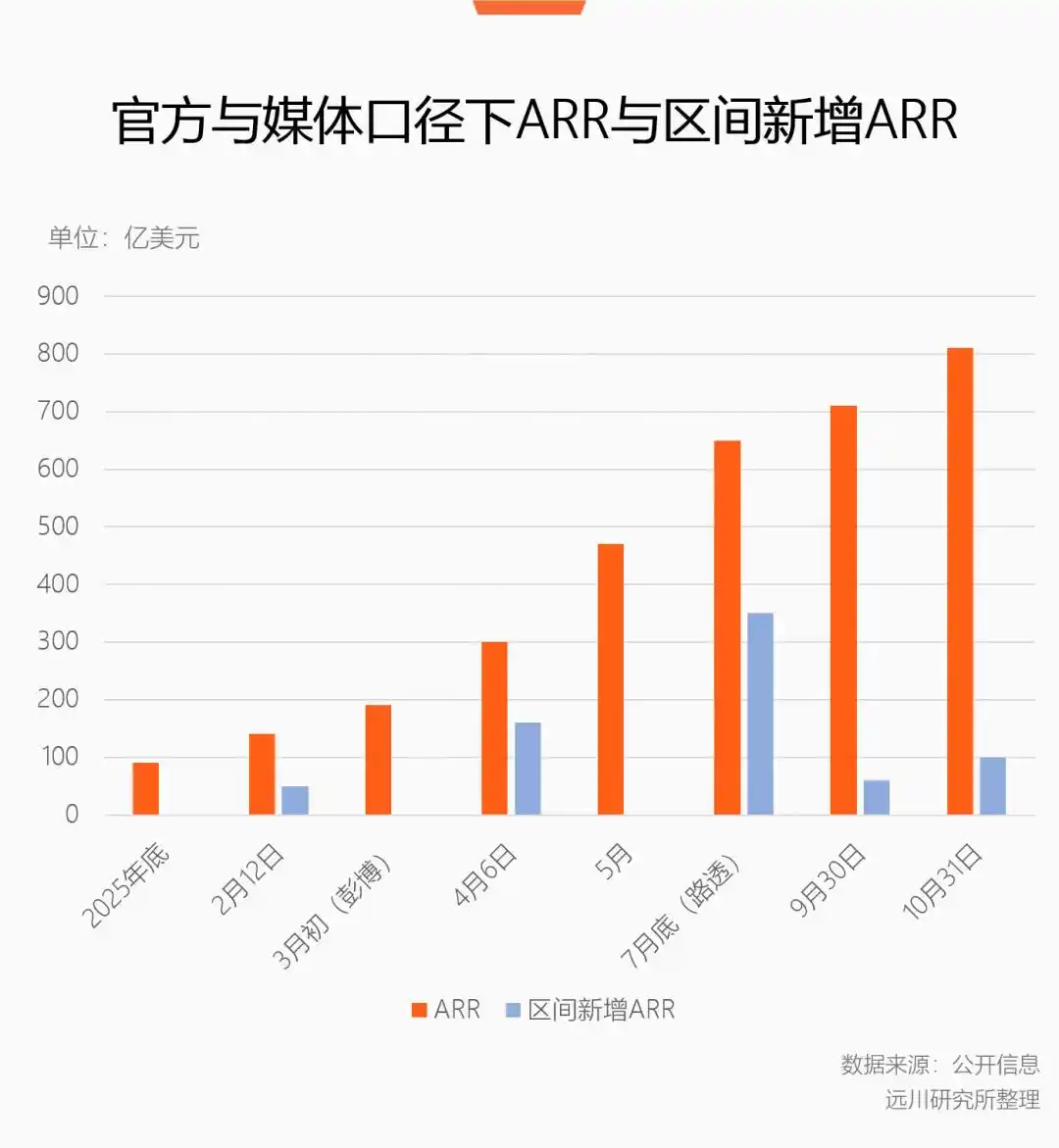
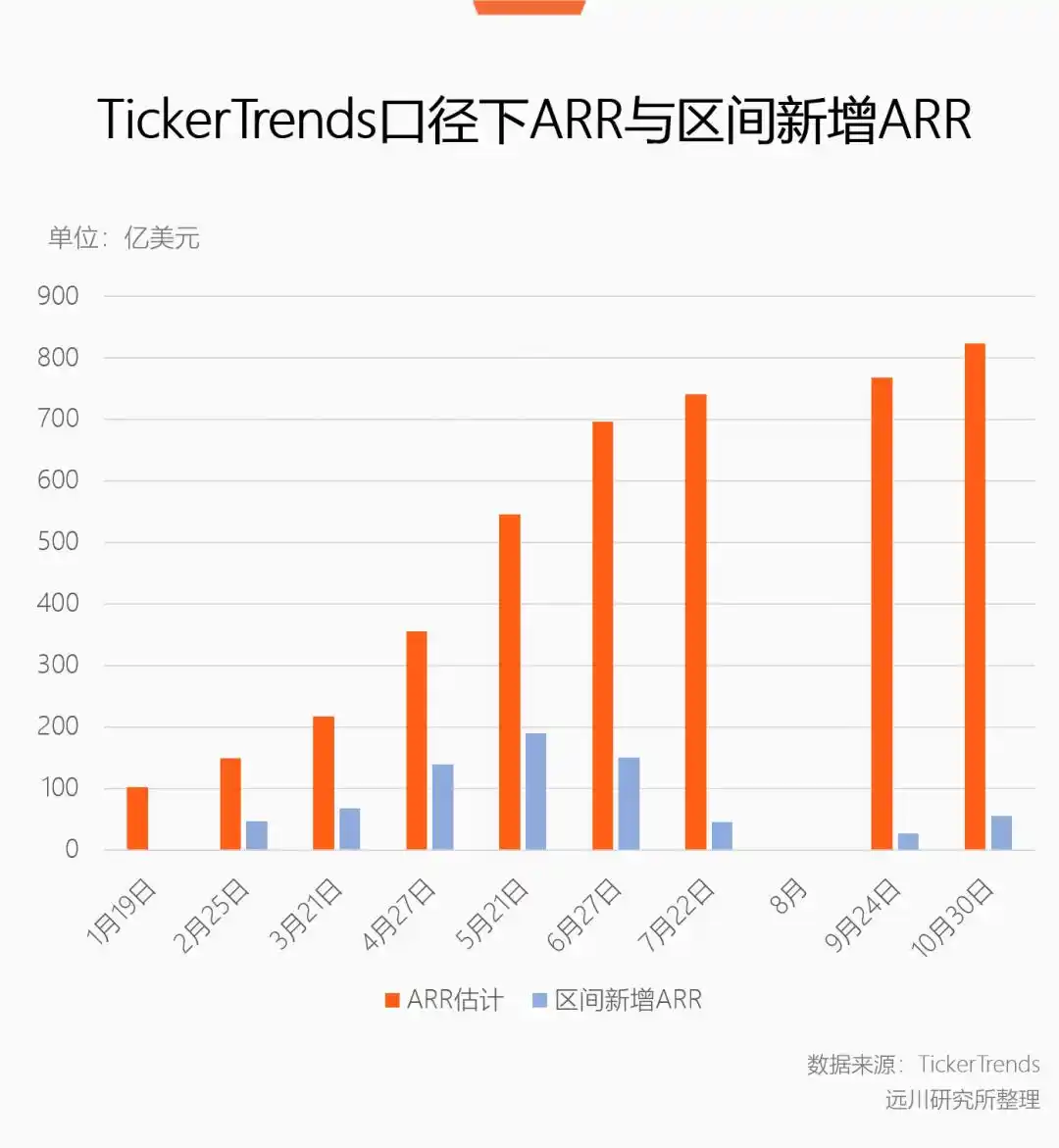
Different disclosure timelines between official sources and TickerTrends make direct comparison of new ARR challenging. Averaging incremental ARR over a period and converting it into a 30-day average growth rate (not actual new ARR) yields a similar conclusion:
Anthropic’s growth acceleration is declining.
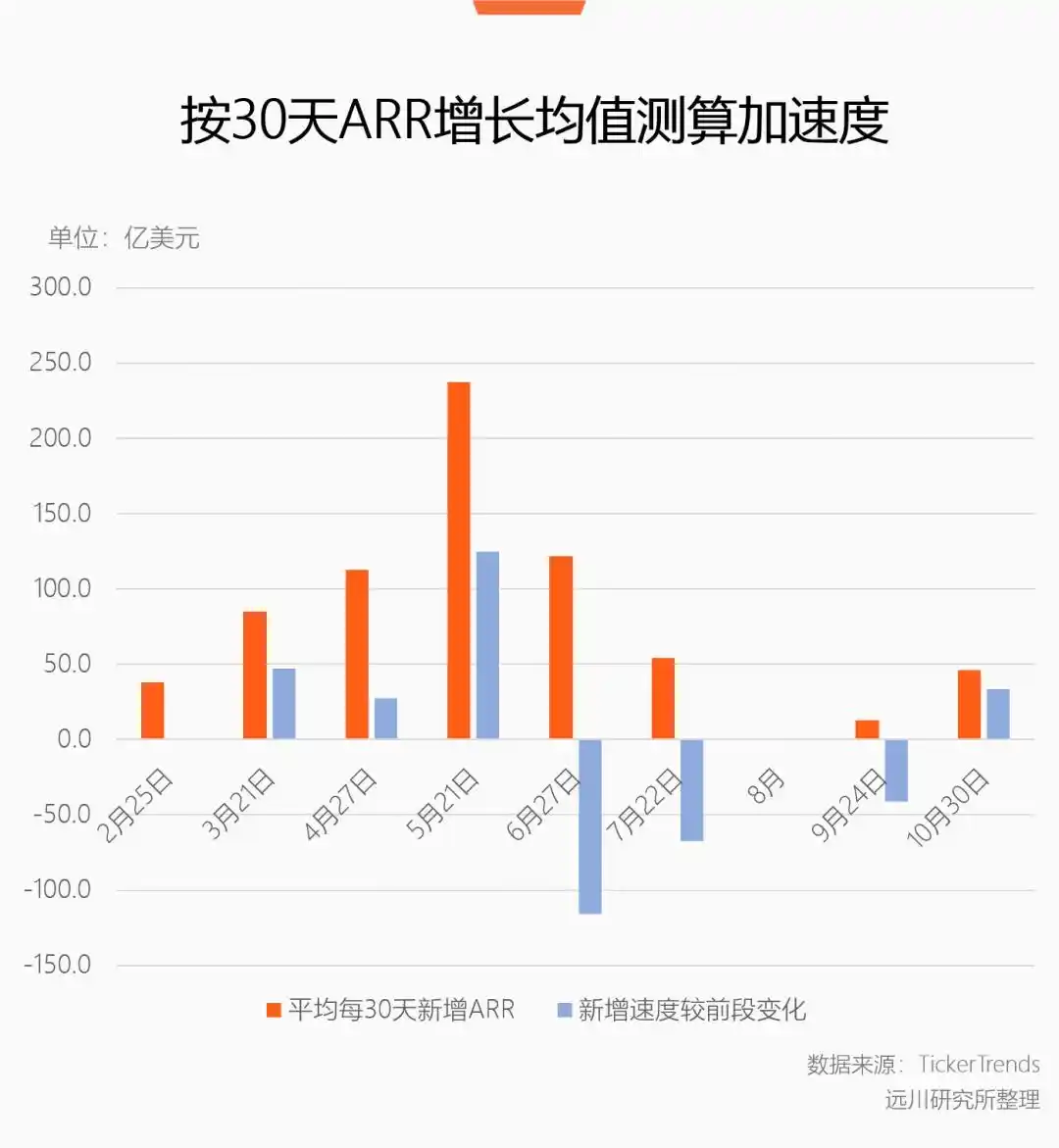
Thus, Reuters explicitly stated in October: the revision to $1.5 trillion stemmed from disappointment over Q3’s slowed sequential growth.
Using the same metrics to assess OpenAI’s growth acceleration reveals a similar downturn in Q3. By late September, OpenAI raised at a $1.4 trillion valuation. But by November, it secured funding at $1.25 trillion—11% below initial targets.
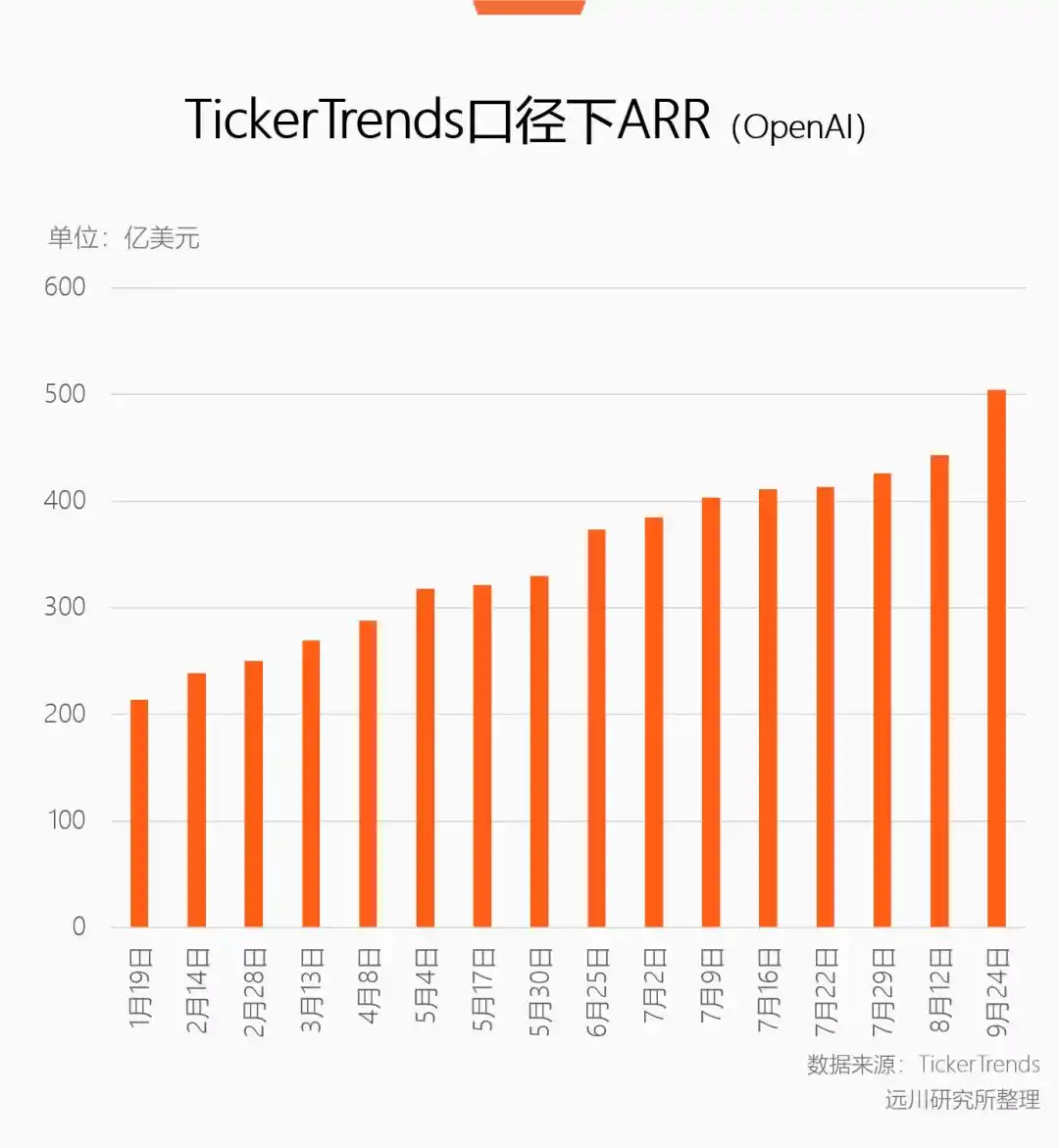
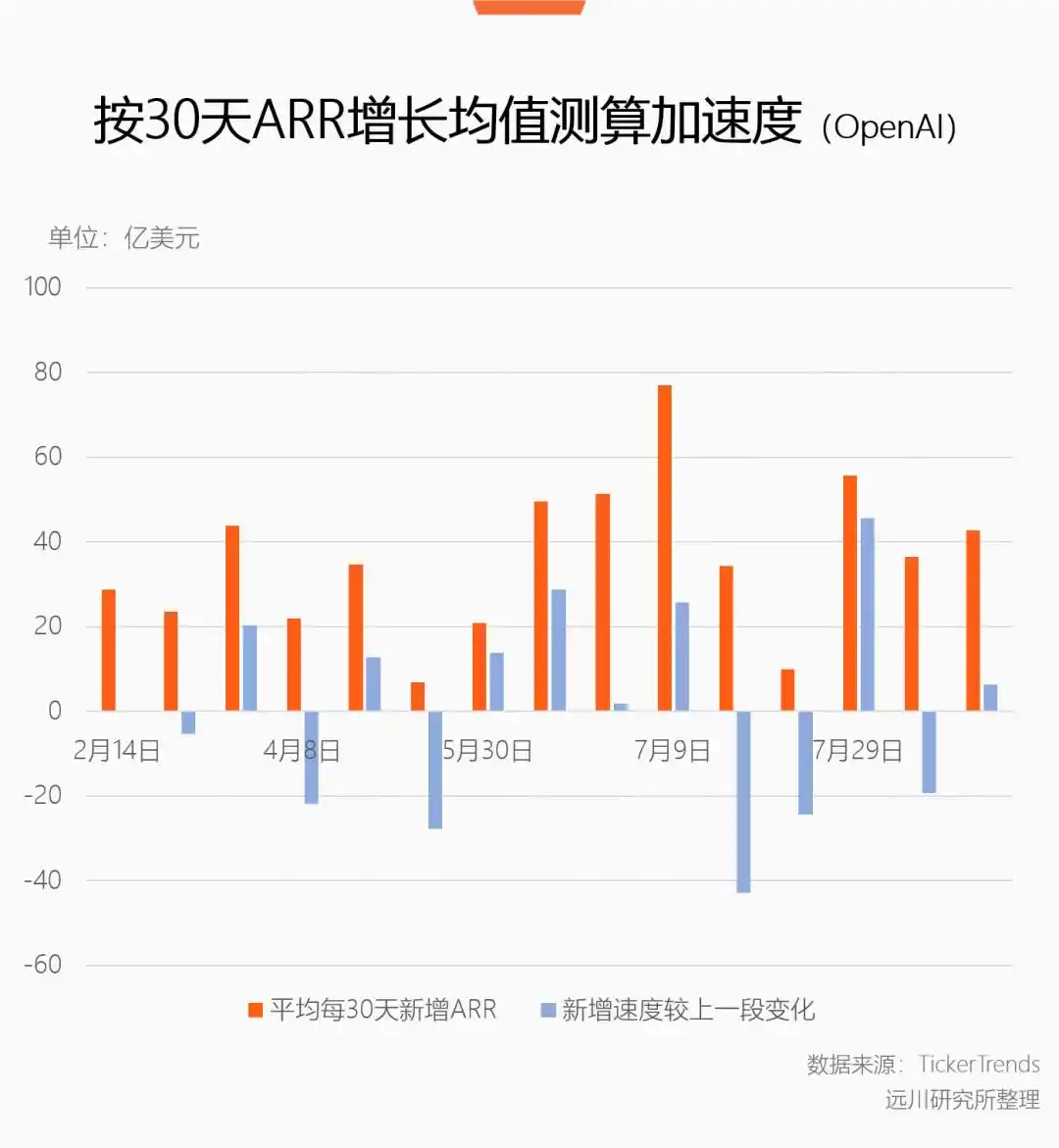
In short, after AI commercialization kicked off this year, growth far exceeded expectations. Greedy capital swiftly assigned sky-high valuations. Once the pace slows, institutions reassess whether the growth trajectory can be sustained.
By Q4, both companies accelerated again.
According to OpenAI CFO Sarah Friar, Q3 revenue was approximately $10B, up 50% quarter-over-quarter. Year-over-year run-rate revenue reached ~$5B, with total Q3 growth around 70%.
Anthropic grew faster. In October, ARR rose from $7.1B in September to ~$8.1B—a $1B increase in one month, surpassing the combined gains of the previous two months. While absolute acceleration doesn’t match early-year levels, momentum has reasserted itself.
Yet, despite renewed growth, Anthropic’s IPO pricing still declined. With acceleration back on track, what are investors still concerned about?
Pain Before Gain
In October, Anthropic’s ARR resumed its uptick. But the prospectus revealed another story:
In Q2, Anthropic generated $68B more in revenue YoY, while infrastructure costs for compute rose $22B. In Q3, revenue increased by $54B, but compute expenses surged $43B.
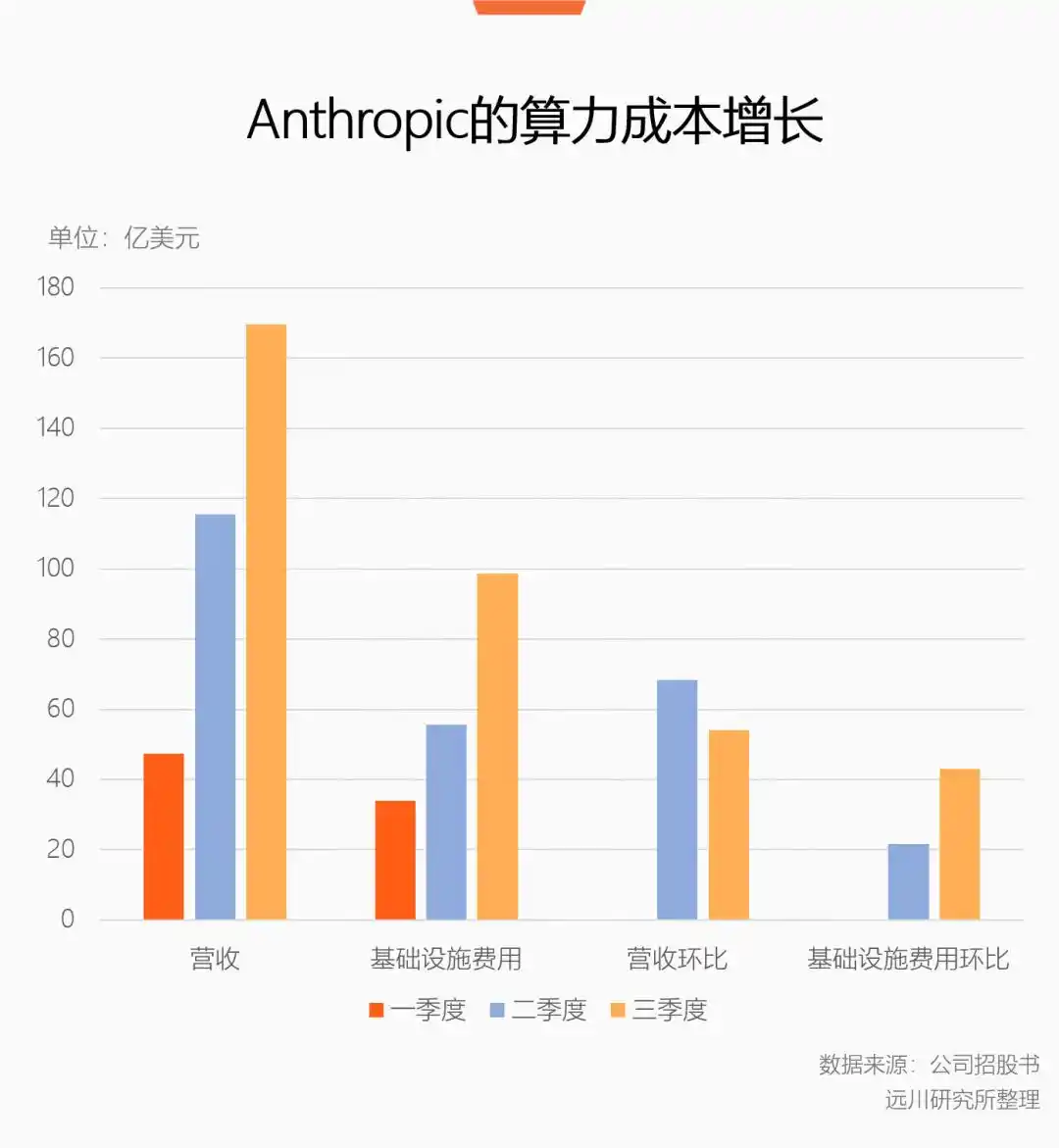
Revenue growth per period declined, while compute spending nearly doubled.
Over the past three quarters, Anthropic’s revenue growth YoY fell from 132% to 47%, while compute expense growth spiked from 15% to 77%. For every $100 in revenue, incremental compute cost rose from $16 to $80.
The prospectus explains: Anthropic utilized $5B in short-term compute capacity in Q3. Compute capacity comes in tiers—early-bird and scalper prices. Short-term leases command significantly higher rates than long-term contracts, eroding profit margins. To secure long-term pricing, compute must be committed 12–18 months in advance.
In the JPMorgan interview, Amodei blamed the company’s own success:
In 2024 and 2025, Anthropic achieved revenue roughly ten times that of the prior year, but compute investment failed to keep pace.
The pain of infrastructure lagging behind business expansion became manifest in the form of a $90.09B compute procurement commitment in the prospectus, with $45.16B expected to be spent before 2030.
Take Amazon’s contract: from May 2024 to April 2036, Anthropic commits to spending at least $11B on AWS.
If you get compute first, my model falls behind. Thus, large model firms race to lock in compute early via long-term contracts with cloud providers.
Last year, one guest; this year, ten tables; next year, twenty or even a hundred? The hotel says yes, but the contract must be signed now.
OpenAI did the same. In its September roadshow materials, OpenAI projected $350B in revenue by 2030, with cumulative revenue of $84B from 2026–2030. Meanwhile, it plans to spend $85.6B on compute during the same period.
In February, OpenAI and Amazon announced an expanded agreement—adding $10B to an existing $38B deal, totaling $1.3B in future commitments. The funds OpenAI is preparing to spend represent the accumulated unfulfilled obligations of cloud providers.
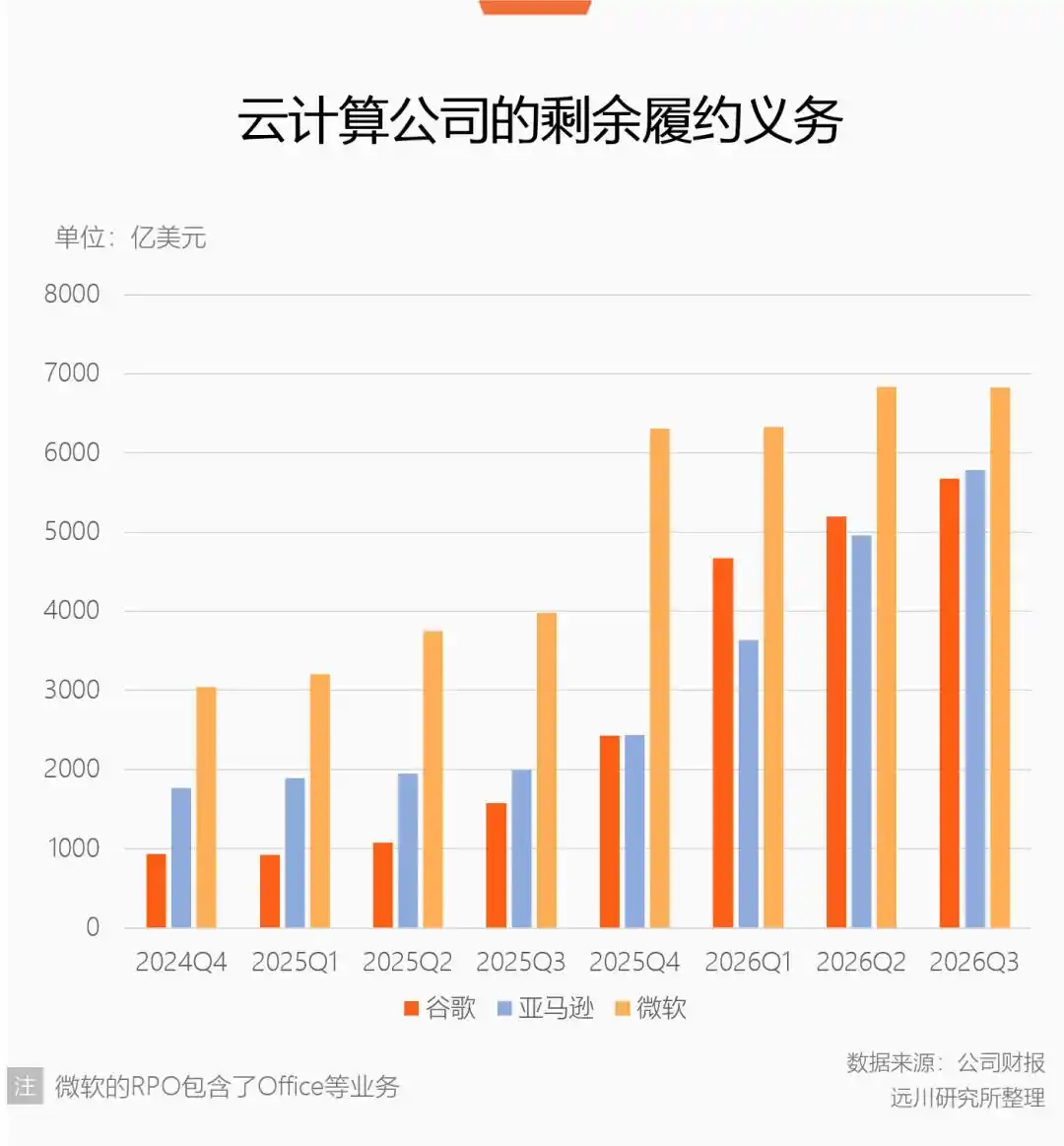
For Amazon to earn this money, it must first acquire land, build data centers, and power the chips. OpenAI can’t wait. Amazon can’t either—its own data center build-out lags, delivery can’t keep up, so OpenAI quickly pivots to Microsoft and Google.
To prevent losing orders to competitors, cloud providers incur massive capital expenditures—building compute faster means turning contracts into cash flow sooner.
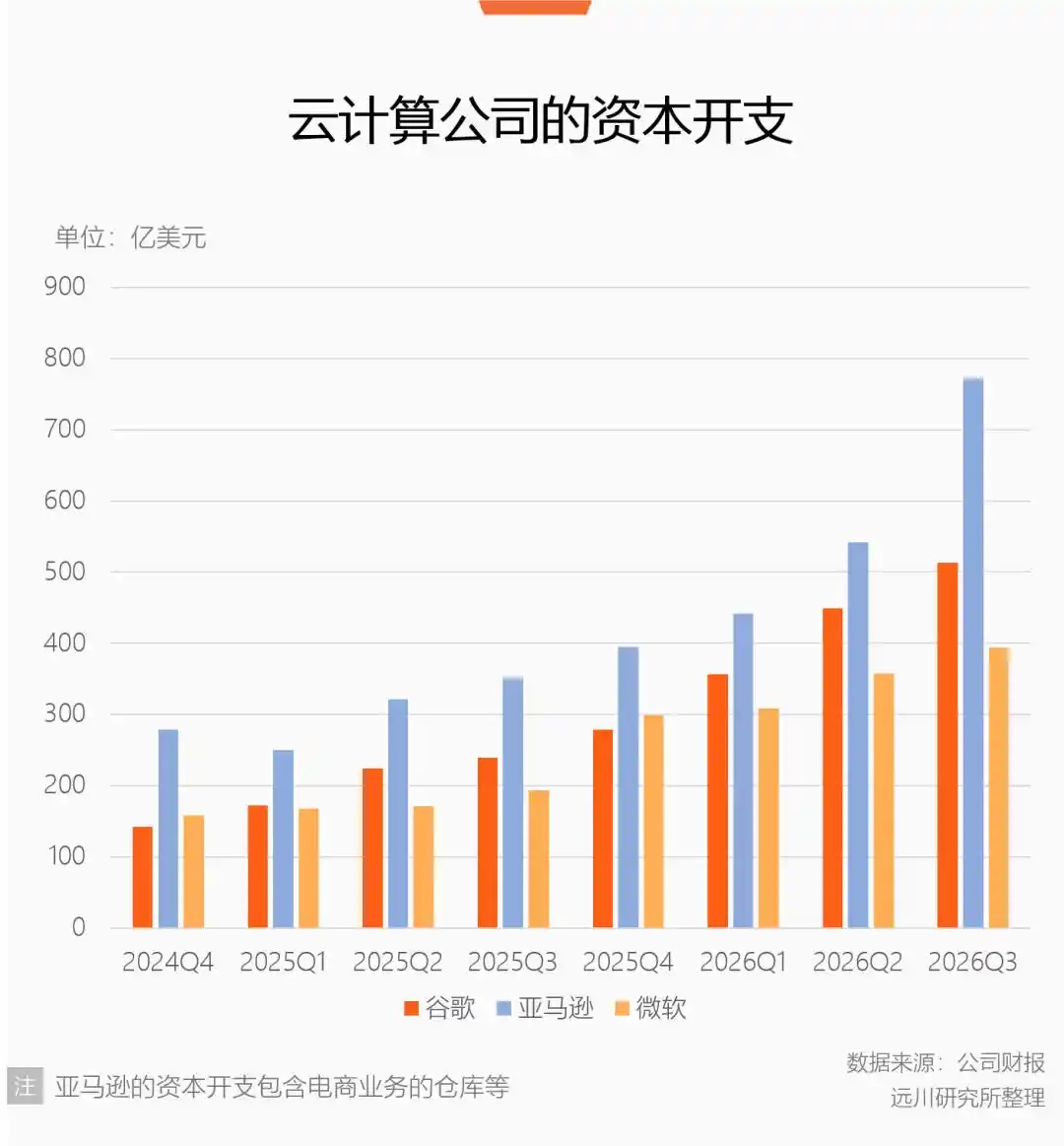
Supply-demand imbalance forces compute to be fought over, leading to pre-emptive investment across the entire supply chain.
Trillions in capex are already committed. Can revenue cover it? So far, optimism remains justified.
OpenAI CFO Sarah Friar ran the numbers:
In 2023, OpenAI generated $2B in ARR using 0.2GW of compute. By 2025, with 1.9GW, ARR exceeds $20B. Even before full commercialization, revenue growth outpaced compute growth.
Anthropic’s comparison is clearer: from Q1 2025 to Q3 2024, single-quarter revenue grew 45x, while compute costs expanded only 10x. On a per-dollar-revenue basis, compute expenditure dropped from $251 to $58 (lowest at $48 in Q2 2026).
Investors see growth and also observe compute costs being amortized by revenue. Patient capital is willing to invest and wait—but wants a lower price.
Loans Spark Revolution
Anthropic’s prospectus notes: some compute suppliers rely on third-party financing to purchase chips and expand capacity. Without sufficient funding or if financing costs rise, existing compute supply commitments could be disrupted, limiting Anthropic’s model capabilities.
In essence: suppliers are borrowing to survive. If they default, I can’t train models—and my stock will crash.
This is indeed true. Google issued $80.8B in debt in the first three quarters, including $45B in USD-denominated and $35.8B in foreign currency debt—no discrimination, all accepted.
Microsoft’s cash position is stronger, yet it still issued $25B in debt by late October—small steps, cautious moves. Amazon’s free cash flow turned negative over the past 12 months, with $115.1B in loan proceeds received in the first three quarters.
Worst off is Oracle: in the last fiscal quarter, operating cash flow was $23.1B, but capital expenditures consumed $28.5B. The $23.1B includes a $11.4B customer prepayment.
On the compute supply side, Anthropic has no major partnership with Oracle. What worries them is OpenAI. In July 2025, both parties announced a 4.5GW Stargate data center collaboration: OpenAI procures compute, Oracle raises capital to build.
Anthropic’s benefactor is Broadcom. Over the next five years, Anthropic plans to spend $125.2B on compute leasing but lacks immediate liquidity. Broadcom stepped in with a $42B credit line.
Broadcom isn’t naive. Financing customers to buy its chips locks in big clients early. Many of Anthropic’s data center projects rely on supplier guarantees.
Long-term contracts are signed ahead of time, but user revenue can’t be collected 90 years in advance. One end is today’s outlay; the other is long-term expectation. The gap is bridged by debt.
Thus, the entire supply chain becomes financially entangled. An industry turns into a guarantee ring—when the snowball rolls, every flake must sign a letter of assurance.
When OpenAI disclosed in October that ARR was nearing $50B (below the $70B expectation, later proven erroneous), it devastated semiconductor stocks—an illustration of this binding mechanism.
Reuters explicitly stated in November: due to Anthropic’s massive compute contracts and volatility in AI-related assets, valuations were downgraded. Institutions expressed clear concerns about the sustainability of the revolving financing structure.
In November, Yahoo Finance asked “New Bond King” Jeffrey Gundlach if he’d consider buying Anthropic’s debt. His reply: “I wouldn’t touch it.”
When a company simultaneously acts as a supplier, guarantor, and creditor to large model firms, any shortfall in commercialization risks losing orders, investment value, and creditworthiness. Slowing growth propagates from revenue to financing capacity.
Assume a company forecasts double-digit revenue growth next year and pre-funds compute accordingly. Even a 50% revenue increase looks strong—but relative to committed expenses, the cash shortfall may widen, and cash flow positivity delayed.
All financing hinges on high-growth assumptions. Commercialization speed must match expansion and debt repayment rhythms. Once leverage is introduced, everything changes. Anthropic must now chart a steeper second derivative curve.
AI is a great technological revolution. But remember: after revolution, repay the loans.
Source: Yuanchuan Research Institute
Disclaimer: Contains third-party opinions, does not constitute financial advice


Yushu Surges 629% on First Day of Trading, Humanoid Robots Sell 5,500 Units
08-19
Yushu's 61 Billion IPO: Who Will Make Money?
08-07
AI stocks down 40%-60%, yet NVIDIA's valuation is at a 10-year low
08-06
HBM Bottleneck Migration, NVIDIA Also Aims to Downgrade
08-06
AI Servers Fuel Demand for Minor Metals: Prices Surge Over 70% in Half a Year
08-06
AI is not a search bar—it's a supercomputer costing just a few dozen dollars
08-05Cloud vendors first declined then surged—why the divergence in AI assets?
08-05


