Chen Danqi Joins Noeri Part-time, the AI Startup That Just Raised $110 Million
Chen Danqi Joins Noeri Part-time, the AI Startup That Just Raised $110 Million

2026-11-17 12:06
Introduction: Yejin Choi bets on Plural Intelligence, enabling AI to autonomously improve workflows. Princeton University Associate Professor of Computer Science Chen Danqi joins a newly launched AI company.
Princeton University Associate Professor of Computer Science Chen Danqi has joined a recently unveiled AI startup.
Early this morning, Chen Danqi revealed on her social platform that she had been working part-time with Noeri for two months. She expressed strong enthusiasm for the team’s research direction, particularly in the application of AI to scientific discovery, aiming to empower every scientist to leverage AI for their most challenging research problems.
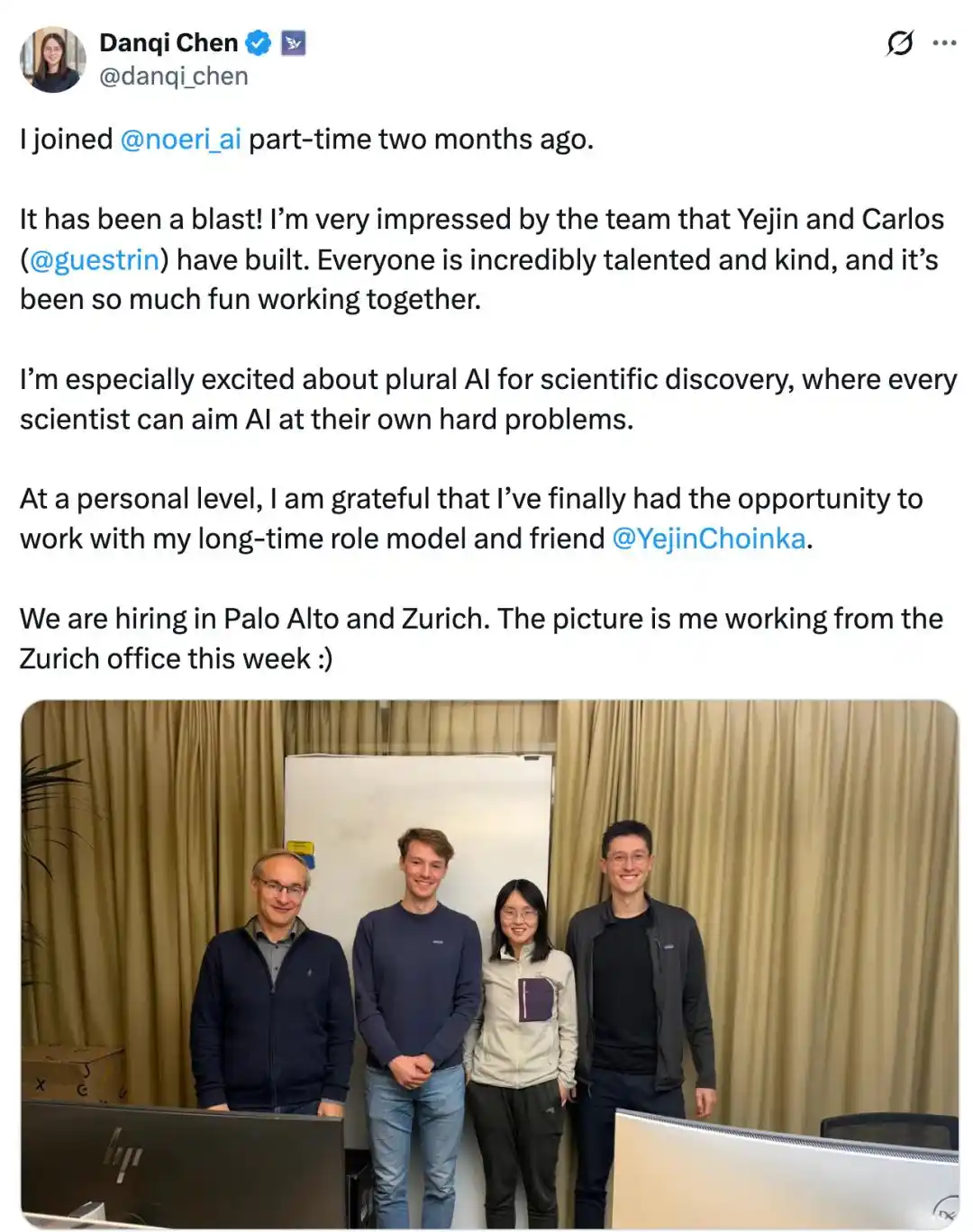
Noeri was co-founded by Yejin Choi and Carlos Guestrin, professors of computer science at Stanford University, with a focus on developing AI systems capable of continuous learning and self-improvement. The company aims to help enterprises harness their proprietary data and operational expertise to build customized AI solutions that continuously accumulate real-world experience and refine capabilities over time.
With its official launch, Noeri also announced a $110 million funding round led by Menlo Ventures, with participation from Madrona Venture Group, Kindred Ventures, Wing Venture Capital, and NEA, while NVIDIA, Cisco Investments, Snowflake, and others joined as strategic investors.
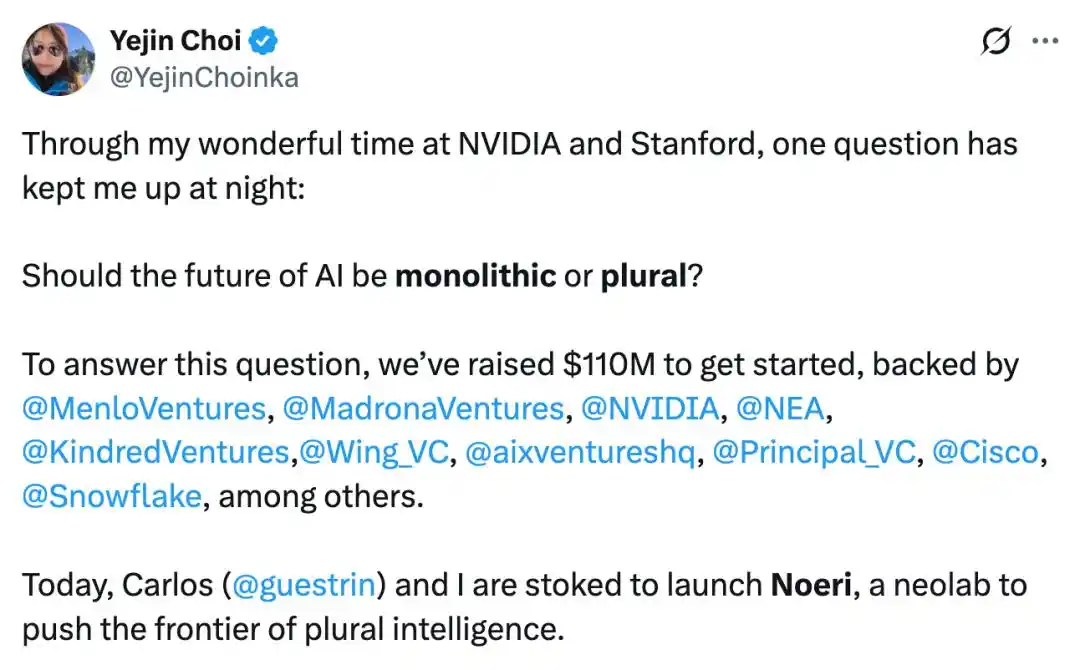
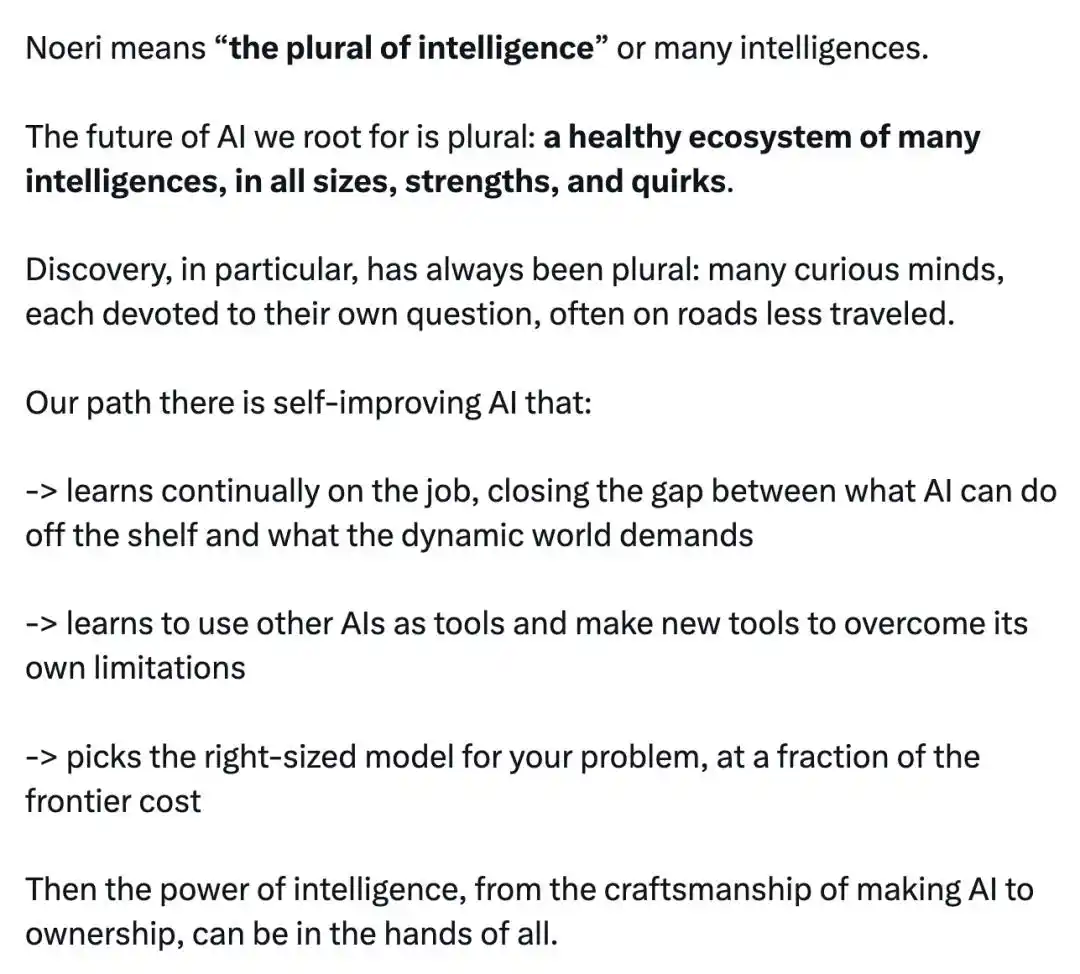
The team has introduced a distinctive concept: Plural Intelligence. In their view, future AI should consist of diverse intelligent systems of varying scales and specializations, allowing each organization and individual to create, control, and continuously enhance their own AI.
Chen Danqi Joins Noeri
What's Behind the Noeri Team?
The two core founders of this venture have deep roots in the AI research community.
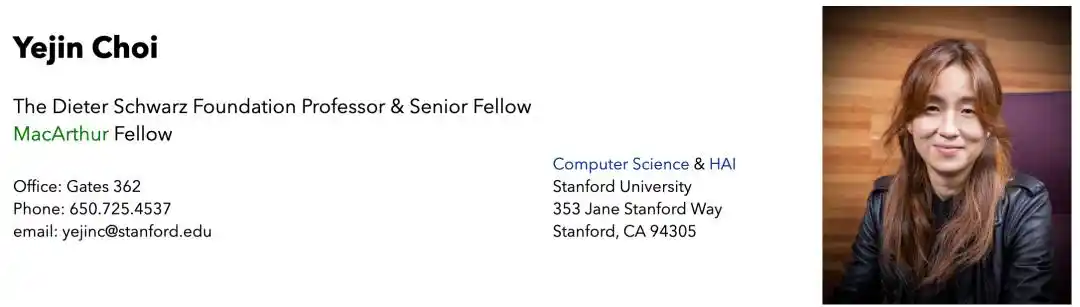
Yejin Choi is a professor of computer science at Stanford University and a senior researcher at Stanford HAI. Her long-standing research spans commonsense reasoning, natural language processing, large language models, and AI value alignment. She previously served as a professor at the University of Washington, senior research manager at the Allen Institute for Artificial Intelligence (Ai2), and held leadership roles including Senior Research Director and Distinguished Scientist at NVIDIA. She officially joined Stanford University in January 2025.
The other co-founder, Carlos Guestrin, is a seasoned scholar and entrepreneur in machine learning.
If you’ve used machine learning tools, you’ve likely heard of XGBoost—co-created by Guestrin and Tianqi Chen—an open-source tool widely adopted across industries. He also co-founded Turi, a machine learning company acquired by Apple in 2016. After joining Apple, Guestrin served as Senior Director of Machine Learning and AI, playing a key role in establishing Apple’s AI and machine learning research center in Seattle.
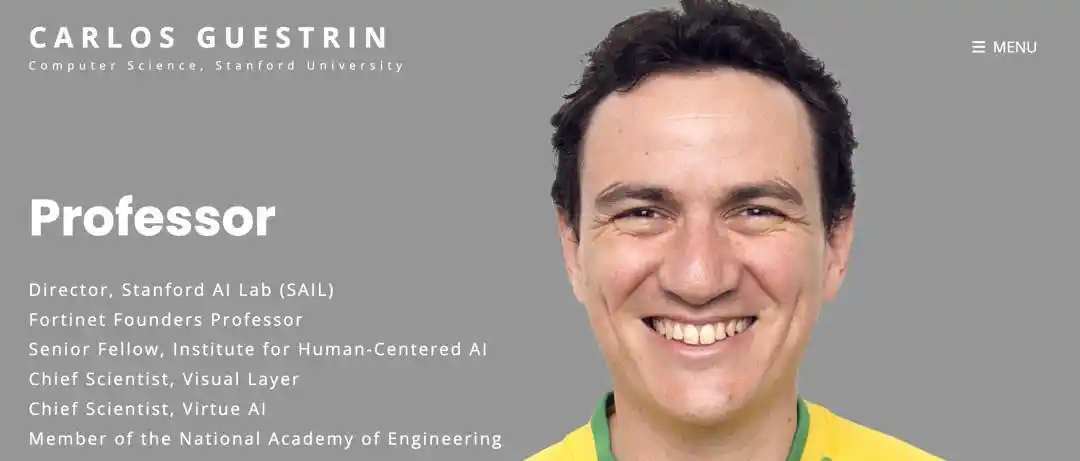
Today, both serve as Co-CEOs of Noeri.
Chen Danqi’s addition brings another critical research dimension to the team. She currently holds the position of Associate Professor in the Department of Computer Science at Princeton University and co-leads the Princeton NLP Research Group. She also serves as Deputy Director of the Princeton Initiative on Language and Intelligence, which focuses on foundational research into large AI systems such as LLMs, and is one of the authors of RoBERTa.
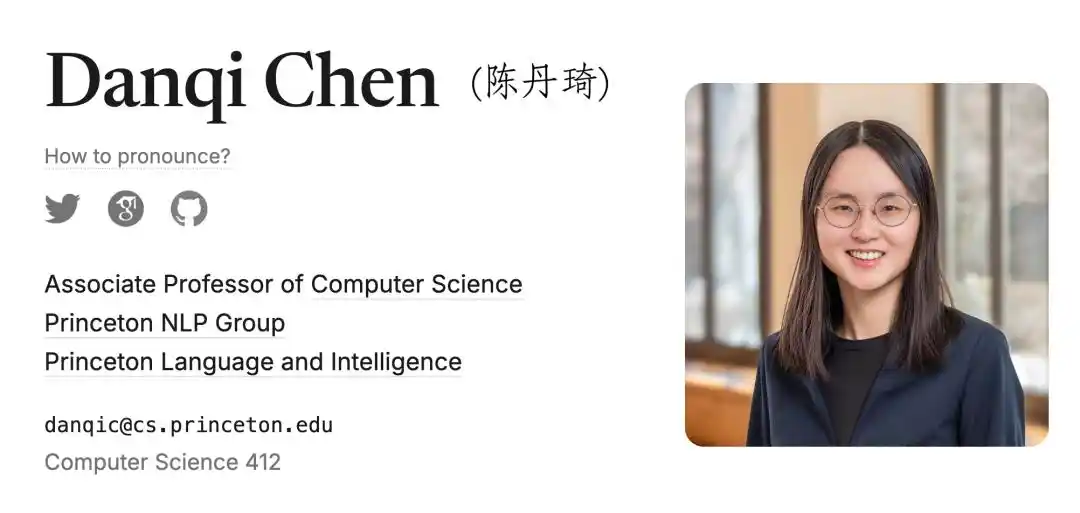
In her own post, Chen Danqi specifically mentioned how thrilled she felt to collaborate with Yejin Choi—someone she has long admired and considered a close friend.
From a team composition standpoint, Noeri brings together researchers from natural language processing, machine learning, reinforcement learning, agents, and scientific computing, clearly aiming to advance academic research and practical AI product development in parallel.
Enabling AI to Improve AI
How Is Noeri Going to Do It?
Noeri defines itself clearly: building AI systems capable of continuous learning and iterative improvement.
Currently, most AI models have fixed parameters after training. Once deployed within enterprises, they often require manual adjustments to prompts, tool invocation patterns, or even full retraining when confronted with new business data and workflows.
This means companies typically need a dedicated AI engineering team to make AI truly adapt to their operations.
Noeri aims to delegate this task to AI itself.
According to the company’s product overview, Noeri will analyze an enterprise’s internal data and workflows, optimizing the entire AI system around specific tasks. The scope of its adjustments includes:
Instructions & Skills: Refining instructions, skills, and execution strategies based on actual task performance.
Tools & Orchestration: Adjusting tool configurations and invocation methods to optimize collaboration among different models and tools.
Model Selection: Choosing more suitable models for specific tasks depending on complexity and cost constraints.
Model Optimization: Further refining model architecture or even adjusting low-level parameters when necessary, to better align models with enterprise-specific requirements.
Every change comes with explanations and requires human review and approval. Noeri compares this process to code review.
It supports both closed-source and open-weight models and can adapt to emerging models. Customers retain ownership of their data, as well as of developed workflows and models, though they must still comply with third-party model licensing agreements.
Noeri aims to enable AI to accumulate experience through real-world use. The system learns from enterprise data, workflows, and interactions during task execution, iteratively enhancing its own capabilities.
Each experience and correction from a task becomes potential input for the next round of optimization.
In terms of product form, Noeri resembles an AI engineer capable of sustained work: researching existing workflows, identifying improvement opportunities, proposing optimizations—all subject to human oversight.
Plural Intelligence
Why Is It Noeri’s Core Philosophy?
The name Noeri itself reflects the founding team’s vision for the future of AI.
The company interprets it as “the plural of intelligence.” In a vision article published by Yejin Choi and Carlos Guestrin, the two outline two divergent paths for AI development.
One path involves a single entity developing and monopolizing a superintelligent AI, leaving all others dependent. The other envisions a diverse ecosystem composed of numerous AI systems of varying sizes and capabilities. Each system is specialized for specific regions, communities, or problems, shaped by those who truly understand them. They favor the latter approach.
Beneath this lies a very practical business challenge.
An enterprise may require AI to handle financial analysis, customer service, R&D design, and more—each demanding different model characteristics. If all tasks are handled by the most expensive cutting-edge models, costs become unmanageable; if cheaper, less capable models are used, performance may suffer.
Noeri seeks to find optimal combinations through model specialization and agent collaboration. For instance, a smaller model could manage orchestration, dynamically calling upon other models and domain-specific tools as needed. As it accumulates experience with specific tasks, it continuously optimizes the relevant models and workflows. Different AIs take on distinct roles and evolve iteratively through real-world operation.
This philosophy extends to scientific research.
Chen Danqi highlighted in her post her particular interest in Plural Intelligence’s application in scientific discovery. For scientists, research problems are often highly specialized, and off-the-shelf general-purpose models may lack sufficient domain knowledge.
If AI could continuously learn around a specific research problem—remembering past approaches and outcomes—and enable multiple specialized agents to collaboratively hypothesize, test solutions, and refine directions, scientists would be freed to focus more on framing questions and validating discoveries.
This is exactly the direction Noeri aims to explore.
Source: Machine Heart
Disclaimer: Contains third-party opinions, does not constitute financial advice


The AlphaGo Moment in Cybersecurity, or Starting from These 466 Agent Matchups
12 days ago
Yushu Surges 629% on First Day of Trading, Humanoid Robots Sell 5,500 Units
08-19
Yushu's 61 Billion IPO: Who Will Make Money?
08-07
AI stocks down 40%-60%, yet NVIDIA's valuation is at a 10-year low
08-06
HBM Bottleneck Migration, NVIDIA Also Aims to Downgrade
08-06
AI Servers Fuel Demand for Minor Metals: Prices Surge Over 70% in Half a Year
08-06
AI is not a search bar—it's a supercomputer costing just a few dozen dollars
08-05


