4,999 RMB, robots capable of shooting Vlogs on the go are now available for sale
4,999 RMB, robots capable of shooting Vlogs on the go are now available for sale

2026-11-16 18:06
Introduction: The DJI-style engineering roadmap positions embodied intelligence to first land in companionship and follow-shot applications. The follow-shot robot Beni, which shattered robotics records on international crowdfunding platforms, is now officially available in China.
Beni, the follow-shot robot that broke robotics records on international crowdfunding platforms, is now officially available in China.
Official pricing for the standard version is 4,999 RMB—equivalent to a flagship smartphone.
It can run, jump, and perform backflips on command, its two large eyes blinking rhythmically.
If it only performed these motions, it would merely be an expensive high-end remote-controlled toy.
What’s most astonishing is—
it can shoot vlogs for you.
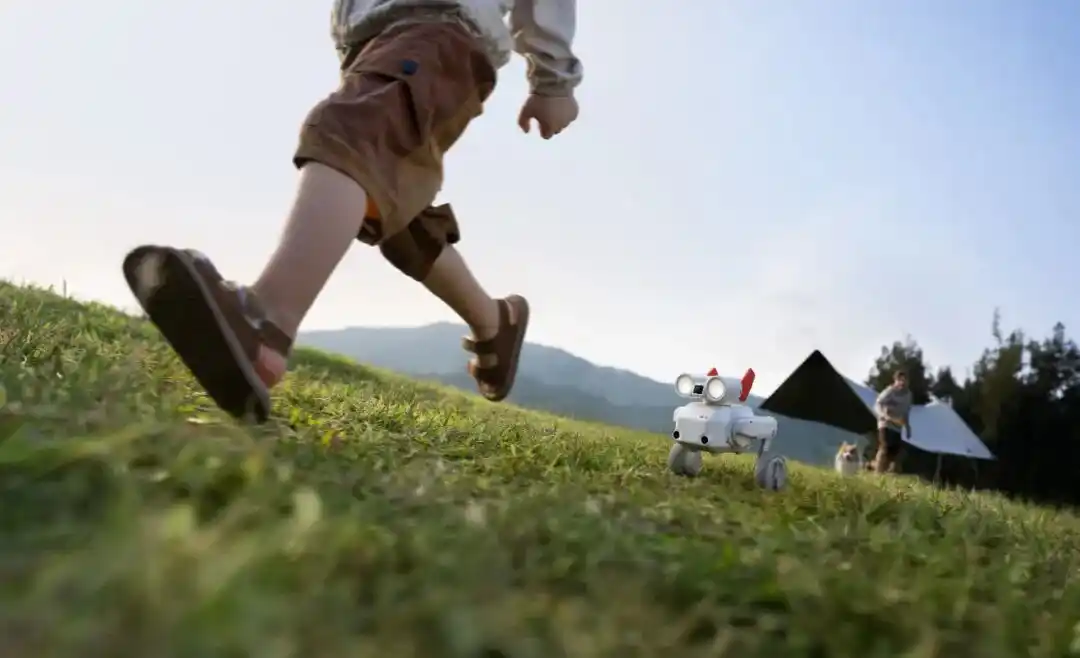
Whether running, skateboarding, or chasing your kids around, wherever you go outdoors, it races just behind you, reaching speeds up to 28.8 km/h.
Wait, what about stairs?
This robot simply jumps straight up.
Even if it accidentally tumbles face-first, it bounces right back up and resumes filming.

And it comes with built-in 4K stabilization...
Oh no, my photography skills are now worse than a dog’s.
Seriously, whether it's the explosive success on overseas crowdfunding, the approach of turning hardcore engineering into geeky consumer toys, or the overall industrial design quality, everything about this product bears a striking resemblance to early-stage DJI.
Naturally, this isn’t coincidental.
The team behind it is MiaoDong Tech, a consumer robotics startup founded less than two years ago, with its founder originating from the DJI ecosystem.
Core team members even include veterans with experience developing Tesla’s Optimus humanoid robots.
It’s quite ironic.
Elon Musk constantly talks about bringing embodied intelligence into homes, humanoid robots, etc.,
yet it’s being pioneered by a follow-shot robot entering the consumer market first.

The Pocket-Sized Follow-Shot Robot
To be honest, until my boss placed the delivery box on my desk, I had done zero research on this device.
Initially, I had no expectations—I thought it was just another iron lump seen in videos.
But upon opening the package, wow, it actually looks rather adorable.
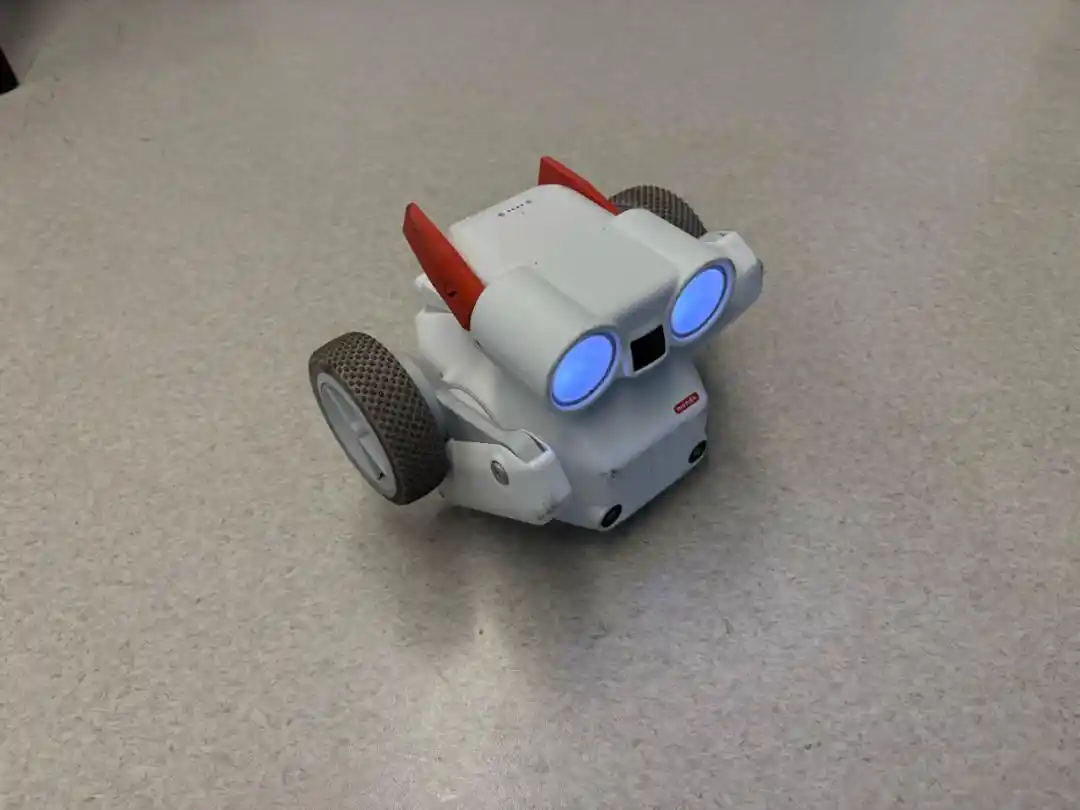
Its body size is roughly equivalent to two palms, measuring around 20 cm in both length and width—about the size of a portable lunchbox when standing upright.
It’s incredibly lightweight—just 1.75 kg—lighter than the Win laptop I carried during university.
Scan the QR code on your phone, download the dedicated app, and it’s ready to roll.
The control interface resembles a racing game.
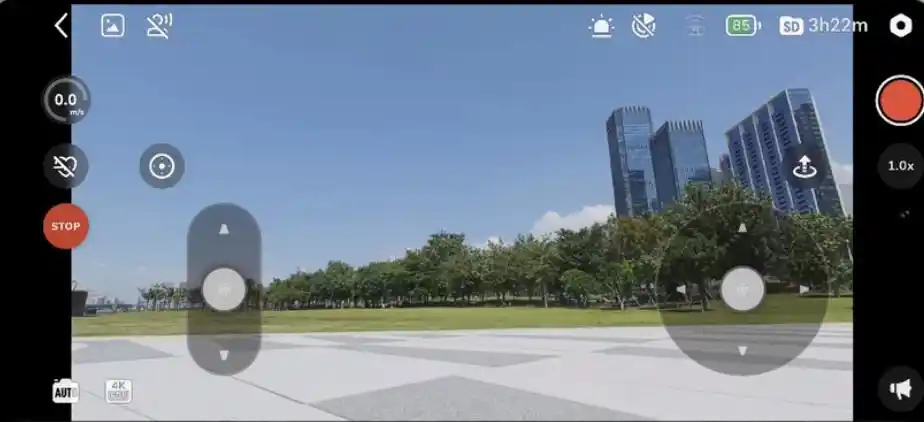
But honestly, staring at the phone screen while controlling it at high speed can easily make you dizzy.
And if you’re buying it for your kid, do you really expect them to keep borrowing your phone every day?
The official team clearly anticipated this.
The package includes a small smartwatch (bushi).
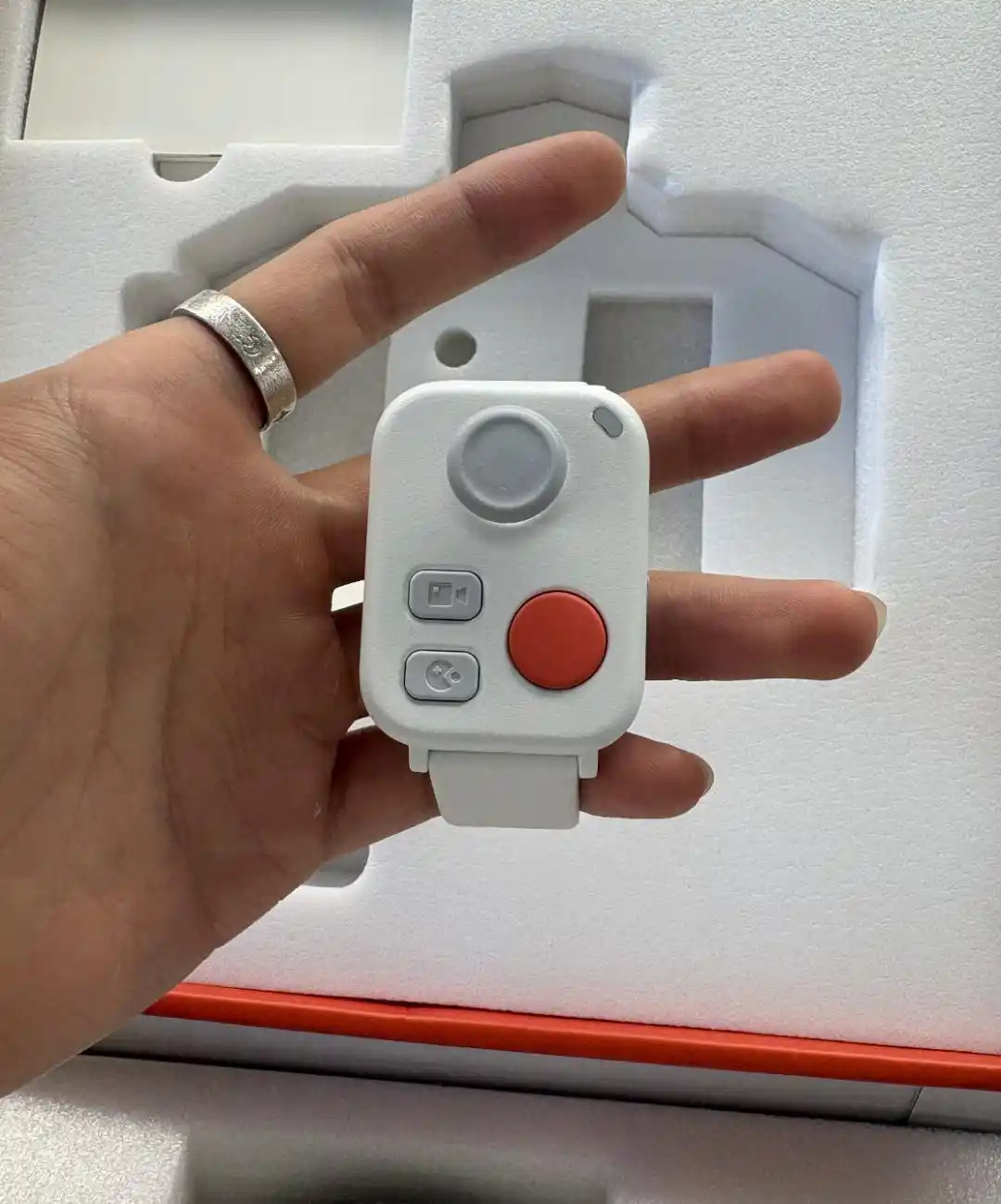
It looks remarkably like Kamen Rider’s transformation device. Worn as a watch daily, it can also be detached and held in hand for direct control.
All core functions within the app can be fully managed via this wristband.
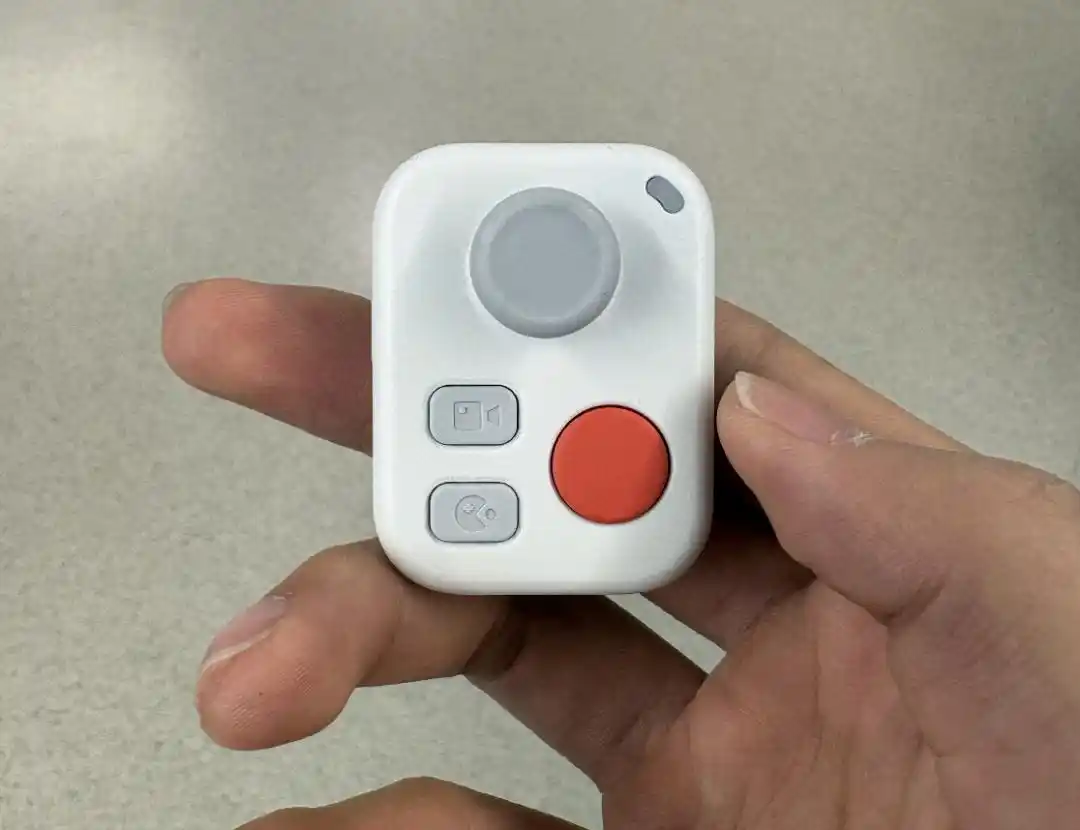
Honestly, using this watch for blind operation is far more enjoyable than fiddling with virtual joysticks on a glass screen.
After receiving the watch, I never opened the phone app again—except to export edited videos.
Of course, if you’ve never operated a wheeled robot before, there’s definitely a learning curve.
I myself spent an entire night experimenting at my desk and in hallways, crashing countless times, only beginning to grasp the flow of human-machine synergy the next morning.
Luckily, its motion control has absurdly high tolerance.
The balance algorithm is rock-steady; I deliberately tripped it, pushed it, kicked it—it wobbled slightly but instantly stabilized like a seasoned dog.
Even if it truly falls over, it springs back up in half a second—a perfect backflip—standing upright again.
The first time I saw this move, I was completely stunned.

And here’s the craziest part: you can’t harass it endlessly—the little guy has a temper.
When annoyed, it grunts, hops up forcefully in protest.
Inside the chassis, there are hidden emotional Easter eggs triggered randomly over time.
In short, it’s genuinely endearing—far cuter than a cold metal robot dog, making it impossible to resist wanting to kick it.
(ps: No abuse of robots allowed!!)
Truthfully, it’s extremely popular.
On the first afternoon, the entire editorial team lost focus—everyone gathered around my desk watching my clumsy drift stunts.
On my way home, during rush hour in Zhongguancun, my back-and-forth turns drew stares from everyone.
Several electric scooter delivery riders even stopped mid-road, one foot on the curb, just to watch Beni leap up stairs.
A backpack-wearing guy sidled up mysteriously:
Bro, working on embodied intelligence?
Sorry, I’m just a robot driver with exactly three hours of driving experience.

A Legged Pocket Camera
Let’s get real.
If its capabilities were limited to running and jumping, it’d still just be a cool consumer gadget.
Paying 4,999 RMB for a giant remote-controlled car? That’s a tough decision for most average workers.
Only one core function makes me believe it truly possesses practical productivity potential—
Long-press the camera button on the watch face, and the follow-shot robot enters autonomous tracking mode.
Beni’s two eyes immediately turn red, spinning in place to lock onto the controller wearer, then trotting obediently behind you.
Tap the capture button once, and the camera activates.
You run forward, it follows right behind; you stop, it brakes smoothly within a safe distance; you suddenly change direction, it automatically adjusts lens angles from the side and rear.
To put it simply, it’s like a DJI Pocket 3—but with legs.

I don’t know what your typical outing routine is, but personally, I absolutely hate pulling out my phone to take photos when traveling or socializing.
That’s why my WeChat Moments page remains largely blank.
Documenting life is great, but the act of pulling out the phone disrupts immersion too much.
Imagine a perfect sunset, or you’re playing with your child on the lawn, or riding mountain trails with old friends—those moments of deep flow are rare.
But if you’re constantly thinking, “I need to film content for Xiaohongshu,” your instinct becomes: pull out the phone, unlock the screen, open the camera, raise your arm, frame the shot, tell others to stay still.
It truly ruins the atmosphere.
To solve this fragmentation in recording, I’ve experimented with countless devices—from jotting notes in a memo app, to using voice-to-text input via DouBao, even buying Feishu recording beans to hang on my collar.
Yet the outcome was always the same: whenever something truly exciting happened and I was fully immersed, I’d inevitably forget to “start recording” or “hold up the phone.”
So you can imagine how much I longed for an automatic tracking hardware device.
Beni fits the bill perfectly.
Drop it on the ground, press a button on the wristband, and from then on, you can treat it like it doesn’t exist—just let it film.

Plus, thanks to integrated software-hardware design, post-production worries are eliminated.
The companion app features MondoCut, an intelligent editing tool that auto-selects highlight clips and applies templates for one-click export.
Naturally, since this product targets the companionship segment, home use is primary—privacy is therefore crucial.
Beni’s visual computation runs entirely on-device, locally. The body includes 32GB onboard storage and supports microSD expansion. It works offline, no internet required.
Unless you actively use cloud-based templates, recorded footage never leaves your device.
Just live your life fully—let the dog on the ground handle the rest.

Naturally, as a first-generation product, there are some flaws.
First, automatic obstacle avoidance isn’t foolproof—unexpected obstacles still cause collisions.
Like glass doors…
But luckily, it comes with a protective case—highly recommended to use immediately upon receipt.
Second, avoid overly crowded environments—there’s a risk of losing track, mainly because psychologically, you’ll never stop glancing back.
Finally, the ever-present issue: battery life.
One battery lasts 1.5 hours.
I think that’s already impressive for such a compact form factor.
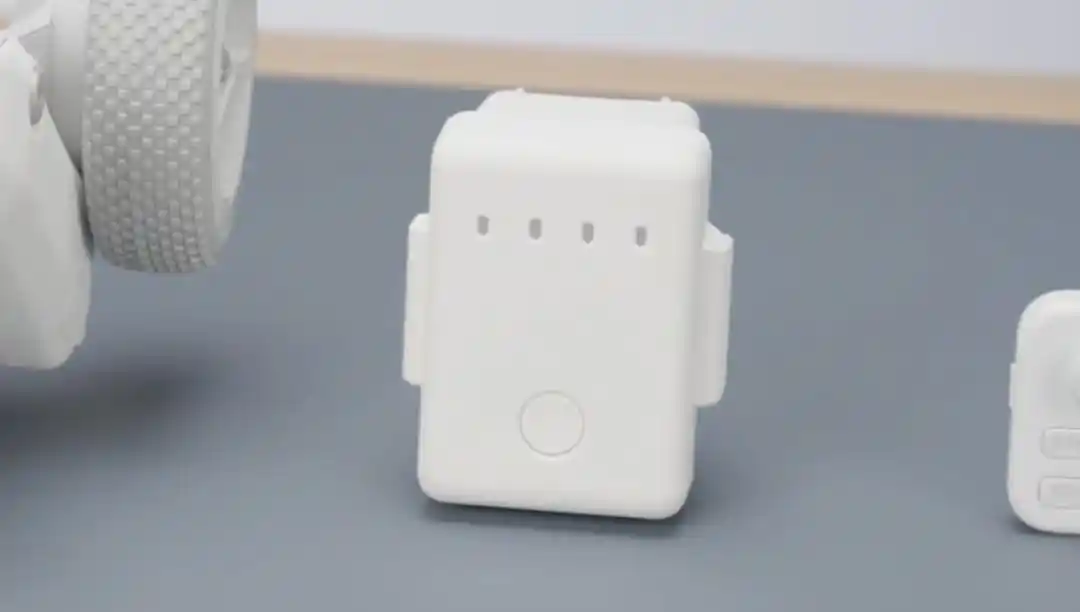
But if you plan to use it all day outdoors, consider spending an extra 800 RMB on the Explorer Edition, which includes two batteries for seamless swapping.
Oh, and one feature almost slipped my mind.
Beyond being a photographer, Beni has another surprisingly useful application.
On the side of the wristband controller is a physical "Pac-Man" icon button. Long-press it, and the robot enters interactive gameplay mode.
I initially assumed such “human-robot interaction games” would just involve rotating in place or playing preloaded electronic music.
But after trying it, I realized—this is actually real gaming, complete with joystick controls!
One of the most fun modes is called “Find the Coins.”
You can think of it as a 3D physical-world version of Minesweeper.
Once activated, the algorithm randomly generates five invisible virtual coins within a few meters around you—no visible markers. You must guide Beni via the wristband to explore the area.
The closer Beni’s wheels get to a hidden coin, the faster the beeping sounds from both the wristband and chassis become, and the eyes flash rapidly. You adjust direction by following the rhythm until the wheels precisely land on the virtual coordinates—then Beni spins joyfully in place.
There’s also a two-player game called “Tug-of-War.”
Two players hold their phones and wristbands respectively. After a countdown, whoever shakes their wrist faster wins.
Beni reads the data difference in real-time—faster, more forceful shaking pulls the robot toward that player.
Then you see this bizarre scene—
Two people who normally bury their faces in short videos while eating dinner desperately wave their arms in a shopping mall, sweating profusely, trying to make this iron dog run toward them.

But in that moment, I felt deeply moved.
People always claim kids are addicted to phones and tablets, but I’ve never believed children are naturally obsessed with glass screens.
To be honest, often it’s because the real world today feels so dull.
Engaging offline experiences will always attract ten thousand times more than online ones.
On the first evening, I took Beni to Darencheng. Near the Apple Authorized Store entrance, almost no one passed by without stopping to glance.
It was so popular—even toddlers learning to walk chased after Beni.
I panicked, accelerating furiously with the joystick.
(Sorry, I was genuinely terrified—what if it got damaged and I couldn’t explain it back at work o(╥﹏╥)o)
But it turned out I was overthinking it—kids were friendly toward Beni, just like a real dog.
Parents nearby asked me what it was called, how much it cost, where they could buy it.
Then I did what I’m doing now—repeating my research findings, explaining everything to them.
Truthfully, without this robot, I wouldn’t have had the energy to wander aimlessly around the office area all night after typing nonstop on the computer.
Spending too much time in front of screens, I often mistakenly assume the screen is my interlocutor.
But actually, people are the ultimate endpoint of every experience.
People remain the most critical variable in the AI era.
A DJI Veteran’s Embodied Entrepreneurship
Finally, let’s dive deeper into the company behind this.
After playing with Beni for a while, I became genuinely curious about this startup.
With so many companies building follow-shot robots, others focus on industrial inspection, material transport—
why did this team specifically obsess over follow-shot cinematography?
When I reviewed their team background, wow—
Turns out they’re from the DJI ecosystem!!
The company behind Beni is MiaoDong Tech, founded in January 2025 in Nanshan, Shenzhen.
CEO Gao Jianrong previously led DJI’s RoboMaster robotic combat business and was a core veteran in DJI’s supply chain operations.
Co-founder and CTO Yang Shuo earned his BSc and MSc under Professor Li Zexiang at HKUST, served as DJI’s Technical Director, later pursued robotics at Carnegie Mellon University (CMU), and joined Tesla directly after graduation as a core control and algorithm engineer on the Optimus humanoid robot team.
Additionally, the core team includes key veterans from DJI’s embedded low-level technology division, Li Haonan.
Embracing the Robot’s Clumsiness
Everyone says the era after LLMs is the age of embodied intelligence.
But in this era, which companies and products will be the first to mass-produce and enter mainstream consciousness?
No consensus yet.
Unavoidably, embodied intelligence technology itself is still in its steep climb—foundation unstable, making product predictions nearly impossible.
Even more challenging: in the physical world, the problems and interaction boundaries robots face are far harder to define than writing code in a virtual digital realm.
Everyone is exploring different paths, but what I found interesting about Beni is its unique solution.
Economics seeks optimal solutions within constrained budgets. I believe Beni embodies this principle—product-layer refinement resulting in a perfect intersection of “emotional value – utility – cost.”
First, utility.
Autonomous videography is genuinely useful. Even after novelty wears off, it won’t just sit gathering dust in the living room.
Then, something often overlooked—price.
Software is easy to acquire users, but hardware, especially in current mainstream business models, is a one-time purchase. And when it’s a novel product, users are highly sensitive to cost.
Yet you can’t lack users—early products inevitably have bugs, and users demand unexpected features. Without launching, iteration is impossible.
Thus, a sweet spot must be found.
Beni’s price point is ideal—4,999 RMB. Bite the bullet, and ordinary people can afford it. This brings physical AI down from the lab pedestal into everyday life.
And truly, it delivers tool value—multi-terrain follow-shooting.
Second, I believe one thing is critically important: emotional value.
Beni can play with you.
Don’t underestimate the power of emotional value, brothers!!
People constantly complain when robots will finally start working, but honestly, in the short term, this device can’t really work—forcing it would only make sense in standardized B2B scenarios, taking over industrial assembly lines.
For now, across the industry, the fastest breakthrough for embodied intelligence in real-world applications likely requires emotional value.
This is inherently a form that can legitimately be “imperfect.”
If current tech can’t fully solve it, why pretend? Pretending to be Jarvis is just pure AI JiaHao.
Beni offers a new paradigm.
From the very beginning, it presents itself as a lovable, slightly foolish pet—perfect.
As long as it resolves a minor pain point based on relatively mature frontier technologies and genuinely integrates into ordinary people’s daily lives—
we’re willing to accept a robot’s clumsiness.
Source: Quantum Bit
Disclaimer: Contains third-party opinions, does not constitute financial advice


HuggingFace's "AI Duck" Goes Viral, Boosting Chinese Chip Supplier Rockchip
09-02
Yushu Surges 629% on First Day of Trading, Humanoid Robots Sell 5,500 Units
08-19
14 Executives Depart, Horizon Unleashes a Robot Legion
08-11
Yushu's 61 Billion IPO: Who Will Make Money?
08-07
Former Huawei Genius Youth: Building 5,000 Reliable Robots This Year Won't Exceed 3 Companies
08-05
China's climbing robotic vacuum cleaner captures 70% of the global market
08-05Musk spent nearly half of the Tesla earnings call discussing AI and robotics, with automotive business accounting for less than one-third of total revenue
08-05


