Don't want to pay $39 a month? He cracked the treadmill with Claude.
Don't want to pay $39 a month? He cracked the treadmill with Claude.

2026-11-15 20:07
Introduction: AI is weakening the hardware subscription barrier, but also pushing against legal and copyright red lines. For Old Fox, monthly expenses on software subscriptions—such as AI tools, cloud storage, and news services—are unavoidable. In today’s world, one-time purchases are no longer popular; essential services still require subscriptions.
For Old Fox, there’s always a need to pay for software subscriptions each month, like AI platforms, cloud drives, or information services… Nowadays, the era of perpetual licenses has faded—necessary services must still be subscribed to.
Having already paid for a membership, users naturally assume cross-platform compatibility. But some vendors refuse to play fair—despite owning a premium subscription to one software, users are still charged when trying to use it on another platform?
Have you ever experienced this? Recently, a Reddit user overseas ran into exactly this frustrating situation.

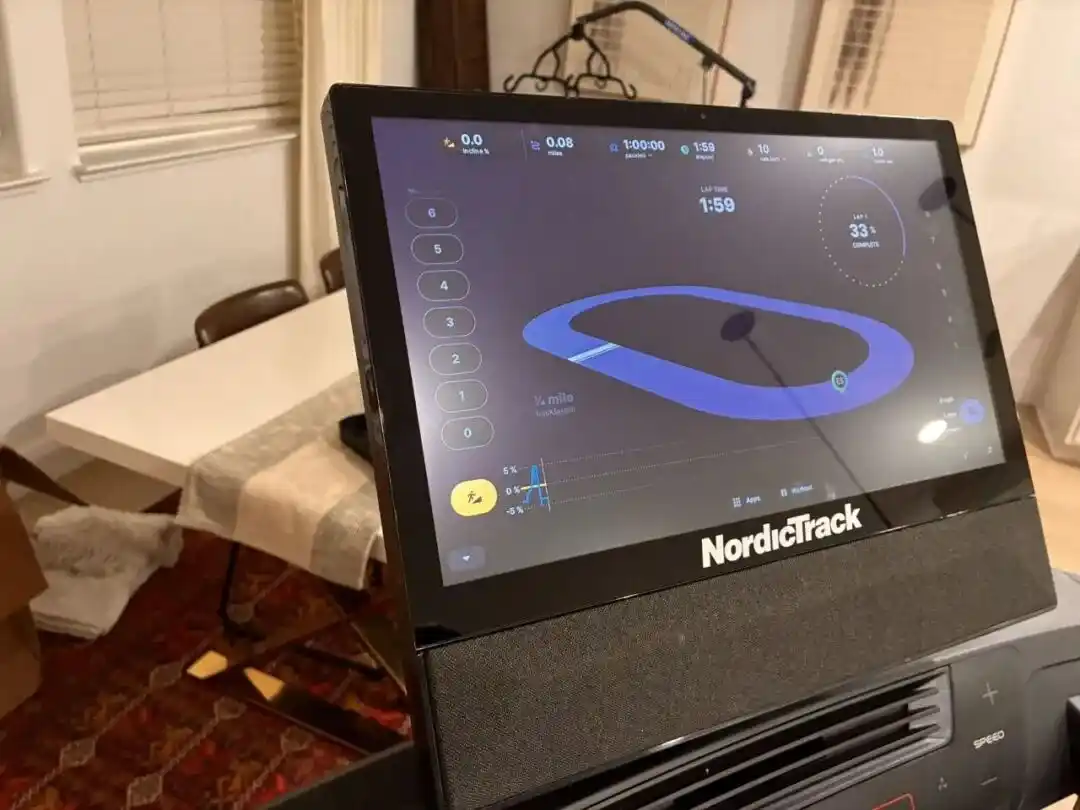
A few years ago, this guy’s girlfriend purchased a NordicTrack (Nordic) treadmill. In the U.S., this brand dominates half the market in this space—even the presidential aircraft “Air Force One” features a NordicTrack treadmill.
One key reason they chose this treadmill was its large built-in screen, allowing users to watch videos while running. Running with video tutorials or movies is a form of balanced productivity and relaxation.
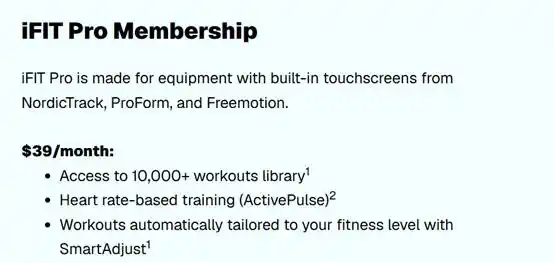
But upon receiving the device, they discovered that beyond basic motion control, all extended features were locked behind the iFIT (the parent company of the treadmill) subscription within the embedded system.

Although he already had a Netflix subscription, he now had to subscribe to iFIT just to unlock Netflix on the treadmill.
Even more infuriating, even for basic workouts, the treadmill would slowly load the embedded app while forcing users to watch carefully crafted, intrusive advertisements on screen...
Enough is enough! This kind of anti-consumer practice cannot be tolerated. The guy decided to hack the treadmill himself.
The rise of the AI era has enabled technical democratization, making reverse engineering a viable option. Opus 5.5 + Claude Code became the key weapon in this reverse engineering effort.
He first discovered the treadmill runs Android 9, which means Claude Code could analyze the device’s apps and services to identify reusable APIs.
After several attempts, he successfully found that the treadmill’s motor control service already provided local interfaces. However, rather than reinventing the wheel from scratch, Claude leveraged an existing open-source project: QZ (qdomyos-zwift), which previously studied how certain NordicTrack devices communicate with external programs.
Building on these prior findings, Claude developed a new client using Java.
Yet finding the motor interface didn’t mean replacing the UI was straightforward.
The iFIT system includes a component called com.ifit.eru—an update and locking module. He discovered this component reinstalls manufacturer apps, disables debugging access, and reactivates restrictions every time the device restarts.
He tried disabling related apps individually, but once accidentally crashed the motor service, and another time took half an hour to restore.
In short, this wasn’t a case where AI alone could finish the job instantly. Even with relevant expertise, significant effort was still required.
After 1.5 days of persistent work, success was finally achieved! Testing confirmed the app launch time dropped from a previous 1 minute to under 20 seconds, and the annoying ads were completely removed.
After posting the story on Reddit, many users praised the post, saying it finally gave relief to consumers suffering from the burdens of hardware subscription models.

“Finally someone did it—now everything charges a subscription fee. It’s absurd.”
Others said they’re not opposed to paying for software, willing to pay a one-time fee for genuinely valuable tools—but they absolutely refuse to pay annual fees for such basic applications.
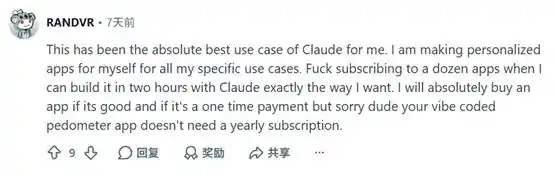
Since the project has been made public on GitHub, some users said they plan to study it over the weekend to see if their own devices can be similarly modified.

In reality, this guy shares the sentiment of most consumers—not against software monetization per se, but unwilling to pay $39/month just to stream Netflix on a home treadmill. Bundling this feature into their proprietary subscription is pure profit extraction from users!
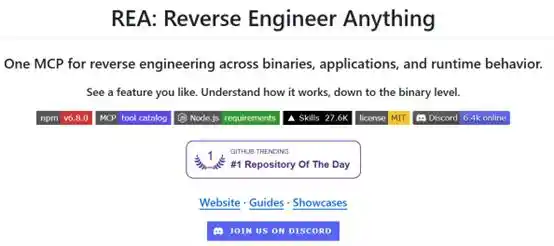
This reminded Old Fox of last month’s viral REA (Reverse Engineer Anything) project, which integrated existing reverse engineering tools like Ghidra, Hopper, and IDA with AI agents to enable model-driven program analysis.
Since its release, REA gained massive popularity, amassing over 400,000 stars on GitHub.
Some users attempted porting early Windows games to Mac and browsers, while others experimented with smart toilets—enabling PC-based remote control for devices originally only accessible via WeChat mini-apps.
In short, as cutting-edge large models advance into the intelligent phase of GPT-6 Astra and Opus 5.5, the barrier to modifying software has dramatically lowered. While it’s not yet accessible to complete beginners, compared to the steep learning curve of past tools requiring decompilation knowledge, today’s users have achieved a meaningful degree of “technical democratization.”
But is the story of AI-powered reverse engineering entirely smooth sailing? Clearly not.
Regardless of how egregious a vendor’s behavior may be—like this treadmill manufacturer—developers in the commercial world naturally resist consumer reverse engineering.
Even the individual behind this project shared it anonymously on GitHub; any copyright-related disputes could still land him in trouble.
For indie game developers, the proliferation of reverse engineering tools poses an existential threat.
Independent developer Digital Sun, known for creating Moonlighter, originally planned a public demo for their upcoming title ReVamp. But they ultimately canceled it due to fears that other developers might extract game content using AI reverse engineering and release competing titles before the official launch.

In the long run, indie developers face a dilemma: reduce exposure to prevent copying, but risk losing marketing opportunities. Large studios can afford bigger teams for secure testing and alternative promotion strategies, but small creators often can’t bear the cost.
Faced with this “everyone has a gun” scenario of cyber chaos, Claude responded swiftly. On October 30, Anthropic engineer Addy Osmani confirmed that Opus 5.5 now includes restrictions targeting replication of specific commercial games.
Currently, Claude Code begins refusing certain reverse engineering and product activation analysis tasks during conversations. When Old Fox discussed this topic with GPT, the model immediately declined answers if it sensed any attempt at circumventing boundaries—maximal caution activated.
Consumers and vendors always harbor some overt or hidden tensions. If hardware and software companies become overly exploitative, reverse engineering can seem like Robin Hood-style justice. But if misused, this technology harms small developers far more, while giving large corporations greater flexibility.
Amid the rapid development of AI, the intersection of technology, business, and law remains lagging and ambiguous. Consumers gain temporary freedom through AI-driven reverse engineering—but may soon find themselves crushed again by AI vendors’ control.
As the Dao rises one zhang, the demon rises ten zhang—the relationship between Sun Wukong and the Buddha is probably no different.
Written by: LJM
Sourced from: TechFox
Disclaimer: Contains third-party opinions, does not constitute financial advice


The AlphaGo Moment in Cybersecurity, or Starting from These 466 Agent Matchups
10 days ago
AI is not a search bar—it's a supercomputer costing just a few dozen dollars
08-05
Anthropic Locks in 6 Years of Compute with $10 Billion Commitment
08-05Not building robots—why is it worth $14 billion?
07-31AI is no longer competing on benchmark scores, but on profitability
07-25
ByteDance's Douyin Beans priced at 68 RMB—worth it for 382 million monthly active users?
07-25
Fields Medalist Concerned About AI Extinction Heads to OpenAI
07-25


