Huang Renxun Once Showed Optimism Toward Ethereum, NVIDIA Loses $20 Billion in a Single Day
Huang Renxun Once Showed Optimism Toward Ethereum, NVIDIA Loses $20 Billion in a Single Day

2026-11-14 12:26
Lead-in: From dedicated mining hardware to AI data centers, Huang has successfully pivoted his strategy. In 2017, the cryptocurrency market was in full-blown bull run.
2017, the cryptocurrency market was in full-blown bull run.
Recently dominating global media headlines, Huang Renxun stated during NVIDIA’s quarterly earnings call that “cryptocurrency and blockchain will persist long-term and scale significantly... GPUs are well-positioned for this space.”
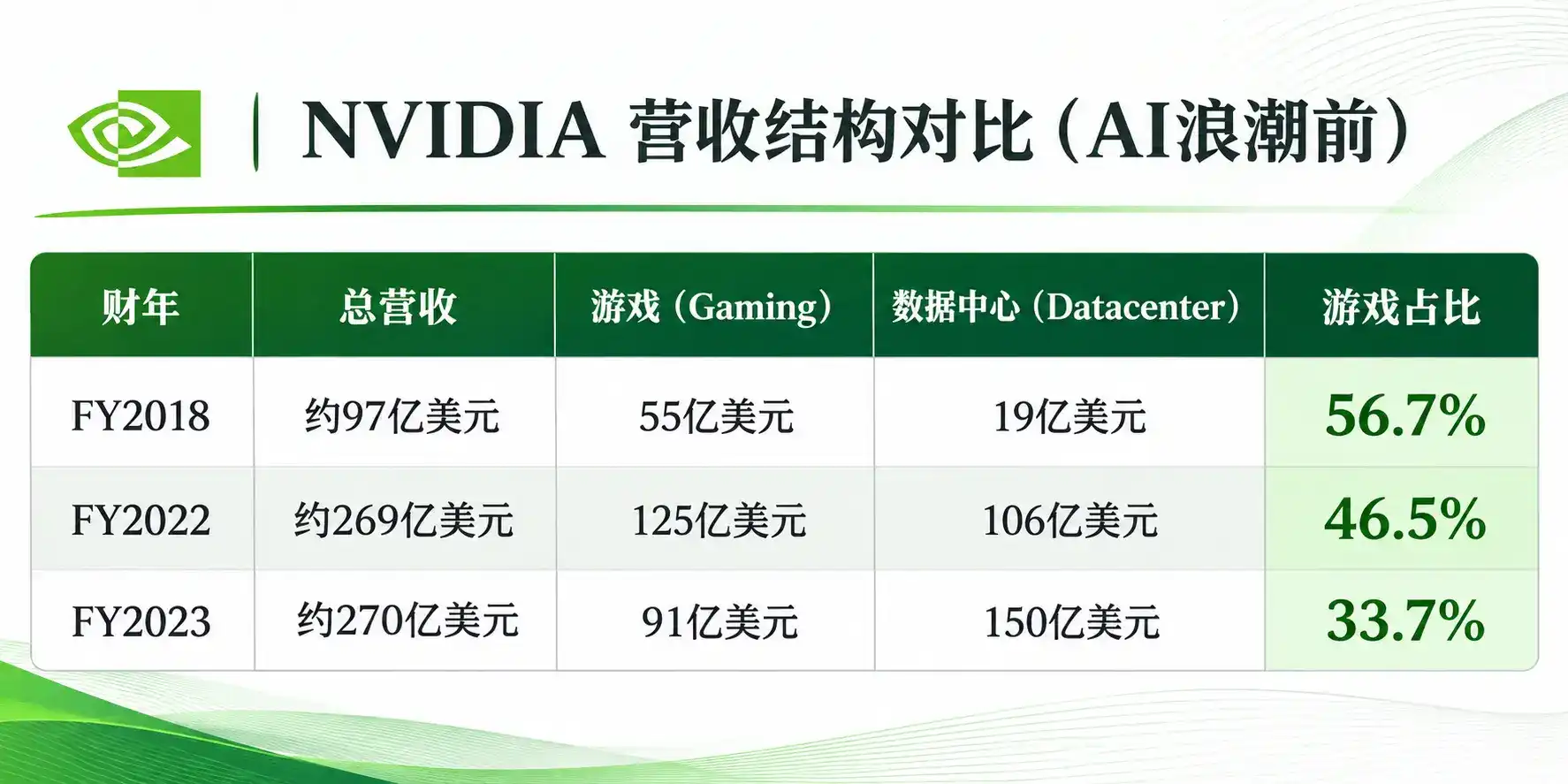
According to NVIDIA’s historical financial reports, it wasn’t until 2023 that revenue from data center chips surpassed that of gaming for the first time. Prior to that, gaming GPUs and professional visualization tools were NVIDIA’s core business. Yet during those years, Ethereum mining—though a minor segment—repeatedly disrupted NVIDIA’s stock price.
Ethereum Bear Market Cost NVIDIA $20 Billion
In March 2018, Huang Renxun had just turned 55. During an interview with CNBC’s “Mad Money”, he reiterated what he’d said at the previous year’s earnings call: “Cryptocurrencies will endure. The world will have a frictionless, low-cost value exchange mechanism, and it will persist long-term.”
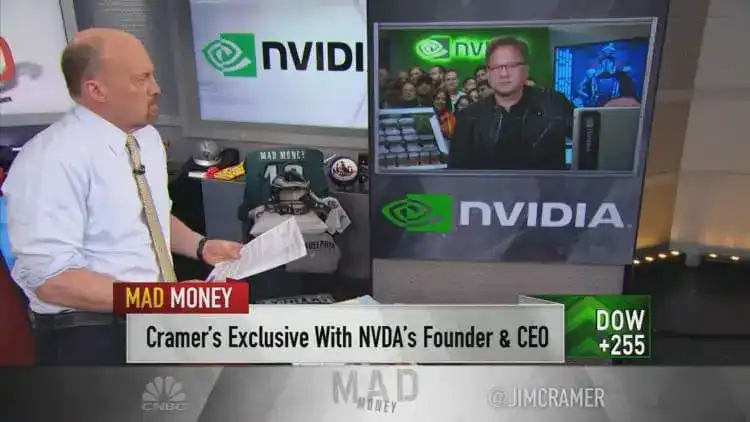
He also stated, “Blockchain will persist long-term and become a new paradigm of foundational computing. I anticipate blockchain and cryptocurrencies will be key drivers in GPU development.”
During those years, JPMorgan CEO publicly labeled Bitcoin as fraud and threatened to fire employees trading it; Buffett repeatedly warned of a “bad outcome” for crypto; AMD benefited marginally from mining but cautiously emphasized that “mining won’t be a long-term growth driver.”
Today, Huang Renxun is arguably a “smaller Musk.”
In 2016 and 2017, driven by rapid growth in gaming and data center businesses, NVIDIA’s stock surged 224% and 81%, respectively. But just as Huang was savoring the potential of crypto to deliver more surprises, disappointment arrived first. In 2018, crypto prices collapsed across the board—Bitcoin plummeted from nearly $20,000 to under $4,000, while Ethereum dropped from four digits back to two.
In August 2018, NVIDIA released its mid-year results: crypto-related product revenue fell sharply from $289 million in the prior quarter to just $18 million. The company explicitly stated that crypto contributions would be negligible in the second half, causing NVIDIA’s post-market stock to drop ~5%. In November, NVIDIA reported Q3 earnings below expectations, and even more critically, issued guidance far below Wall Street forecasts (~$2.7 billion vs. expected $3.4 billion). Huang directly attributed this to a “crypto hangover” lasting longer and being more severe than anticipated.
The following trading day after the earnings release, NVIDIA’s stock dropped as much as ~19% from the previous close. A mining segment accounting for only single-digit percentage of total revenue caused NVIDIA’s market cap to evaporate over $20 billion in one day.
From “Past History” to “Dedicated Mining Hardware”
In March 2019, at a press event in Tel Aviv, Israel, Huang Renxun attempted to sever ties with cryptocurrency entirely. Addressing the media, he declared, “NVIDIA never planned for cryptocurrency—we were found by it, and now it’s past history.” He acknowledged that crypto technology had inherent value, even expressing hope that future blockchain ecosystems might adopt less computationally intensive algorithms, making GPUs no longer the battleground for miners.
Evidently, Huang had been deeply scarred by crypto’s volatile swings. But just two years later, the situation reversed dramatically.
Starting in late 2020, Ethereum prices soared once again, turning NVIDIA’s gaming GPUs into hard currency for miners. RTX 30-series cards became impossible to obtain, prompting gamers to complain about being priced out of the market. News of internet cafes being fully booked for mining operations became commonplace. Due to the aftermath of the bear market, miners struggled to secure stable supply channels, driving retail prices sky-high and leading to prolonged shortages on e-commerce platforms. Gamers either had no GPU or ended up buying “mined-out” “miner cards.” Social media exploded with anger toward NVIDIA.
Huang realized pretending crypto didn’t exist was no longer viable. In February 2021, NVIDIA officially launched the Cryptocurrency Mining Processor (CMP) series—dedicated hardware designed exclusively for professional mining, lacking display outputs, optimized for airflow, and supporting high-density multi-GPU deployment.
This wasn’t necessarily a reconciliation with crypto, but rather a strategic move to shield core business from disruption. Evidence lies in NVIDIA’s implementation of driver-level restrictions on the RTX 3060 via LHR (Light Hash Rate), effectively halving its Ethereum mining performance, using technical measures to physically separate gamers and miners onto distinct pathways.
At the time, Huang’s single directive could send tremors through the Ethereum mining community. Though Bitmain also offered Ethereum miners, and AMD GPUs sometimes outperformed in mining efficiency, NVIDIA’s products remained the preferred choice due to superior supply chain reliability and product stability.
Initially, the market responded positively to CMP. In Q1 2021, CMP revenue exceeded $155 million. NVIDIA optimistically projected $400 million for the next quarter, but actual results fell short—Q2 revenue reached ~$266 million. By Q3, it dropped further to $105 million.
Cumulatively, CMP generated approximately $526 million in revenue across the cycle. Canadian miner Hut 8 placed a $30 million order for CMP equipment. Later, NVIDIA introduced the higher-end CMP 170HX, offering ~164 MH/s Ethereum hash rate, priced above $4,000—though supply remained extremely limited, functioning more like an experimental product for elite mining farms.
With the launch of dedicated mining hardware, Huang’s stance toward crypto underwent another 180-degree reversal. During a VentureBeat interview at Computex 2021, when asked whether he was excited about Ethereum’s transition to proof-of-stake, he responded affirmatively. In his view, Ethereum had already established its dominance, possessing reliability and credibility, with DeFi and numerous other applications relying on its network—making the PoS shift a natural evolution.
He believed Ethereum held significant long-term value, with transaction throughput poised to improve dramatically. He openly stated that cryptocurrencies would continue to exist. He also noted that Ethereum’s current momentum might cool within a year, but mining itself wouldn’t disappear. Furthermore, he argued Ethereum chose GPUs because they form the largest programmable distributed supercomputing network in the world.
In September 2022, the Ethereum merge—the event Huang had been “excited” about—was completed, instantly collapsing GPU mining demand. Global mining farms shut down en masse, flooding the market with used GPUs. The once-scarce supply situation reversed overnight into massive inventory overhang. NVIDIA’s CFO later admitted in subsequent earnings calls that the Ethereum merge negatively impacted demand for certain products.
But starting in 2022, data center business gradually became NVIDIA’s core engine. The discontinuation of mining products had little impact on NVIDIA. It was precisely after this point that NVIDIA formally parted ways with crypto.
AI & Crypto
If Huang doesn’t stumble, we may witness a third reversal in the future.
Paid transactions based on x402 and stablecoins are increasingly recognized as the best current solution for Agent payments, while “AI+Crypto” projects now hold a foothold in today’s Web3 landscape. In March this year, at the NVIDIA GTC 2026 conference, All-In Podcast host Chamath Palihapitiya asked Huang about Bittensor’s approach to training low-parameter large models via distributed compute. Huang replied it resembled the modern-day “Folding@home,” and added that open-source/decentralized models and closed-source models represent a complementary “A and B” relationship.
Huang’s endorsement sent TAO tokens soaring over 20% in minutes. Many on X expressed surprise that Huang himself had inadvertently endorsed a crypto project.
As AI continues advancing, stablecoins or other cryptocurrencies may genuinely become the medium of exchange between silicon-based Agents in the era of artificial intelligence. Huang, who could have continued elaborating on this vision, will likely no longer speak from the stage of NVIDIA’s platform—should he return to the topic, he’ll probably do so not as NVIDIA’s CEO, but as an independent figure.
Source: Foresight News
Disclaimer: Contains third-party opinions, does not constitute financial advice


HuggingFace's "AI Duck" Goes Viral, Boosting Chinese Chip Supplier Rockchip
09-02
Yushu Surges 629% on First Day of Trading, Humanoid Robots Sell 5,500 Units
08-19
14 Executives Depart, Horizon Unleashes a Robot Legion
08-11
Nokia Snatches AI Optical Chip Race, Stock Soars 52%
08-07
Yushu's 61 Billion IPO: Who Will Make Money?
08-07
AI stocks down 40%-60%, yet NVIDIA's valuation is at a 10-year low
08-06
HBM Bottleneck Migration, NVIDIA Also Aims to Downgrade
08-06


