MiniMax claims images are generated in 10 seconds, but real-world tests show it actually takes up to 1 minute
MiniMax claims images are generated in 10 seconds, but real-world tests show it actually takes up to 1 minute

2026-11-13 20:06
Introduction: OpenAI leads via model and access point; low cost alone is no barrier. The AI image generation race is heating up. On the evening of November 10, MiniMax launched and opened H3-Image model weights.
The AI image generation race has recently become intense.
On the evening of November 10, MiniMax released and opened H3-Image model weights, pitching a "faster and cheaper" proposition. Officially, it can generate a high-resolution 16-million-pixel image in just 10 seconds, at only 50%-70% of the price of mainstream tools in the same tier.
Before this, OpenAI and ByteDance had just delivered their latest updates.
On November 5, OpenAI unveiled Images 2.6 and GPT Image 2.6, further advancing speed and editing capabilities. They claim a 50% improvement in generation speed over previous versions, added features including GIF animation generation and reusable reference images, and introduced two new models—GPT Image 2.6 Flare and Sunburst—on the API side, with Sunburst specifically optimized for consistency across multiple editing rounds.
ByteDance launched Seedream 5.5 on November 9, focusing on stability in continuous editing and supporting precise local modifications.
All three have rolled out new models. How do they actually compare? Beyond generation quality, what are they really competing for?
01 OpenAI Leads, MiniMax Wins on Speed
First, examine the rankings — the differences among the three are quite significant.
In Artificial Analysis’s latest text-to-image benchmark, GPT Image 2.6 Sunburst (max) ranks first, Seedream 5.5 ranks tenth, and H3-Image comes in twenty-third.
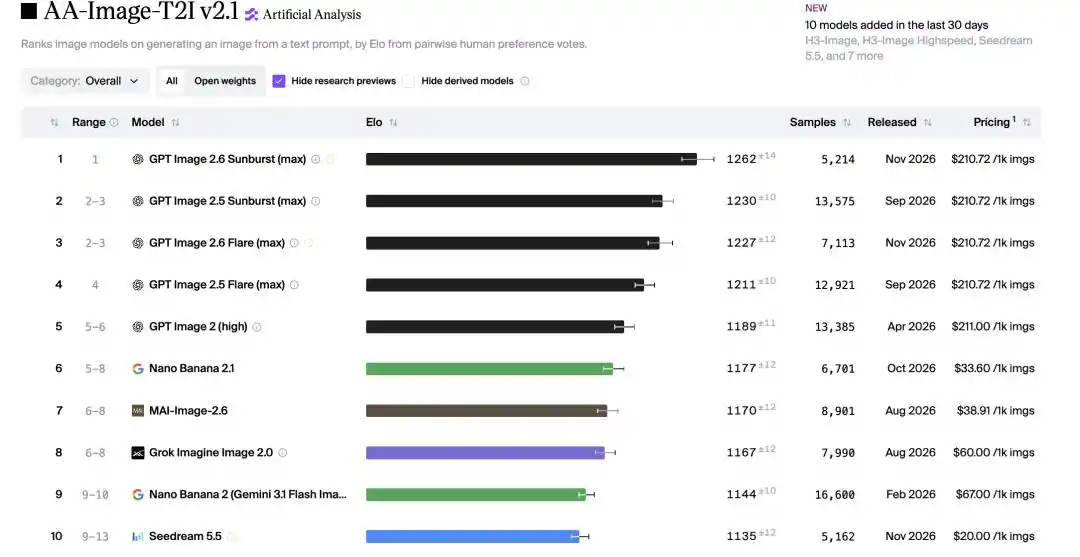
Source: Artificial Analysis official website
On the image editing leaderboard, OpenAI maintains its top position, ByteDance climbs to sixth, and MiniMax reaches twelfth. Compared to initial image generation, both latter platforms perform better in editing tasks.
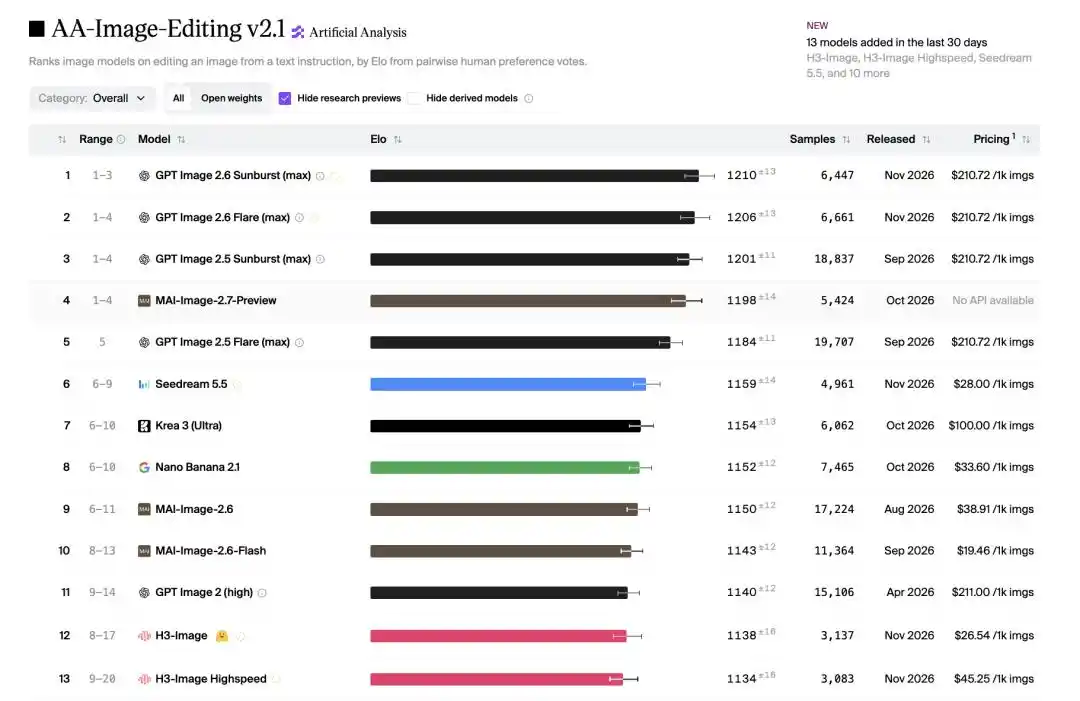
Source: Artificial Analysis official website
With two first-place finishes, does OpenAI truly pull ahead of the others in real-world use?
We tested all three new models through ChatGPT, Douba, and HaiLuo AI. ChatGPT used GPT Image 2.6 automatic mode, Douba invoked Seedream 5.5, and HaiLuo AI tested both standard and Highspeed modes of H3-Image.
Note that OpenAI offers different model tiers via API, allowing developers to choose based on needs. However, most end users directly generate images within ChatGPT, so we did not test API endpoints separately but instead evaluated real product experience across platforms.
First question: focus on comprehension.
The popularity of short-form dramas needs no explanation. From fruit-themed ethical dramas like strawberries betrayed by pineapples and grapes cheated by bananas, to melodramatic tales where mushrooms and nail art vie for inheritance rights, protagonists now extend beyond humans — even food items are falling in love and fighting over family fortunes.
The recently viral long-named candied fruit skewer naturally didn’t escape this trend. With a list of ingredients as lengthy as a spell, it successfully entered the elite circle. In its family, longer names and more ingredients mean higher bloodline prestige — ordinary hawthorn skewers lack even the right to inherit wealth.
We asked all three platforms to generate a scene depicting an elite family visit: the heir of a super-long-name candied fruit clan, combining milk skin, strawberries, taro paste, and over a dozen other ingredients, returning home with a simple hawthorn skewer to meet his parents. Classic “misalliance” plot — a nobleman falls for a commoner, parents disdain her background.
We emphasized that all characters must have human bodies with candied fruit heads, ingredients seamlessly integrated into facial features, and no human faces should appear.
Over a dozen ingredients, multiple characters, complex setup — one prompt tests comprehension, execution, and visual fidelity simultaneously.
Prompt (scroll to view text):
Theme: A billionaire family feud over inheritance rights, centered around a viral long-named candied fruit skewer
Generate a cinematic 3D animated still from a Chinese absurd AI short drama, aspect ratio 9:16, highly detailed semi-realistic 3D animation style, exaggerated and bizarre character designs with strong comedic effect.
Core concept: A top-tier aristocratic family composed entirely of viral long-named candied fruit skewers. All characters have normal human bodies wearing luxurious suits and gowns, but their entire heads are massive, multi-layered 3D candied fruit skewers made from over ten different sweet treats.
Note: These are not traditional clusters of hawthorns, but constructed from hawthorn, strawberry, Jumbo Muscat grape, blueberry, mango, milk skin, taro paste, red bean glutinous rice, tangyuan, cheese, mango pomelo drink, crushed pistachios, chocolate shell, cold brew yogurt, and buttery crisp.
Ingredients layered atop one another: vibrant red hawthorn and strawberry, emerald green grape, golden yellow mango, creamy white milk skin, pale purple taro paste, deep purple red bean glutinous rice, soft white tangyuan, dark brown chocolate, golden buttery crisp, interwoven in intricate layers. Some fruits are sliced open, revealing inner cheese and yogurt fillings.
The entire head resembles a towering, colorful confectionery spire, visibly rising far above a normal human head. The outer layer is encased in clear, crystalline sugar coating, with a slender bamboo stick protruding from the top. Syrup glimmers under warm lighting. Ingredient details are highly realistic, with distinct thickness and depth between layers.
The candied fruit head integrates natural food-shaped eyes, eyebrows, and mouth capable of expressing anger, arrogance, shock, etc., without showing any human face.
Scene: An extravagantly luxurious private mansion banquet hall. Massive golden crystal chandeliers, high ceilings, white marble flooring, full-length floor-to-ceiling windows. Outside, a bustling urban night street illuminated by neon lights.
A long marble dining table sits at the center, adorned with tall wine glasses, golden candlesticks, and fine cutlery.
Characters and narrative: On the left, a dignified elderly patriarch, wearing a deep brown tailored suit, gold ring, and family crest on his chest. His head is an enormous, 20+ layer super-luxury candied fruit skewer, built from dozens of exotic ingredients stacked vertically, forming an exaggerated crown-like shape. He looks furious, pointing his right finger toward the opposite side of the table.
Beside him stands a noble matron in a cream silk gown. Her head is a complex green-creamy tower formed by layered green grapes, milk skin, pistachio cheese, white tangyuan, green matcha crisp, and golden sugar shell.
On the right, a young heir in a sharply tailored white-gold suit stands upright, confronting his elder with defiant posture. His head is a giant multicolored candied fruit skewer composed of strawberry, hawthorn cake, mango pomelo drink cheese, taro paste, red bean glutinous rice, tangyuan, milk skin, pistachio cold brew yogurt, and chocolate buttery crisp — layered intricately like a delicate 10+ story dessert tower.
Next to him is a young woman in a light green elegant dress, with a plain hawthorn candy skewer for a head, expression shocked.
Composition and style: Symmetrical wide-angle composition, the dining table centered, four figures positioned evenly on either side. All characters fully visible from head to toe. The oversized candied fruit heads dominate the visual field but do not obstruct other figures. Body proportions are natural, costumes lavish and intricate, while the candied fruit heads are exaggerated yet realistic, creating strong contrast.
Cinematic 3D animation rendering, exquisite material textures — crystalline sugar shells, crispy milk skin texture, dense cheese consistency, soft tangyuan feel, vivid fruit colors, rich highlights and reflections.
The overall image features bold colors, opulent lighting, and abundant detail, delivering a surreal, absurd, melodramatic aristocratic short drama aesthetic — resembling a well-produced yet wildly implausible AI animated series.
First, speed: MiniMax indeed excels. But we almost missed it.
Initially, using MiniMax Code to invoke H3-Image, we found image generation took nearly one minute, and edits took up to five minutes. Where’s the promised 10-second output?
Later switching to HaiLuo AI, speed finally improved. H3-Image standard mode takes ~25–30 seconds per image, while Highspeed mode completes in just 10–15 seconds. The reason? MiniMax Code, as an Agent product, involves additional task scheduling overhead beyond simply calling the image model, adding latency.
In contrast, OpenAI and ByteDance models each take about one minute per generation. On speed, MiniMax leads.
Now, results. ChatGPT clearly understands abstract artistic direction. After over a minute, a dramatic short film still emerged. Characters are lavish, expressions exaggerated, and the fusion of candied fruit and facial features remarkably natural. Grand, dramatic, and dripping with tension — one can almost hear someone slam the table and hand over a check: “Five million, leave my son.”
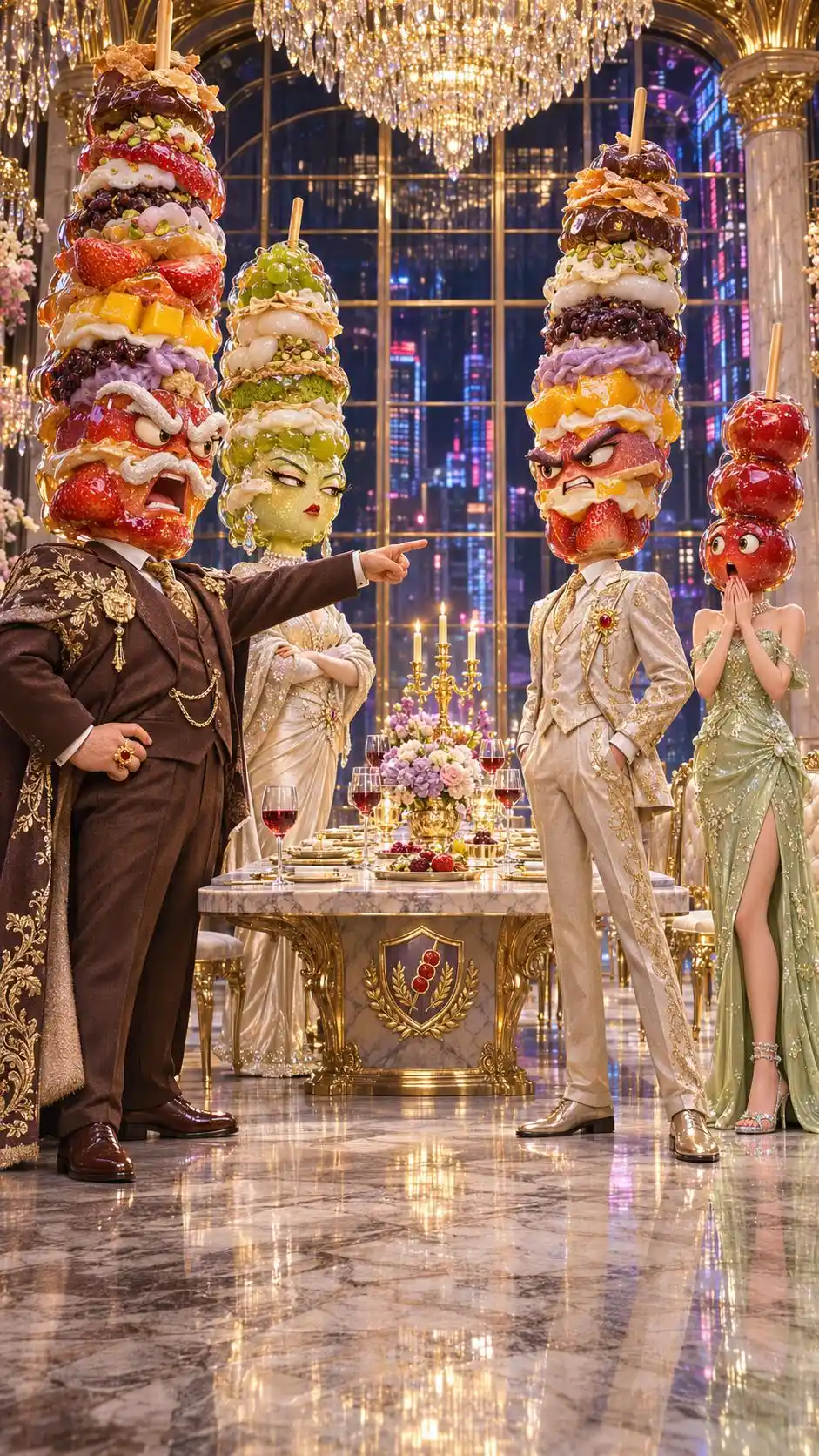
ChatGPT-generated still
HaiLuo AI, meanwhile, brings strong short drama flair. It’s the only one among the three to automatically add a title to the generated image — which, at first glance, genuinely feels like a real short drama still.
HaiLuo AI generates four images per run. Standard and Highspeed modes produce similar image quality, but both make identical mistakes. The first image shows clear clipping issues — characters are literally standing on the table, turning a family meeting into a chaotic “everyone on the table” scene.
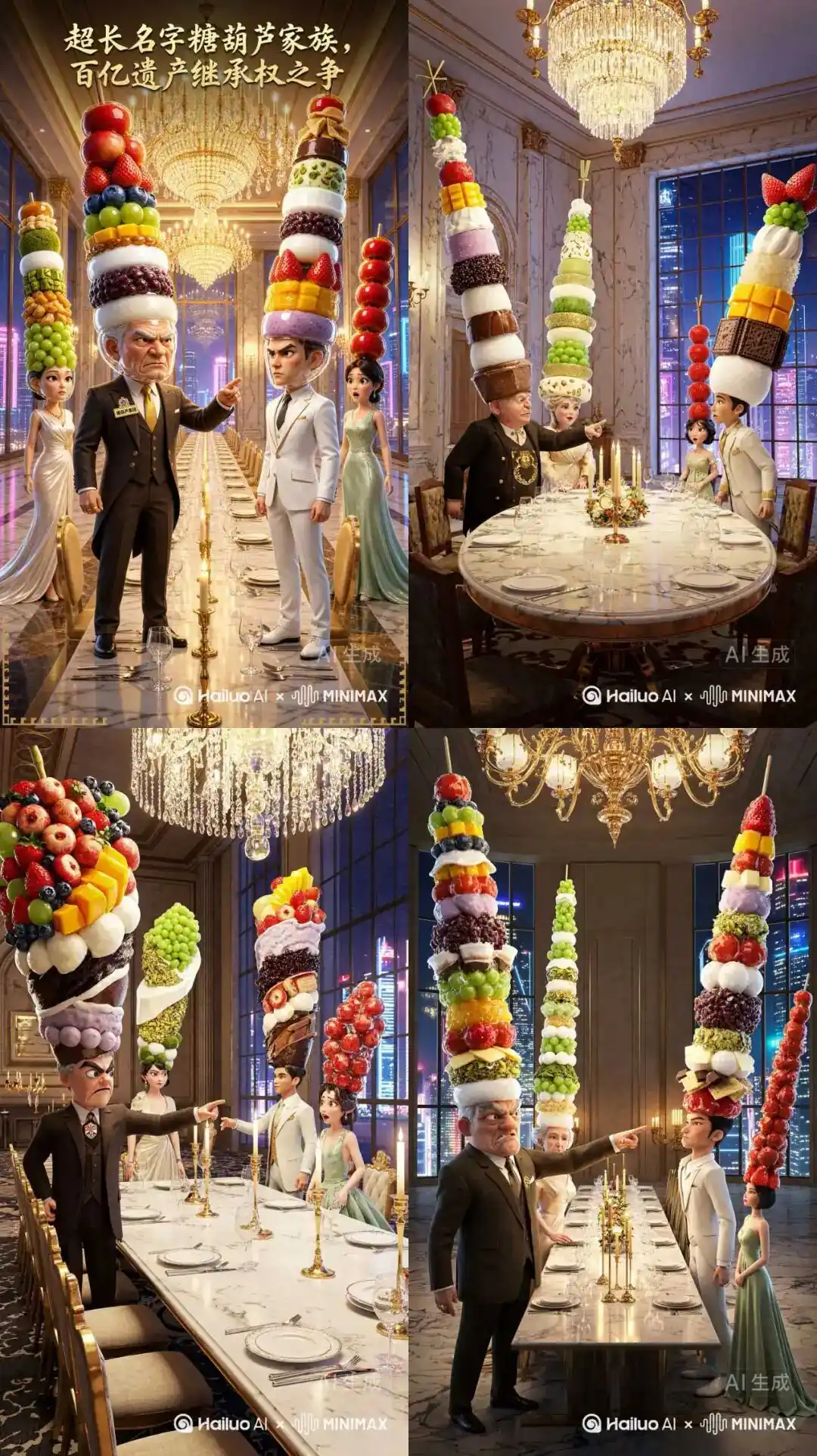
MiniMax H3 standard version output
The remaining three images show no obvious clipping, but heads are still misaligned. Each character wears a human face atop a massive candied fruit head — like wearing a luxury candied fruit hat. Some expressions are flat, lacking the dramatic flair.
We selected the worst-performing image as reference and instructed HaiLuo AI to lower the figure from the table and merge the face with the candied fruit head. The regenerated four images all suffered from severe clipping — more people ended up on the table, as if participating in some mysterious ritual. As for face-fruit fusion? Still separate.
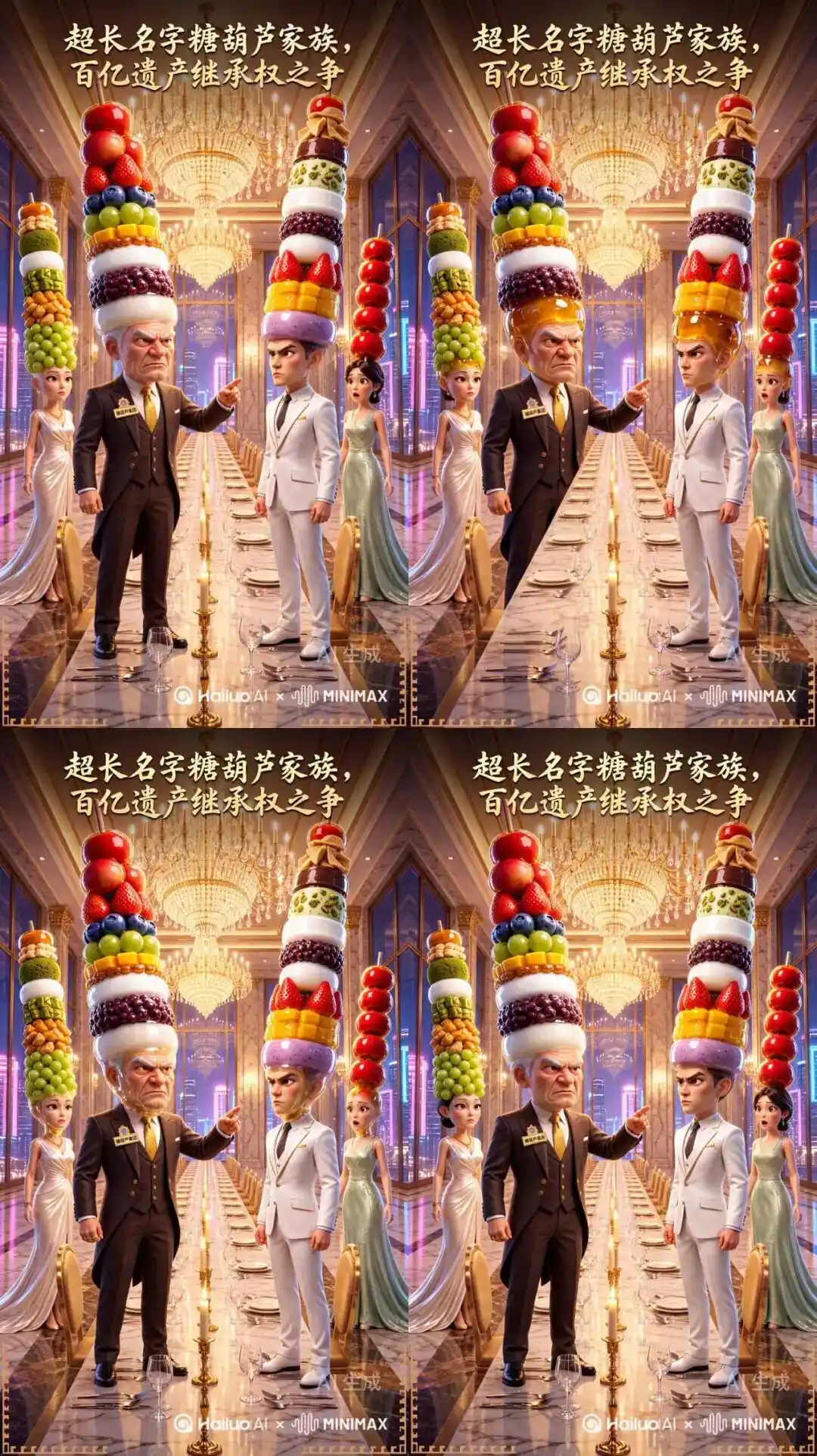
MiniMax H3 standard version after modification
Douba also stumbled on head integration. Scene and clothing were fine, but characters again sported human faces with candied fruit heads growing separately.
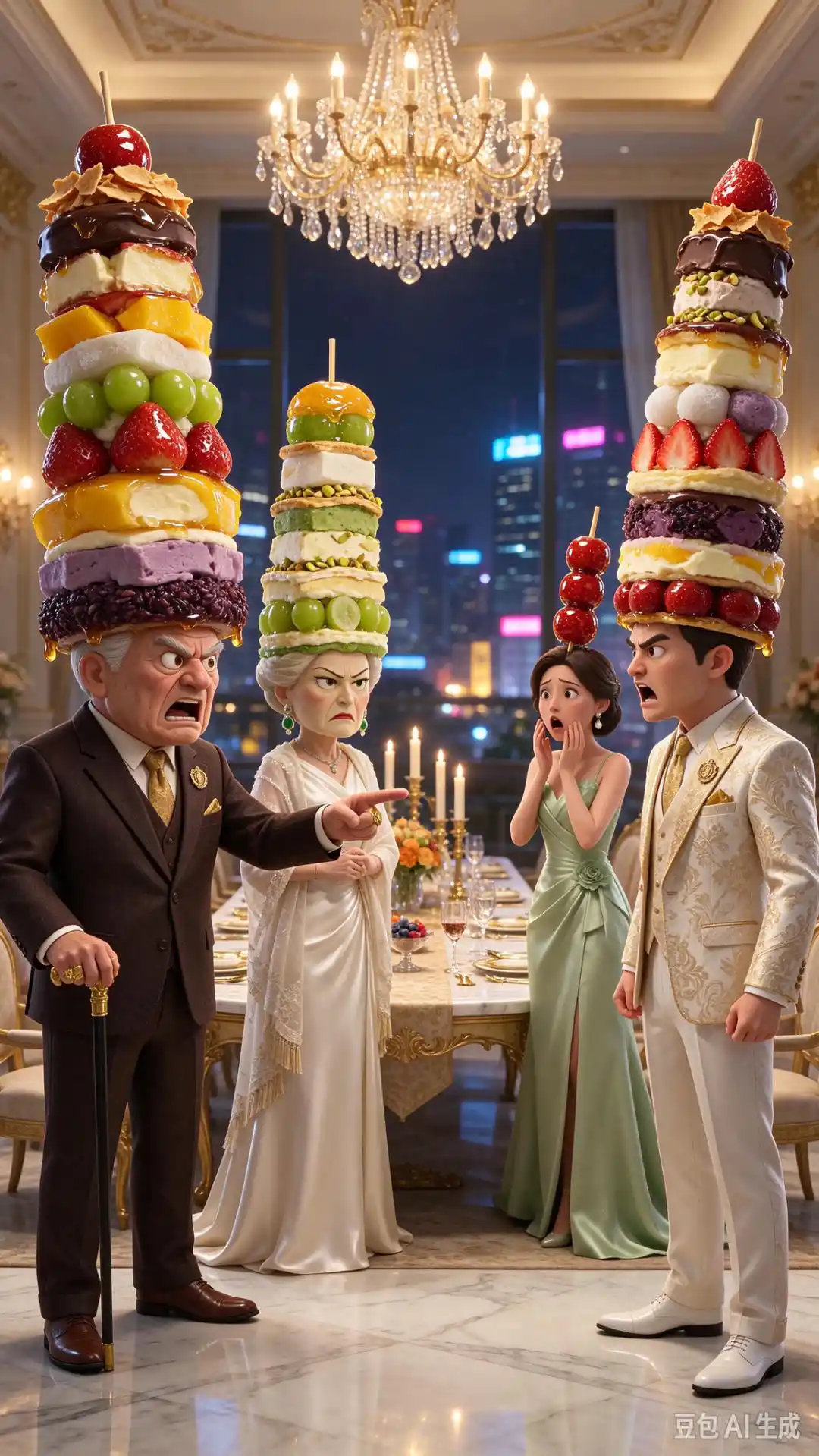
Douba-generated still
Luckily, it supports localized editing. We selected a character and requested a head edit — but only three of the four faces were changed. One character remained with a human face, blending awkwardly into the candied fruit family.
We had to remind again. After waiting ~7 minutes, the last outlier was finally fixed. But post-editing, while the face and fruit were barely merged, original facial expressions and identity cues became blurred — the heir and father now look like they’ve swapped roles. This is far from Seedream 5.5’s claimed “stable multi-round editing”!
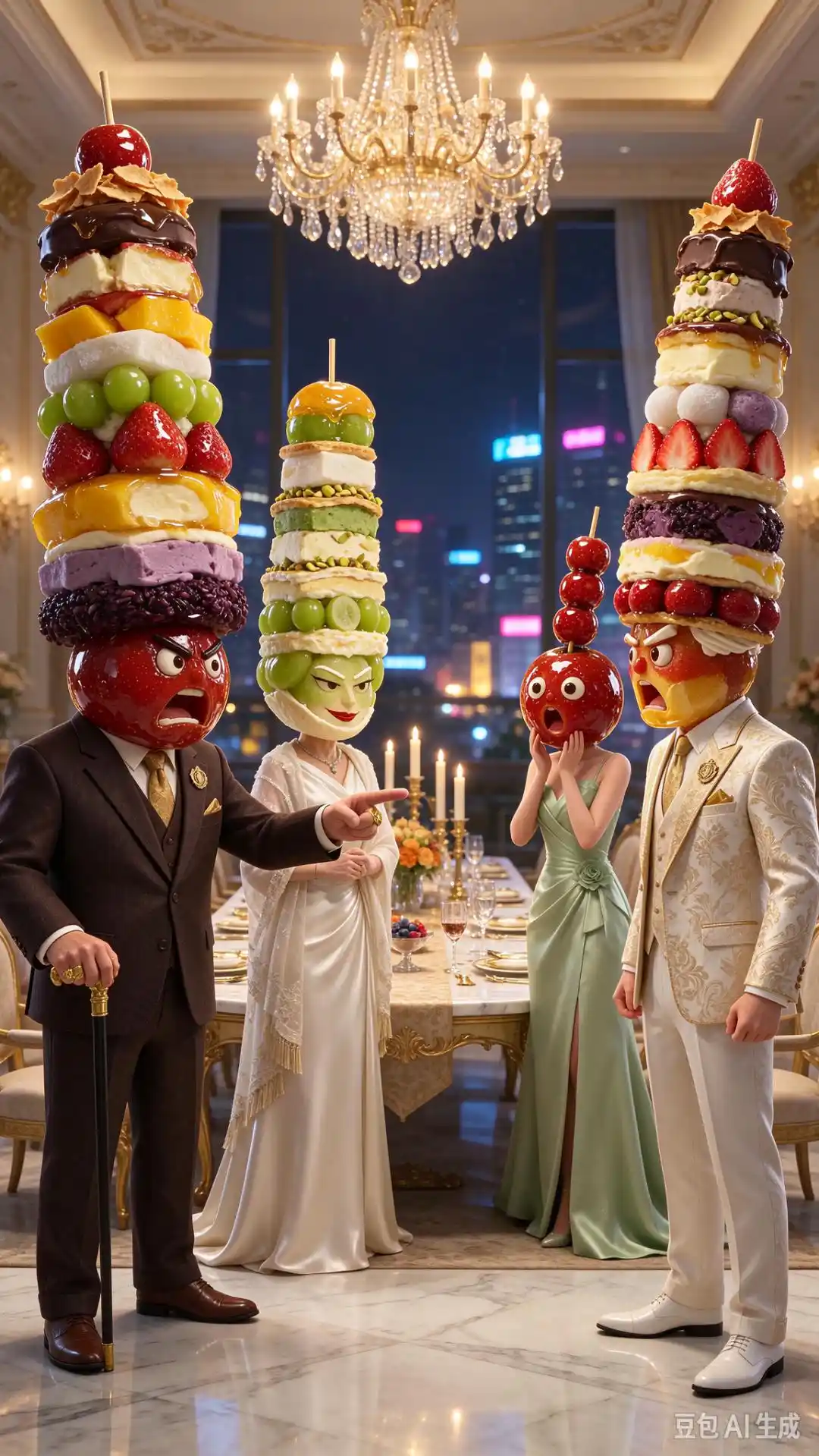
Douba-modified output
Next, second test: assess aesthetic judgment.
Earlier online trends featured epic Chinese celestial realm panoramas — heavenly palaces, immortal mountains, jade staircases floating above endless clouds, ethereal and dreamlike. This time, no complex characters. We simply tasked the three AI models with constructing a grand mythical celestial city, testing whose aesthetic sense prevails.
Prompt (scroll to view text):
Original Chinese mythological celestial realm panorama, grandiose to near cosmic scale, an Eastern paradise. Camera positioned above the Nine Heavens, using ultra-wide aerial perspective to depict a city suspended in boundless cloud seas. Hundreds of classical Chinese palaces, pavilions, and red-brick towers spread across massive floating immortal mountains, arranged hierarchically along mountain contours, extending toward distant horizons, forming an imposing, orderly architectural ensemble.
The central structure is the Hall of Supreme Heaven, built atop a vast white jade platform, featuring double-eaved hip roof, golden glazed tiles, vermilion columns, gilded brackets, and intricate dragon-and-phoenix carvings on the ridge. Surrounding it are dozens of varying-sized immortal palaces. White jade bridges span the cloud sea, connecting floating mountain peaks. Thousands of celestial steps spiral upward along the ridgelines, culminating at the Hall of Supreme Heaven. Roads, stairs, and bridges between buildings follow logical connections. Every structure has clear support systems and authentic classical Chinese architectural proportions.
To the left, a colossal floating mountain rises from the clouds, its cliffs lined with ancient pines, dotted with green-glazed pavilions and terraces. To the right lies a grand palace complex, layered walls, white jade courtyards, and golden eaves stretching under sunlight. Several massive waterfalls cascade down floating cliffs into the bottomless cloud sea below. Distant triple immortal mountains emerge faintly from morning mist, with countless tiny palace silhouettes dotting the sky, creating immense spatial depth.
The sky displays a natural gradient from pale blue to azure to gold. Morning sunlight streams from the east, piercing through layered clouds, casting clear volumetric light across palace rooftops, white jade bridges, and mountain slopes. Clouds possess realistic movement, thickness, and occlusion. Near structures feature fine textures, distant palaces gradually shrink and fade in color with distance, achieving accurate atmospheric perspective.
Merge the essence of classical Chinese landscape painting — emptiness and negative space — with Song Dynasty grandeur in composition, meticulous details in meticulous brushwork, and photorealistic visuals from top-tier East Asian mythological cinema. Architecture follows traditional Chinese palace forms: authentic overhanging eaves, brackets, mortise-and-tenon joints, roof guardian beasts, stone railings, dragon motifs, and cloud-thunder patterns clearly visible. Dominant color palette: white jade, vermilion, gold, green, and pale blue — bright, transparent, rich, yet restrained.
The image conveys sacredness, solemnity, tranquility, and grandeur, evoking immense architectural scale and epic dimension. Emphasis lies on the monumental size, spatial order, and hierarchical relationship between heaven and earth. No human figures, immortals, celestial soldiers, or humanoid beings appear. Cinematic digital concept art, ultra-wide aerial view, grand depth composition, 16:9 horizontal format, ultra-high detail, 8K visual fidelity.
Negative prompt: Human figures, humanoid statues, Western Gothic cathedrals, Greek temples, European castles, European angels, modern cities, glass facades, sci-fi architecture, cyberpunk neon, spaceships, cartoon style, plastic texture, structural errors, disproportionate roofs, duplicated buildings, unsupported bridges, chaotic floating relationships, broken steps, perspective errors, overcrowded architecture, thick fog obscuring subjects, excessive gold glow, excessive purple tones, random text, logos, watermarks, existing film/TV characters, game characters, or IP symbols.
ChatGPT continues its refined approach. The celestial realm is astonishingly vast — palaces densely packed across the frame, architectural details maximized, and the misty atmosphere perfectly captured.
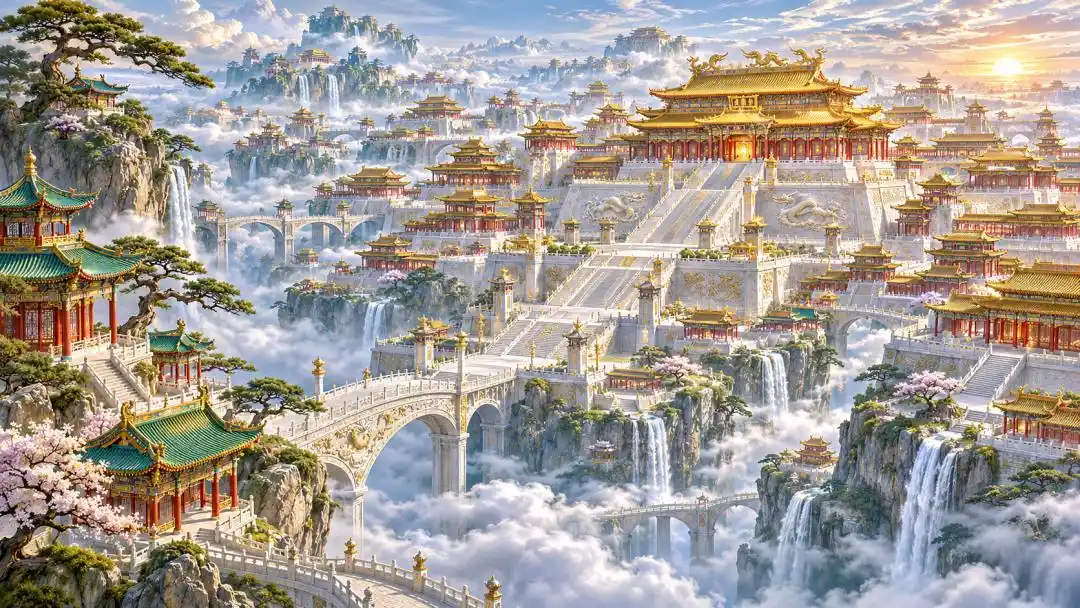
ChatGPT-generated celestial realm image
However, it seems fixated on the word “grand.” The entire celestial city is dazzlingly golden, with palaces so numerous they feel cramped — as if squeezing every single building from the Nine Heavens into one image. The result leans too much toward ostentatious wealth. Perhaps being number one for too long has made it forget how to be subtle.
Let’s test editing capability. We pointed out issues directly on the image, requesting fewer buildings, reduced opulence, and more authentic Chinese flavor. After ~1 minute, the revised version arrived — fewer palaces, cleaner composition, correct tone. Full compliance. Score: perfect.
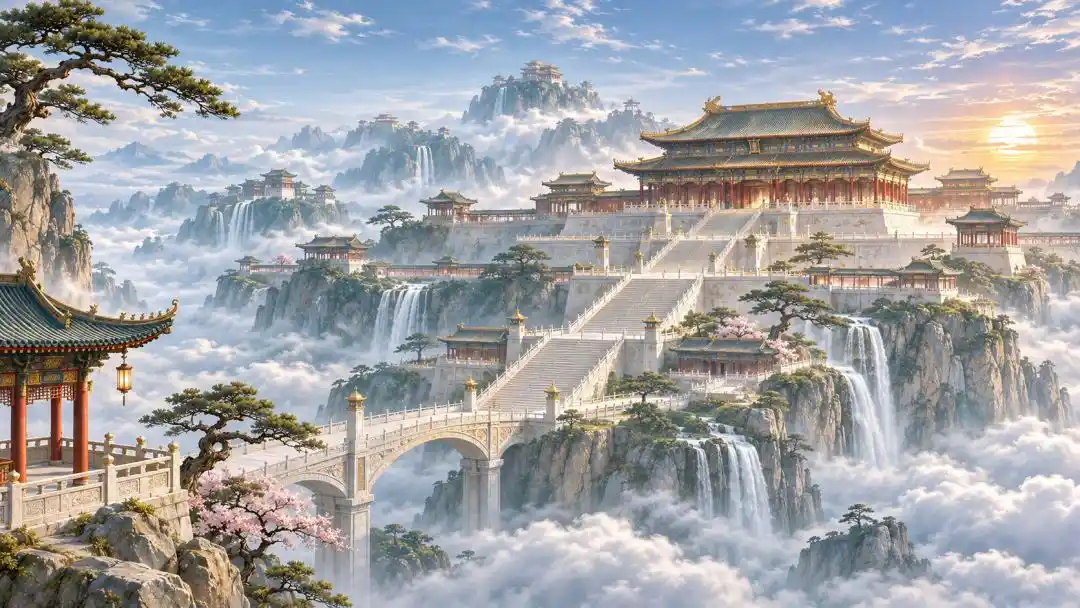
ChatGPT-modified celestial realm image
This round, HaiLuo AI and Douba performed better — their first outputs met our expectations, so we didn’t modify them further.
HaiLuo AI’s layout is more spacious, with clouds weaving between pavilions, resembling a meticulously crafted xianxia video game scene. Regardless of standard or high-speed mode, the four generated images maintain consistent style — variations mainly lie in architectural arrangement.
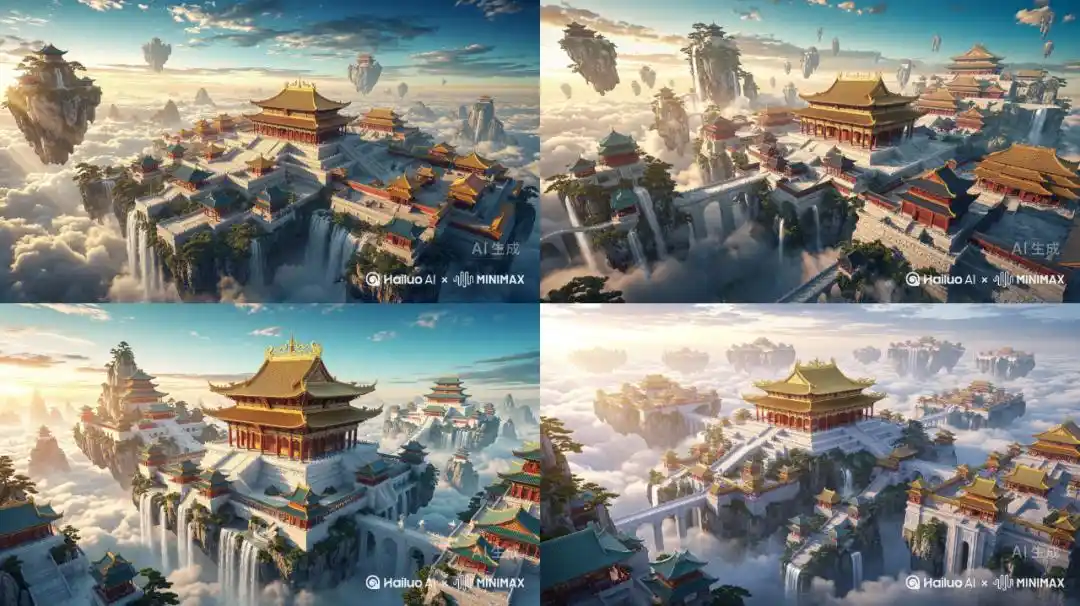
MiniMax H3 standard version celestial realm image
Douba’s output closely matches — palaces step down in layers, composition natural, strong xianxia vibe.
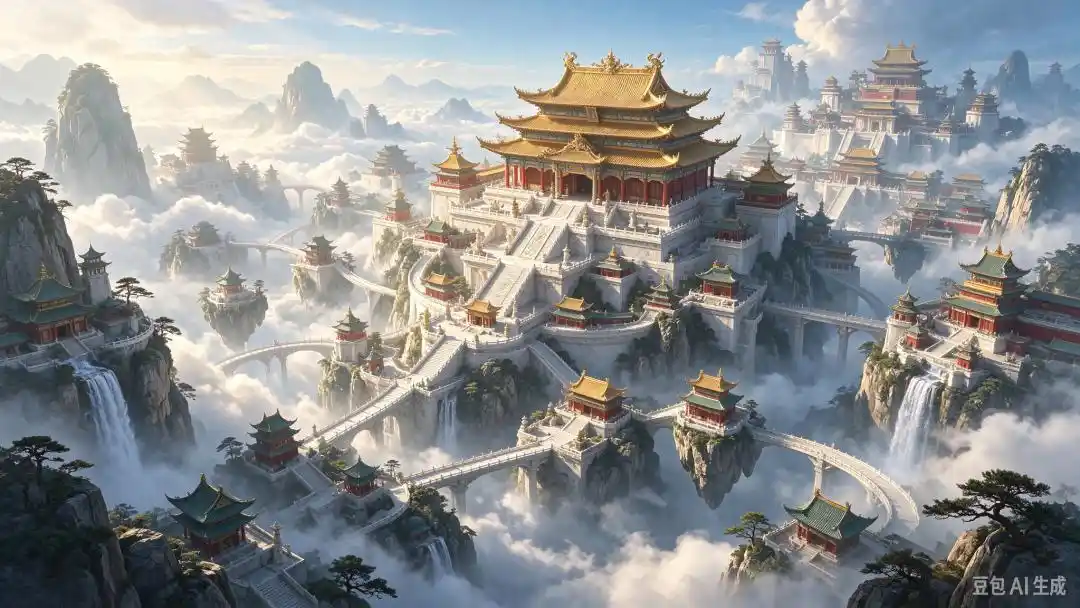
Douba-generated celestial realm image
After two rounds of testing, OpenAI’s models remain superior overall — best at understanding complex instructions, fastest and most accurate edits, mostly achieving perfection in one go. Only occasionally does its aesthetic judgment veer into excess. MiniMax’s model demonstrates speed advantage, generating images in under 15 seconds on HaiLuo AI with solid quality, but struggles to deliver both speed and accuracy on complex tasks. ByteDance’s model offers solid visuals but lagged in editing speed and stability during this test, leaving us somewhat disappointed.
02 Models Grow Stronger; Companies with Real-World Scenarios Have Better Odds
Companies continue investing heavily in image model R&D, driven by commercial potential in professional markets.
Compared to casual uses like avatars or memes, industries such as advertising, e-commerce, and game art require large-scale, continuous image production and are more willing to pay for efficiency. As model capabilities advance, AI can assume greater design and content creation roles, helping enterprises reduce labor costs.
Revenue models for image models aren’t limited to individual subscriptions. Providers can earn via API calls, enterprise services, or integrating image capabilities into existing products to increase user engagement frequency.
But professional users demand higher standards. Images must not only look good but also maintain consistency in products, characters, and brand elements, and allow accurate modifications upon request. From our testing, current models still have significant issues to resolve.
Against the same market, the three players adopt different strategies.
OpenAI competes on model strength and access point. ChatGPT boasts a massive user base — users don’t need to launch dedicated image tools; they can generate and edit images directly in chat. OpenAI disclosed that global users generate 4 billion images weekly across ChatGPT, Codex, and APIs. Every model upgrade reaches these users instantly, eliminating the need for zero-based product promotion. Conversely, enhanced image capabilities boost ChatGPT usage and attract paid users.
ByteDance leverages more mature content creation ecosystems.
Seedream is embedded in products like Ji Meng, Douba, Douba Work, and accessible via Huoshan Fangzhou to serve enterprises and developers. Casual users generate fun images, creators produce assets, and businesses batch-generate content via API.

Source: Seedream official website screenshot
Especially Ji Meng, already hosts many users seeking image and video creation — every Seedream update directly serves these needs. ByteDance can also collect real-world usage feedback via existing products to iteratively improve models.
MiniMax’s position is comparatively challenging. Though it has HaiLuo AI as a creative tool, user scale and ecosystem maturity fall far short of ChatGPT and Ji Meng. Even with strong model performance, convincing users to switch tools incurs extra customer acquisition costs.
Thus, MiniMax chooses to break through via speed, pricing, and openness.
In this test, H3-Image’s Highspeed mode showed no significant quality drop versus standard mode. For users needing bulk generation, faster speed means higher efficiency. Combined with relatively lower prices, MiniMax stands a chance to attract cost-sensitive developers and enterprise clients.
Yet speed and low cost alone cannot build lasting moats. OpenAI and ByteDance can also accelerate and reduce prices — and larger user bases enable economies of scale to lower costs further. What professionals truly care about is whether they can get it right on the first try. If an image requires multiple revisions, those few extra seconds of fast generation become meaningless.
Open-sourcing model weights holds greater long-term value for MiniMax. Enterprises can deploy and customize locally, reducing dependency on third-party APIs. Compared to closed-source models requiring API calls only, this appeals more to enterprises and developers with customization needs. Once a company integrates the model into its system, switching becomes costly — locking in customers.
MiniMax has proven it generates faster and cheaper. But next time, we hope it doesn’t just generate a candied fruit head in under 15 seconds — we want it to get the head right the first time.
Source: AIX Finance
Disclaimer: Contains third-party opinions, does not constitute financial advice


Douyin Releases 220,000 AI Animated Series in Half a Year, Most Creators Earn Less Than $10 Monthly
07-29
ByteDance's Douyin Beans priced at 68 RMB—worth it for 382 million monthly active users?
07-25
62 Yuan AI Community Collected 248,000 in 4 Days—First Lesson? Recruiting Referrals
07-23
Ditching Salesforce? U.S. Small Businesses Save $100K Annually with AI
07-23
The AlphaGo Moment in Cybersecurity, or Starting from These 466 Agent Matchups
8 days ago
The Trump administration plans to offer Constellation Nuclear a $5 billion loan for capacity expansion, with the additional power mostly pre-allocated to AI giants such as Google
15 days agoSilicon Valley Executives Spark Controversy Over Using AI for Household Tasks; Survey Reveals Half of American Adults Worry About Impact on Relationships
15 days ago


