54-Year-Old Debt-Ridden Guy Builds 12 Billion Views with AI
54-Year-Old Debt-Ridden Guy Builds 12 Billion Views with AI

2026-11-12 18:00
Lead: Seedance drives visual evolution—script is the true traffic lever. If you were over 50, failed in entrepreneurship, and carried debts of hundreds of thousands, what would you do?
If you were over 50 today, failed in business, and burdened with debt in the hundreds of thousands, what would you do?
Zhang Hansheng, a 54-year-old facing such circumstances, chose AI.
Starting in March last year, he began self-studying AI film production, spending 1,000 yuan to enroll in an online course and exploring AI video generation from scratch. From there, he started by taking on AI short-form drama orders, gradually assembling a team, and ultimately contributing to the recent viral AI short series "Armed into Song".
This story follows a modern special forces operative who time-travels to the Northern Song Dynasty, using advanced military knowledge to alter history. The first season launched on August 21 this year. In the following two months, the team released ten seasons totaling approximately 1,000 episodes. As of November 6, cumulative views across all platforms exceeded 12 billion.
The 10-member team includes Zhang Hansheng, who carries debt, a ride-hailing driver, a stay-at-home mom, and a wholesale distributor who drives delivery trucks daily—no one is a professional in the film and television industry. Each member independently handles scriptwriting, storyboarding, character design, video generation, and post-production editing using AI tools.
Non-professional background, AI-generated content, 12 billion views—these elements collectively embody a striking form of "technological democratization."
But today’s story isn’t about an inspirational tale. On the contrary, under the backdrop of the "Big Hit Era," the success of "Armed into Song" is profoundly thought-provoking.
Six People Producing a Thousand Episodes
On August 1, 2026, Zhang Hansheng began forming the production team for "Armed into Song." He spent roughly a week selecting six core members from previously collaborated creators to form the central production crew.
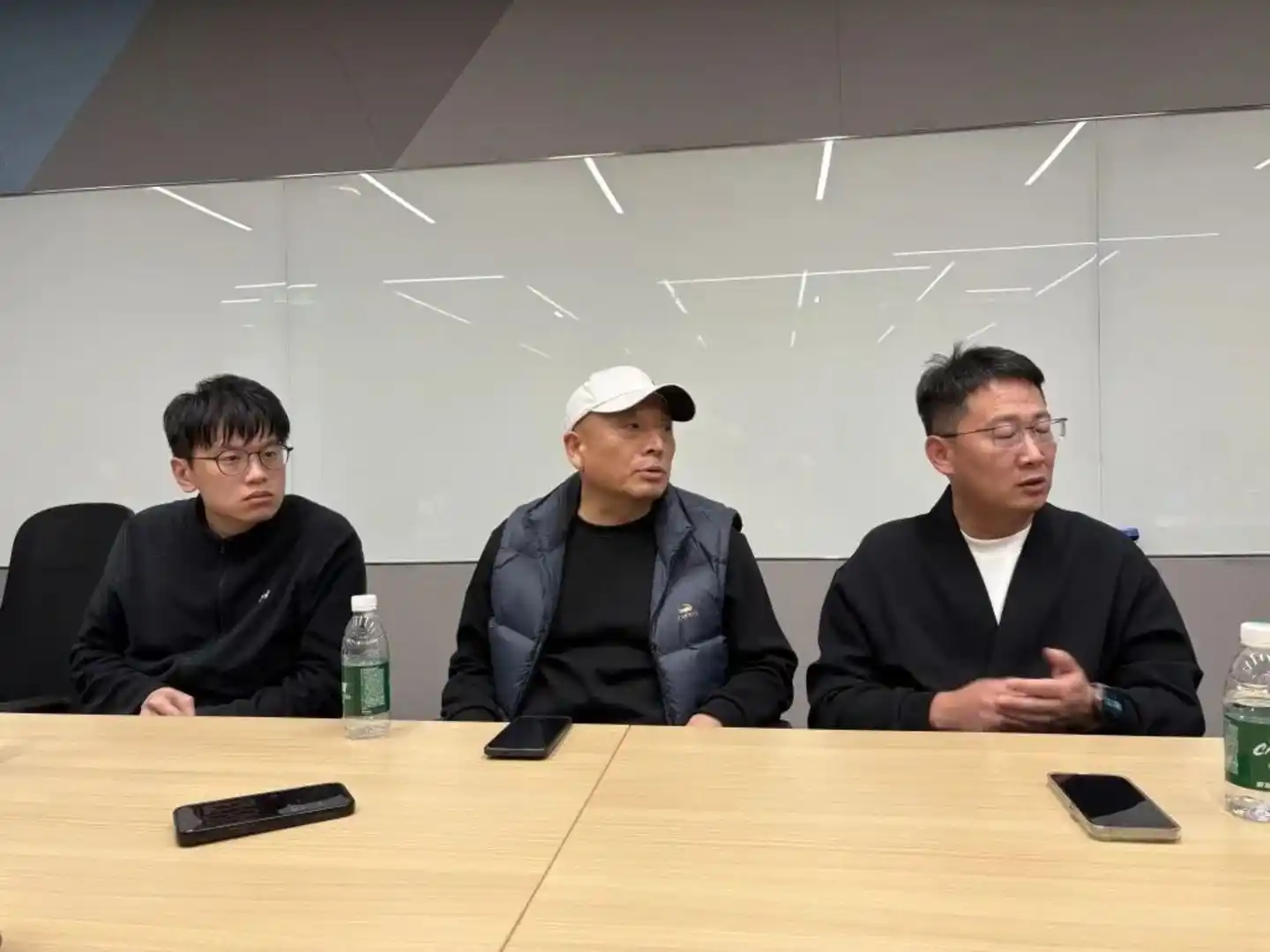
Production team of "Armed into Song," source: Guanchazhe Network
None of these six individuals are formally trained in film or television. Some were ride-hailing drivers, others stay-at-home moms; one runs a wholesale business and delivers goods by truck. Team members are scattered across Guangdong, Anhui, Hubei, Jiangxi, Fujian, and Hebei provinces—never having met in person as a full group.
Yet they quickly established a relatively standardized production workflow: reading novels, deconstructing scripts, writing prompts, generating videos, followed by post-production editing.
First comes script adaptation. "Armed into Song" is adapted from a novel of the same name on Tomato Novel, which exceeds 1.7 million characters. Zhang Hansheng oversees IP selection and creative direction, while Li Chaohua manages script coordination and content oversight. The team must first read the entire novel, then break it down into plotlines and episode structures suitable for short-form drama.
Although labeled as an AI short-form drama, no AI involvement had occurred up to this point.
Based on their understanding of character personalities and narrative arcs, the team rewrites dialogue, plots, and shot expressions, then transforms the script into prompt sequences recognizable by AI models.
Next is character and scene design. To prevent visual inconsistencies across different contributors, the team established a shared asset library upfront, storing character concept art, scene designs, and props uniformly. Each member can retrieve relevant assets from the library when producing specific scenes.
For example, a recurring character must maintain consistent facial features, clothing, and appearance across episodes; similarly, a village or military camp should preserve a uniform visual aesthetic.
These image assets are then paired with prompts and input into video generation models to produce actual shots—the most computationally intensive phase.
In AI video production, this repetitive generation and screening process is known as "gacha." According to lead creators, average shots require around three generations, while battle scenes often need over ten, and complex shots may exceed twenty. Even if a generated frame meets requirements, it may be discarded if character expressions, movements, or camera effects fall short of expectations.
Finally, each member completes their assigned episodes and shots, which are then consolidated for unified review, editing, and adjustments. Any discrepancies in costumes, settings, or narrative continuity require rework.
This workflow ultimately enables astonishing production speed: from the first season's launch on August 21 to the tenth season update by early November, approximately 1,000 episodes were produced in just over two months. According to the creators, the team now maintains a pace of releasing one season per week, with each season containing around 100 episodes.
In fact, script creation itself resembles conventional film and TV writing; character design remains similar to traditional casting decisions, requiring direct involvement from lead creatives.
Even the “gacha” process of video generation mirrors the waste of raw footage during traditional filming—except one consumes film or storage space, while the other consumes tokens.
Yet AI creation undeniably offers advantages unmatched by traditional film production: continuously evolving video generation models provide virtually unlimited creative potential.
Seedance Delivers Major Breakthroughs
The explosive popularity of "Armed into Song" not only capitalized on the momentum of the short-form drama market but also benefited significantly from continuous upgrades to Seedance as the series progressed, leading to steadily improving quality.
In the initial stages of Season 1, the team primarily used Seedance 2.0. With the release of Seedance 2.5, they began experimenting with the new version and noticed a significant improvement in visual realism. Particularly in Seasons 9 and 10, AI artifacts diminished noticeably, and lighting, shadows, and scene textures became increasingly indistinguishable from real cinematic visuals.
From the creators' perspective, this shift goes beyond mere visual enhancement. The upgraded multi-reference capability in Seedance 2.5 proved especially crucial for projects like "Armed into Song," which feature large casts and extensive battle sequences.
On July 31, ByteDance officially launched Seedance 2.5. Compared to the initial release of Seedance 2.0 earlier in the year, one of the most noticeable improvements was the increase in maximum video generation duration—from 15 seconds to 30 seconds per run.
This doubling of generation length may seem minor at first glance, but it has been transformative for film production.
Previously, AI video generation typically yielded only short clips. To create a continuous action sequence, creators had to generate multiple videos and splice them together via editing. The more segments involved, the higher the likelihood of discontinuities in character movement, camera motion, and scene transitions.
Seedance 2.5 extends single-generation duration to 30 seconds and supports multi-round video extension, with enhanced optimization for shot transitions and scene continuity.
This means the model begins attempting to maintain consistency in characters, scenes, and actions over longer durations—capable of replicating some long takes traditionally requiring meticulous directorial planning in conventional filmmaking.
Especially for fast-paced, high-frequency short dramas, the seamless stitching of multiple high-quality single shots can form a logically coherent narrative segment.
Beyond this, another critical advancement in Seedance 2.5 lies in its enhanced handling of reference materials.
Seedance 2.5 can accept up to 50 multimodal reference inputs per generation—comprising 30 images, 10 video clips, and 10 audio files. Creators can now supply not only character and environment images but also use video clips for motion references and audio for vocal tone and expression cues.
This is particularly vital for ensemble-driven productions like "Armed into Song." For instance, a battle scene involving multiple special forces operatives requires the model to understand each character’s appearance, attire, positioning, and their dynamic interactions within the frame.
Relying solely on textual descriptions, as in the past, makes consistent control of these details extremely difficult.
Yet model upgrades cannot solve every issue.
During media interviews, lead creator Li Chaohua noted that multi-character scenes remain challenging in AI video generation. Scenes featuring twenty or thirty people simultaneously present immense information-processing demands for the model, often resulting in issues with character consistency, role misplacement, and incorrect action sequencing.
Facial expressions, dialogue delivery, and lip-syncing are still areas needing refinement. Even when visuals appear highly realistic, micro-expressions and emotional conveyance still lag behind those of human actors.
Great Stories Remain Scarce
The production journey of "Armed into Song" not only documents the evolution of AI video generation technology but also reflects shifts in the market environment experienced by the creative team.
When Zhang Hansheng first entered the AI film industry, it was a golden era for AI short-form drama production. In 2025, the highest market rate for AI short-form drama production reached 3,000 yuan per minute. Through order-taking, the team gradually accumulated technical expertise and creative capacity.
However, in February 2026, with the release of Seedance 2.0, video generation quality and production efficiency further improved. Tasks once requiring substantial manual labor—such as shot generation, character design, and video editing—became far easier. While this convenience benefited Zhang’s team, AI short-form drama production rates plummeted rapidly.
According to Zhang, current market rates for AI short-form drama production have dropped to between 200 and 300 yuan per minute—a decline of over 90% compared to the peak.
For production teams, this means the old model of securing contracts through technical proficiency and rapid output is becoming unsustainable.
In the early days, they split the team into five groups, maxing out at 20 AI short-form dramas per month—virtually consuming tokens and generating videos every day. But as project volume increased, they gradually realized that higher output didn't translate into better quality. Although AI-generated footage grew abundant, few works truly captured audience attention.
Thus, instead of pursuing mass production, the "Armed into Song" team shifted focus toward deep reading of source material, script adaptation, and character design—adopting a premium, quality-first strategy.
With higher quality demands, individual episode token consumption surged dramatically. According to the creators, total computational resource investment for the "Armed into Song" series has exceeded 1 million yuan.
Interestingly, despite the massive compute expenditure, the team’s overall token usage has actually decreased. The reason? Overall output has declined. Currently, the team produces only a handful of short dramas per month.
What Zhang Hansheng’s team experienced is part of a broader trend in the AI short-form drama market: massive supply expansion. DataEye data shows that in the first half of 2026, the number of original AI dramas and manga-style series launched on Douyin reached 221,900. Among them, only 1,055 titles surpassed 100 million views—accounting for approximately 0.48%.
If we use 50 million views as a benchmark for profitability, only 2,886 titles reached this threshold in the first half of the year—representing about 1.3%.
Indeed, advancements in AI video generation technology have empowered countless individuals to produce short dramas. Yet the flood of content has fragmented audience attention, leaving only a select few capable of breaking through.
Zhang Hansheng himself believes that producing short dramas using AI technology is no longer the hardest part—and even successful outputs don’t guarantee profitability.
Let alone ordinary creators. Even Elon Musk might not succeed in creating a truly great work using AI.
This summer, after multiple critiques of Christopher Nolan’s casting choices in "Odyssey," Musk claimed he would use his Grok Imagine platform to produce a version of "Odyssey" faithful to Homer’s original text and historical context. In October, Grok partnered with the AI film studio Wonder Studios to release the first episode—approximately seven minutes long.
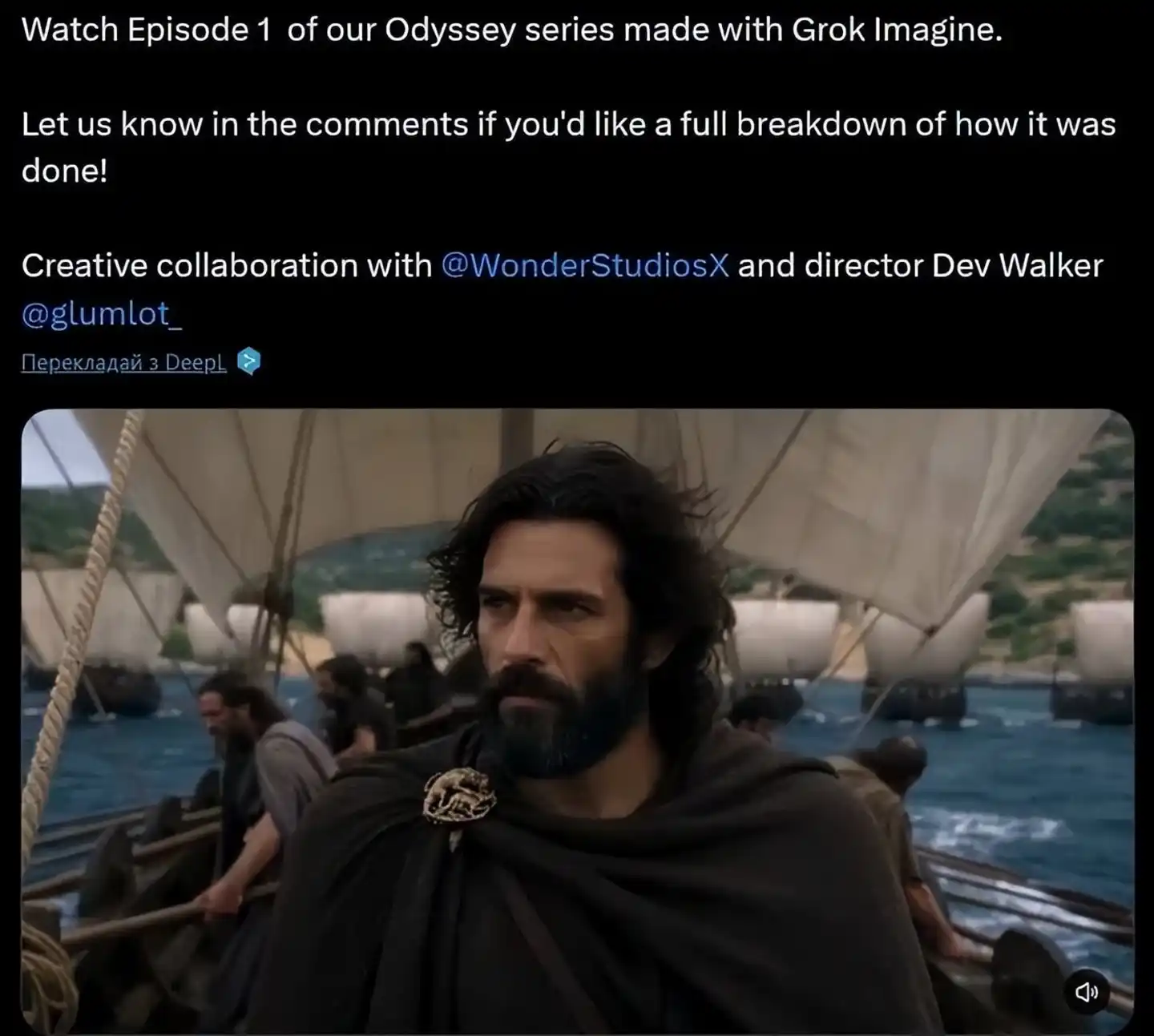
Visually, the scenes generated by Grok already appear remarkably lifelike, approaching cinematic quality. However, the work received widespread criticism regarding narrative storytelling, character performance, and pacing.
TechCrunch commented that the video’s greatest deficiency wasn’t visual realism but artistic resonance and narrative tension—audiences struggled to connect emotionally with the characters or care about the story.
Ultimately, technology is always supplementary. What truly moves audiences remains a compelling story.
Source: Blue Letter Project
Disclaimer: Contains third-party opinions, does not constitute financial advice


Douyin Releases 220,000 AI Animated Series in Half a Year, Most Creators Earn Less Than $10 Monthly
07-29
ByteDance's Douyin Beans priced at 68 RMB—worth it for 382 million monthly active users?
07-25
62 Yuan AI Community Collected 248,000 in 4 Days—First Lesson? Recruiting Referrals
07-23
Ditching Salesforce? U.S. Small Businesses Save $100K Annually with AI
07-23
The AlphaGo Moment in Cybersecurity, or Starting from These 466 Agent Matchups
7 days ago
The Trump administration plans to offer Constellation Nuclear a $5 billion loan for capacity expansion, with the additional power mostly pre-allocated to AI giants such as Google
15 days agoSilicon Valley Executives Spark Controversy Over Using AI for Household Tasks; Survey Reveals Half of American Adults Worry About Impact on Relationships
15 days ago


