AI Xiaohai Turns Empathy into Orders with Commission Rates as High as 55%
AI Xiaohai Turns Empathy into Orders with Commission Rates as High as 55%

2026-10-18 18:02
Introduction: After the fake celebrity fades out, cheap tutorial content begins mass-producing emotional narratives. Xiao Hai has hit another insurmountable obstacle today. He’s behind in the competition, bullied by classmates, and his father has been hospitalized again.
Xiao Hai has hit another insurmountable obstacle today.
He’s behind in the competition, bullied by classmates, and his father has been hospitalized again. In short videos, he portrays a child living with his father, lacking maternal love, constantly facing setbacks in daily life.
Within seconds, eyes brimming with tears, he sobs into the camera, repeatedly calling out “Auntie, Mom”, his voice breaking, before pulling out a bottle of cooking oil from beside him, asking viewers to place an order for him.
Commenters respond by calling him “son.” Some elderly users have placed four orders each, expressing affection for their “son” in messages, urging him to take care of himself.
On the platform, this AI-generated teenage face appears across different regional accounts, telling similar life stories, promoting various products, moving audiences across the country to click “buy” and make purchases.
This business has changed faces many times.
Once it was the fake “Jin Dong” who called everyone “sister,” the sentimental scholar with a signature smile singing love songs, the Russian beauty claiming she wants to marry Chinese men—now it’s the obedient, pitiful “son.”
The person changes, but the emotional commerce remains: inserting a stranger into the audience’s life, transforming affection and concern into orders and tips.
AI further reduces the cost of creating personas and storylines. Previously reliant on real people and stolen footage, now everything can be scaled via tutorials and templates.
01 Distant Brother, Son, or Romantic Partner
79-year-old single elder Wang Hongmei (pseudonym) packed her bags and boarded a train alone. She said “Xiao Hai” invited her to Yuncheng, Shanxi, to see apricot blossoms.
When police officers explained that those affectionate words were performed for millions, not personally directed at her, she refused to believe it.
In this performance, Xiao Hai wasn’t always the protagonist.
Previously, he was the son of AI persona “Wang Jianguo.” Wang Jianguo dressed impeccably, spoke gently, called women “sister,” urged them to buy goods to support his family and fund his son’s education. Xiao Hai stood nearby, lamenting his lack of a mother, hoping aunties could bring happiness to his father.
Later, some “Wang Jianguo” accounts were shut down, prompting the son to step forward, shifting from “sister” to the more intimate “Auntie Mom.”
Two years ago, a wave of accounts began promoting international romance to Chinese audiences.
Ukrainian content creator Olga discovered her face had been cloned, turned into a fake Russian woman named “Natalia.” This fabricated persona spoke fluent Chinese, raved about Sino-Russian lifestyles, praised China, and sold Russian food. Watching her own mouth move, uttering someone else’s scripted lines, was surreal.
In similar videos, some claimed Russian women wanted no dowry, no car or house, just a desire to marry Chinese men. Viewers asked about age in comments, complimented the girl’s looks.
A year earlier, a scholarly figure dressed in shirts and suits became a favorite among middle-aged and elderly women. Singing lip-synced songs against rural backdrops, smiling at the camera, tousling his hair, he received endless praise and tips. One livestream battle drew over 20 million viewers.
Meihua, a 69-year-old fan, saw him as a struggling rural youth and wanted to help. She wanted to film a duet video; her daughter bought a tripod, her husband helped with filming. She enjoyed the interaction and was willing to tip, supporting someone she loved.
Even earlier, in 2020, Huang, a 61-year-old woman from Jiangxi, became obsessed with “Jin Dong” in short videos, made up her mind to leave home and find him—no amount of persuasion from family could change her mind.
That “Jin Dong” was created by mass accounts using actor photos and interview clips, paired with synthetic voices, inviting likes, duets, replies to comments, and private messages. The TV star thus transformed into a personal figure on mobile screens—someone who cared and responded.
It’s easy to find celebrity faces, easy to fabricate identities, easy to script brief greetings. When such videos are broadcast to millions, a simple “sister” can feel like a private message.
Some crave admiration from the opposite sex, others seek a kind word, and some want to care for a suffering child. People carry different hopes, yet often end up returning to the same account, meeting the same operator again and again.
With “Xiao Hai,” there’s no need for fame or romantic promises. Being dutiful, suffering, and missing a mother is enough to invite viewers into the role of “mom.”
Characters rotate, but the strategy is clear: when one persona loses effectiveness, try another that triggers emotional responses.
02 If You Feel Compassion, Place an Order
Xiao Hai’s pleas are always followed by shopping links.
“Just two more orders to win the school product-selling contest,” Xiao Hai says in the video. Rather than directly recommending a bottle of oil, helping a child achieve victory is far more likely to stir the heart of a “mom.” A simple click on the link lets viewers help this pitiful child, rewarding them with a familiar, warm smile.
This model already appeared in fake celebrity live streams.
In 2020, a fake Liu Kaiwei account named “Wei Di” promoted facial masks and luxury creams, claiming actresses on set used them, saying he couldn’t be with his “sister” personally, so the skincare products would care for her instead.
Viewers get to look better while also responding to the “celebrity brother’s” care—easy to purchase. Sellers found that instead of laboriously describing products or marketing brands, using an appealing salesperson generated far richer purchasing motivations.
The food and daily goods Xiao Hai promotes are useful at home. Elderly viewers help their “son” while simultaneously stocking up on household essentials.
Compared to the scholar who traded dance moves and vocals for tips, elders find it easier to justify these purchases emotionally. They pass their internal moral test, spending dozens or hundreds of yuan repeatedly.
Once buying becomes a way to help someone, price becomes secondary. The same oil may be 30 yuan cheaper elsewhere, and ordinary shoppers might switch—but if “Mom” wants to help “Xiao Hai” win the contest, buying elsewhere means failing to help this time.
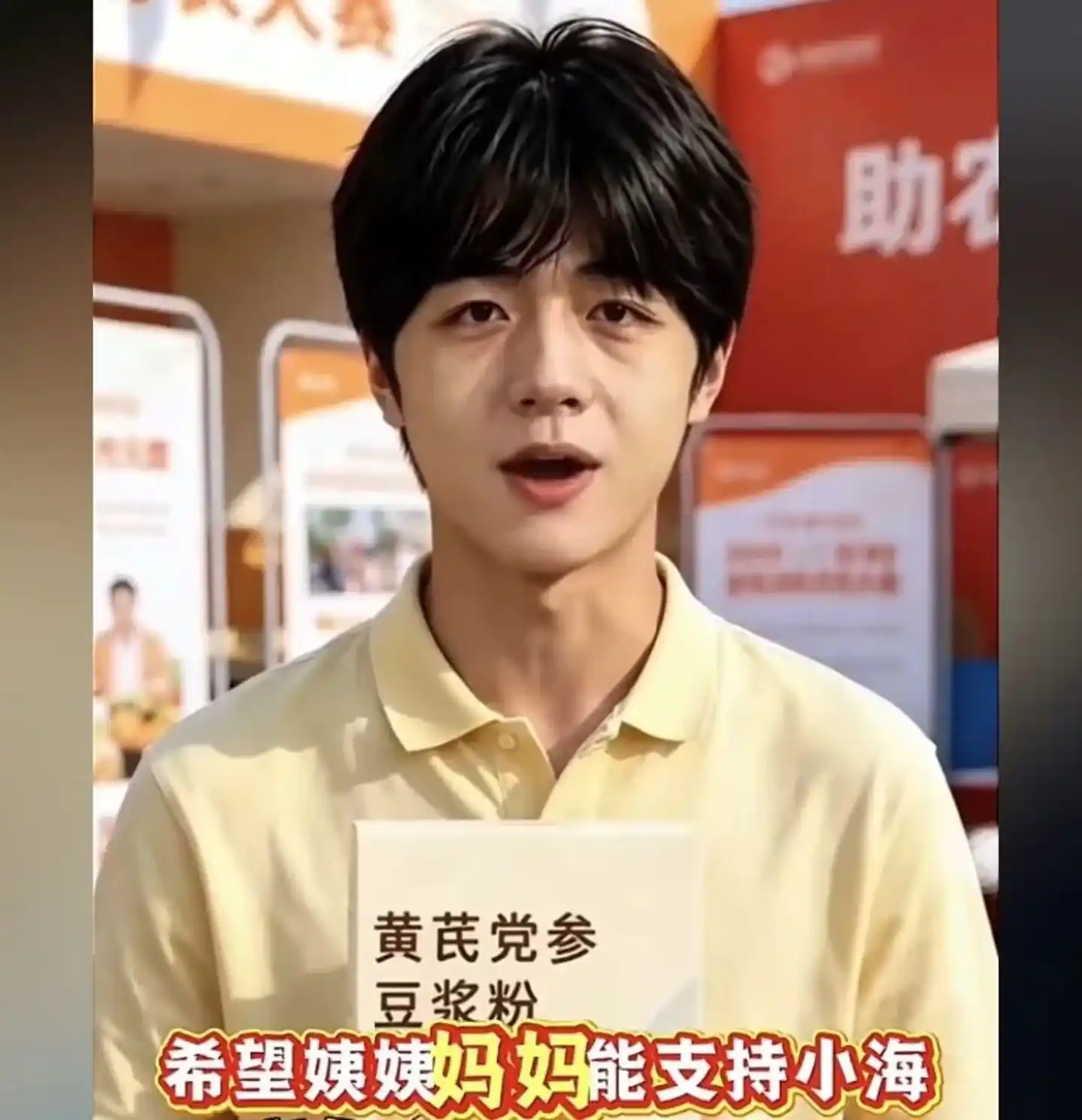
Multiple “Xiao Hai” accounts promote perilla seed oil: 2 bottles, 250ml each, priced at 99 yuan. The brand’s commission rate is 52%. The same product on other platforms sells for just 60–70 yuan.
A gelatin product offers a 55% commission. On “Xiao Hai’s” link, it’s listed at 99 yuan; on other platforms, it’s under 60 yuan.
Seniors believe every order they place strengthens “Xiao Hai’s” confidence in front of classmates—yet what they actually fund is the creator’s sales commissions.
Brands don’t need to run a crying, singing “child” themselves. Operators don’t need to produce cooking oil. Products and videos connect through commission structures.
This profitable arrangement incentivizes repeated video production. Even with tens of yuan spent on materials and tutorials, operators stand a high chance of recouping costs through future orders.
Products attached to “son” videos add urgency to transactions. The complex logic of comparing brands, specifications, and prices collapses into a simple choice: will I help this child?
The extra tens of yuan become easily justified as goodwill. Among mother and son, details aren’t counted.
03 Cheap Repetition, Objective Revenue
Previously, managing an emotional account required teams handling content creation, follower growth, and account resale.
In 2020, a fake Lu Jin account using his name, with 45,000 followers, was priced at 4,500 yuan. Fans didn’t realize their daily likes and greetings were inflating the account’s value.
Now, AI makes content creation significantly easier.
Operators no longer need to appear on camera, hire actors, or require the same person to sing, cook, or perform emotional scenes daily. Tools provide ready-made avatars, voiceovers, and scripts.
Changing dialogue or scenes requires no reshoots. Time once spent on real performers now shifts to AI video generation and editing—drastically reducing costs.
Existing tutorials can be directly reused. Today, “Xiao Hai” kits cost just a few yuan, with tutorials for dozens, and custom avatar and production services for hundreds. If one product fails, switch to another; if one storyline flops, try a new one.
Those buying tutorials must wait for buyers, while tutorial sellers sit at the top of the chain, collecting money as newcomers enter.
A single kit can be resold repeatedly or customized for fee-based video creation. These individuals collect money from both audiences and creators—two hands, one receiving, one offering.
Some “Xiao Hai” accounts sell only dozens of items; others reach thousands. Earnings vary. But for tutorial sellers, the final success of any account doesn’t affect their one-time profit. If one beginner fails, recruit another.
“Xiao Hai” doesn’t need to convince all viewers. Some spot the fraud and scroll away, but others stay and adopt him as their son. Even with clear disclaimers stating AI-generated content, recognition and purchases continue. As long as each video attracts a segment willing to buy, it counts as success.
Low-cost production, high-commission goods, established distribution channels—this creates a stable cash flow. The disappearance of one face, like the fake Jin Dong, doesn’t end the sales model. When intimacy can be repeatedly converted into revenue, and generating new faces grows cheaper, operators keep experimenting.
Xiao Hai has no real life.
His competitions, studies, and father’s illness can all be rewritten according to product sales needs.
Seniors buy things hoping to reduce his suffering; operators must keep selling, so he must keep encountering new hardships. Once a product sells out, the next one still needs a reason to tug at hearts.
This child must never grow up—only keep facing trouble.
Source: Liao Liang Finance
Disclaimer: Contains third-party opinions, does not constitute financial advice


Douyin Releases 220,000 AI Animated Series in Half a Year, Most Creators Earn Less Than $10 Monthly
07-29
ByteDance's Douyin Beans priced at 68 RMB—worth it for 382 million monthly active users?
07-25
62 Yuan AI Community Collected 248,000 in 4 Days—First Lesson? Recruiting Referrals
07-23
Ditching Salesforce? U.S. Small Businesses Save $100K Annually with AI
07-23
Tensorlake npm package suffers supply chain attack, malicious version 0.5.144 injected with Shai-Hulud data-exfiltration worm
11 days agoTesla and Musk Have Yet to Define "Amazing Abundance" — Visionary Slogan Sparks Skepticism
17 days agoInstinct Launches Curated Recommendation Feature, Sparking Frustration Among Some Users Receiving Passive Product Suggestions
18 days ago


