Why Have Five Major Chipmakers Suddenly Invested in MCUs? From Aerospace to Robotics
Why Have Five Major Chipmakers Suddenly Invested in MCUs? From Aerospace to Robotics

2026-10-14 12:02
Introduction: Physical AI-driven chip vendors are shifting from single-chip to system-level solutions. This year, Agent, Physical AI, and Edge AI have become dominant themes in the semiconductor industry.
For the semiconductor industry this year, Agent, Physical AI, and Edge AI are undoubtedly trending topics. Chip manufacturers are aggressively investing—some even going all-in.
As AI extends toward end-devices and the physical world, the importance of MCUs is rising. A transformation is underway, with more vendors turning to acquisitions to fill gaps in their MCU portfolios. The competitive landscape of the MCU market is thus undergoing new shifts.
Microchip: Acquisition of VORAGO
Microchip announced on October 10 the acquisition of VORAGO Technologies, a semiconductor company headquartered in Austin, Texas, specializing in radiation-hardened MCUs and MPUs. The exact financial terms of the transaction remain undisclosed; Microchip expects the acquisition will not materially impact its consolidated financial performance.
VORAGO’s products target high-reliability applications in aerospace and defense, capable of enduring high-radiation environments and extreme temperatures. This acquisition will add a suite of radiation-hardened MCUs and MPUs to Microchip’s portfolio, further strengthening its offerings in aerospace and defense. Additionally, VORAGO’s proprietary HARDSIL process technology will be integrated into Microchip’s ecosystem, helping accelerate time-to-market for new products, reduce development costs, and enhance radiation tolerance in existing products.
Microchip has long held a significant market share in aerospace and defense. Acquiring VORAGO represents a strategic enhancement, bringing in a team with deep expertise in radiation-hardening technologies, thereby bolstering technical support across broader business lines.
In terms of product offerings, VORAGO currently provides VA4 (Cortex-M4), VA5 (Cortex-M55), and VA10805 (M0) MCUs. Beyond MCUs, the company also offers high-performance edge processors in the V7 series.
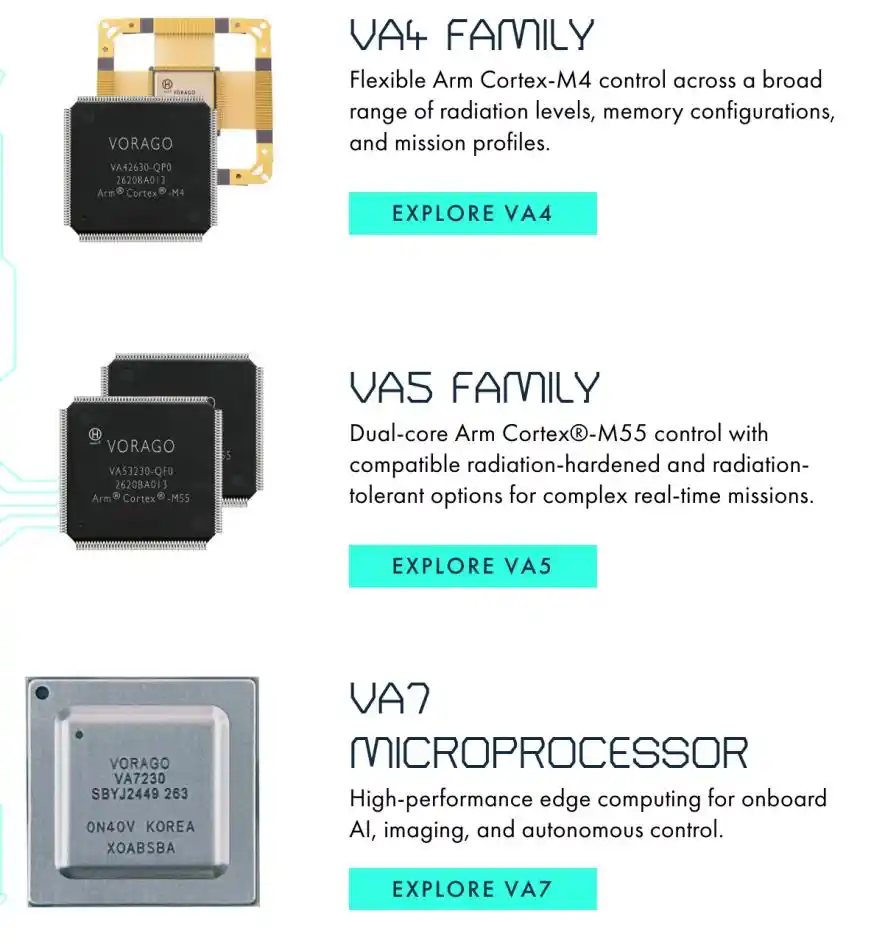
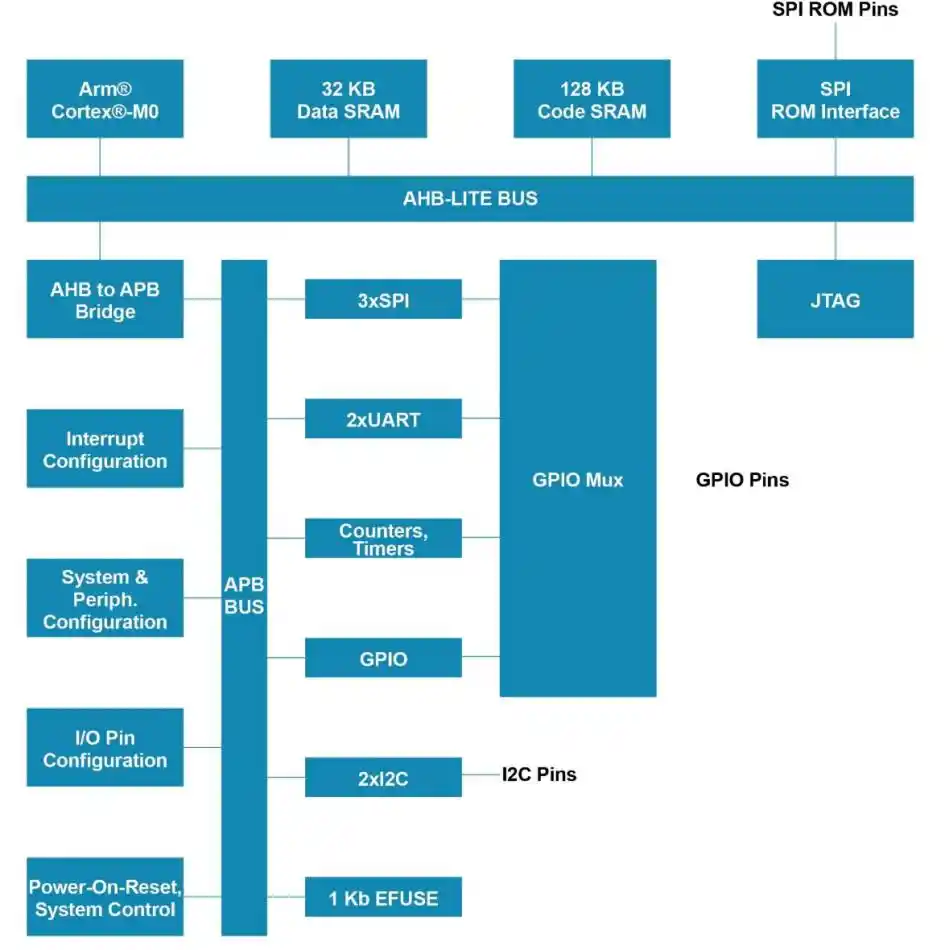
Notably, on September 21, Microchip completed its acquisition of Israeli AI chipmaker Hailo. Hailo fills a critical gap in Microchip’s capabilities in edge AI, machine vision, and robotics computing. In essence, today’s Microchip is now more comprehensive than ever.
ADI: Acquisition of Alif
On September 11, ADI announced a proposed $1.35 billion cash acquisition of Alif Semiconductor. Upon completion, Alif’s AI-native microcontrollers and fused processors will be incorporated into ADI’s product lineup. According to public disclosures, ADI may also pay up to $200 million in additional contingent consideration. The transaction is expected to close by the end of 2026. ADI states this move is part of its strategic positioning in Physical AI.
Alif’s products are built on a heterogeneous computing architecture, combining low-power neural network processing, connectivity, security, and power management features—ideal for edge AI applications requiring real-time perception and local inference. Their chips are already in volume production and adopted by multiple consumer electronics and industrial clients. This acquisition will augment ADI’s digital signal processing capabilities and strengthen its presence in edge AI.
ADI’s long-standing expertise in analog signal chains, sensing, power management, and connectivity complements Alif’s processor platform. The two companies plan to integrate their technological strengths to deliver system-level solutions for markets including industrial automation, data center infrastructure, defense, energy, robotics, digital health, and wearable devices. As AI moves beyond the cloud into the physical world, ADI aims to enhance edge devices’ ability to perform perception, inference, and execution locally.
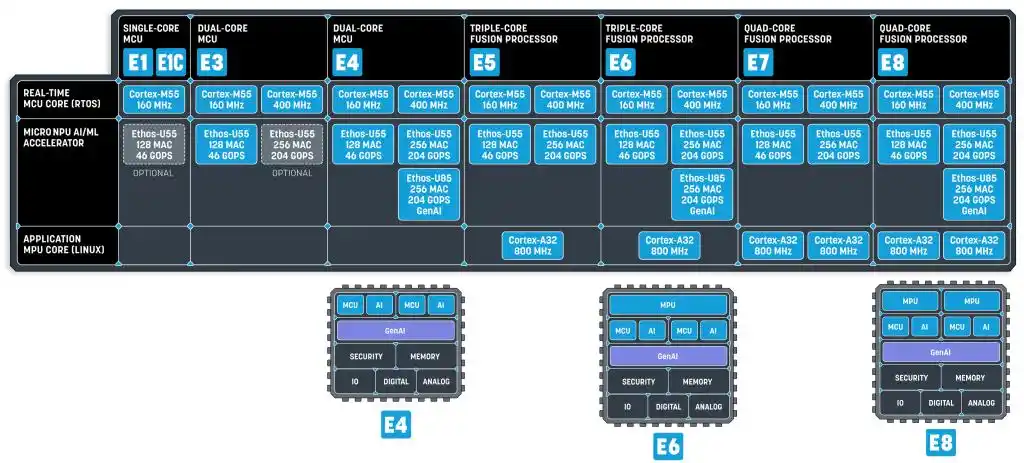
Alif has been an early mover in AI integration. Its first-generation Ensemble MCU series launched as early as 2021, and since then we’ve consistently shipped E1, E3, E5, and E7 devices. While other MCU vendors were still at first-gen AI MCUs, Alif had already introduced its second-generation products—industry’s first MCU supporting Transformer-based networks, forming the foundation for LLMs and other generative AI models.
In 2025, Alif unveiled its latest generation of MCUs and fused processors—the Ensemble E4, E6, and E8—specifically designed to run generative AI models including SLMs. At the same time, Alif became the first chip supplier to adopt Arm Ethos-U85 NPU (Neural Processing Unit), enabling support for Transformer-based machine learning networks.
Benchmark results show that this series achieves high-efficiency object detection in under 2 milliseconds, image classification in less than 8 milliseconds, and performs SLM inference generating text based on user prompts on the E4 device consuming only 36mW. Ensemble E4 (MCU) features dual Arm Cortex-M55 cores; Ensemble E6 and E8 fused processors are based on Arm Cortex-A32 and dual Cortex-M55 cores respectively. Notably, all three—E4/E6/E8—are equipped with dual Ethos-U55 + Ethos-U85 NPUs, delivering exceptional compute performance.
TI: Acquisition of Silicon Labs
Texas Instruments (TI) announced in February a full-cash acquisition of Silicon Labs at $231 per share, with an enterprise value of approximately $7.5 billion. The deal is expected to close in the first half of 2027. This will be TI’s largest acquisition since its $6.5 billion purchase of National Semiconductor in 2011. Over the next three years post-acquisition, TI anticipates annual manufacturing and operational synergies of around $450 million.
The key highlight of this transaction lies in manufacturing and sales synergy. TI plans to leverage its own 300mm wafer fabs, internal packaging and testing capabilities, and mature processes to support Silicon Labs’ product manufacturing, while expanding customer reach through TI’s global distribution channels. For TI, this acquisition could shorten the timeline for building its wireless connectivity ecosystem; for the industry, it will deepen the integration of analog chips, MCUs, and wireless connectivity technologies. However, how product integration, development tool maintenance, and customer support will align remains to be seen after closing.
The core focus of this acquisition is strengthening TI’s wireless connectivity business. Silicon Labs holds extensive expertise in multi-protocol wireless technologies for IoT, including Wi-Fi, BLE, Matter, Zigbee, Z-Wave, and Thread. It also owns the Simplicity Studio development environment, a developer community exceeding 200,000 members, Matter-certified products, and Secure Vault security technology. Post-acquisition, TI’s product portfolio will include approximately 1,200 wireless-enabled devices supporting multiple standards and protocols, significantly enhancing its embedded product offering.

Silicon Labs continues to expand its toolchain, particularly in embedding AI agents into embedded development workflows. On October 7, during the 2026 Works With Developer Summit, Silicon Labs announced an expansion of its AI development platform, introducing the Simplicity AI SDK and Simplicity Design Intelligence, alongside launching an open-source developer community Beta program and deepening collaboration with Databricks.
The primary focus of this update is integrating AI Agents into embedded development pipelines—not just code generation, but also project configuration, firmware compilation and flashing, debugging, and power analysis. The Simplicity AI SDK is now available in Beta, supporting tools like GitHub Copilot, Cursor, and Codex. Developers can invoke Silicon Labs’ tools and technical resources via natural language, with initial functionality focused on low-power Bluetooth development.
Beyond software, Silicon Labs is exploring AI’s ability to understand hardware design. The Hardware Intent feature in Simplicity Design Intelligence can parse product requirements, PCB schematics, datasheets, and meeting notes to assist in verifying pin assignments, peripheral configurations, and hardware constraints. For example, interface conflicts such as I²C, SPI, or UART misconfigurations could be detected before PCB fabrication, reducing costly and time-consuming board revisions. This feature is not yet publicly available; the first Alpha version is scheduled for release in January 2027. Meanwhile, Silicon Labs launched an open-source Beta program for Bluetooth LE, inviting developers to submit issues, bug fixes, and code contributions via GitHub to improve sample applications and future SDKs.
In edge AI, Silicon Labs collaborates with Databricks to connect IoT device data, machine learning training, and embedded model evaluation. Enterprises can use the Silicon Labs MLOps SDK to collect device data and feed it into the Databricks platform, leveraging existing tools and GPU resources for model training, then using ML Profiler to preliminarily assess memory and CPU resource needs on target hardware.
onsemi: Acquisition of Synaptics
Although Synaptics cannot be simply categorized as an MCU vendor, its product portfolio spans edge AI, wireless connectivity, and includes multiple relevant MCUs and SoCs—making it noteworthy.
On June 25, onsemi announced the acquisition of Synaptics, initially valued at approximately $7 billion. This marks the largest acquisition in onsemi’s history.
On October 1, the transaction was revised from an all-stock deal originally valued at ~$7 billion to a cash acquisition of ~$5.7 billion. onsemi stated this adjustment was due to a competing acquisition proposal received from a third party. The revised terms are expected to immediately boost onsemi’s Non-GAAP EPS and provide certainty of value to Synaptics shareholders. The deal is still expected to close in mid-2027.
Just ten days later, reports surfaced that Cirrus Logic had made a prior unsolicited offer to acquire Synaptics, attempting to intervene in the agreement between Synaptics and onsemi. Cirrus Logic’s bid combined cash and stock, prompting onsemi to revise its original terms.
onsemi’s goal in acquiring Synaptics, like ADI’s, is to advance Physical AI. onsemi has long accumulated expertise in silicon carbide power devices, image sensors, and industrial sensing. Synaptics’ edge AI computing, Wi-Fi and Bluetooth connectivity, and touch and audio human-machine interaction technologies complement onsemi’s existing sensor and power products. Together, they aim to expand their presence in automotive, industrial automation, robotics, and smart home markets—evolving their product portfolio from standalone chips to complete system-level solutions encompassing sensing, computation, connectivity, and control.
This transaction reflects a shift in strategy among chip vendors targeting Physical AI. As AI enters robotics, intelligent vehicles, and industrial equipment, vendors no longer need just computational chips—they also require sensors, wireless connectivity, power management, and control technologies. By acquiring Synaptics, onsemi is fortifying these capabilities, aiming to capture market opportunities driven by terminal-side intelligence.
Synaptics was founded in 1986. Since developing the world’s first touchpad in 1992, the company has remained a leader in touch interaction technologies. In 2019, after divesting its LCD TDDI business, Synaptics reallocated capital toward higher-growth areas—IoT and edge AI. Subsequently, in 2020 and 2021, Synaptics acquired Broadcom’s wireless IoT business and DSP Group, securing essential wireless connectivity and voice processing technologies, paving the way for its AI processor roadmap.
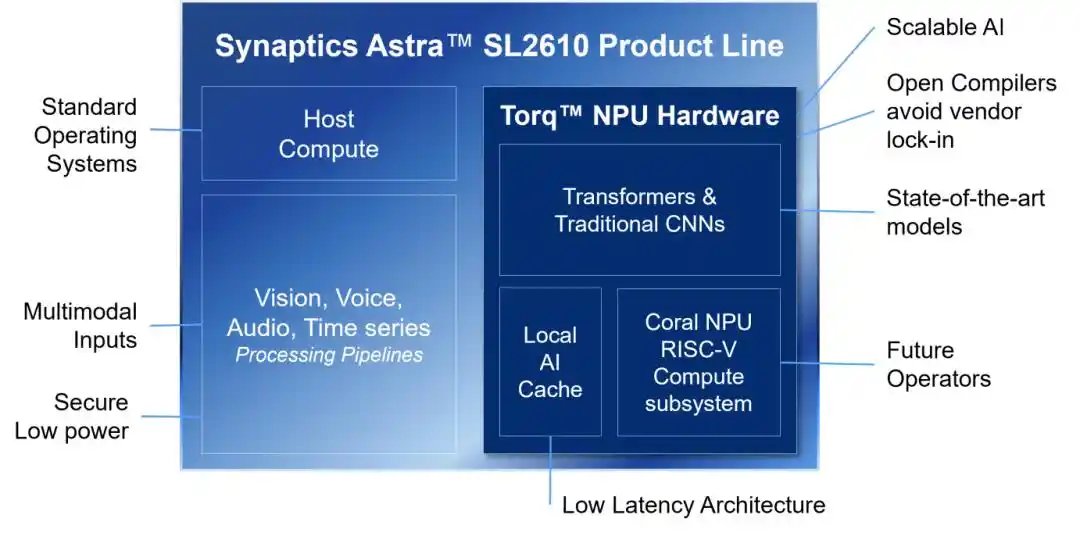
The company has been proactive in AI exploration. In May 2026, Synaptics launched its AI-native MCUs SYN765x and SRW1500, integrating Cortex-M52 (aka ARM’s “Xingchen” STAR-MC2) and Ethos-U55 NPU. The U55 delivers up to 50 GOPS at 200MHz.
Silergy: Acquisition of CloudWay Semiconductor
On April 28, Silergy and CloudWay Semiconductor jointly issued a client notification announcing that Silergy’s newly established acquisition fund has completed a controlling stake acquisition of CloudWay Semiconductor. Post-transaction, CloudWay will maintain its independent legal entity status, with original founding teams and core personnel remaining stable. Existing business operations, distribution channels, orders, and contract fulfillment will remain unaffected.
Silergy has long specialized in analog chips and power management. Recently, it has advanced its self-developed automotive-grade MCUs. During the 2026 Beijing Auto Show, the company revealed the SA32D series based on RISC-V architecture, featuring a high-performance RISC-V core with a maximum frequency of 300MHz, dual-core lock-step support, and peak compute performance up to 6,000 DMIPS—targeting applications such as battery management systems and main drive motor control.
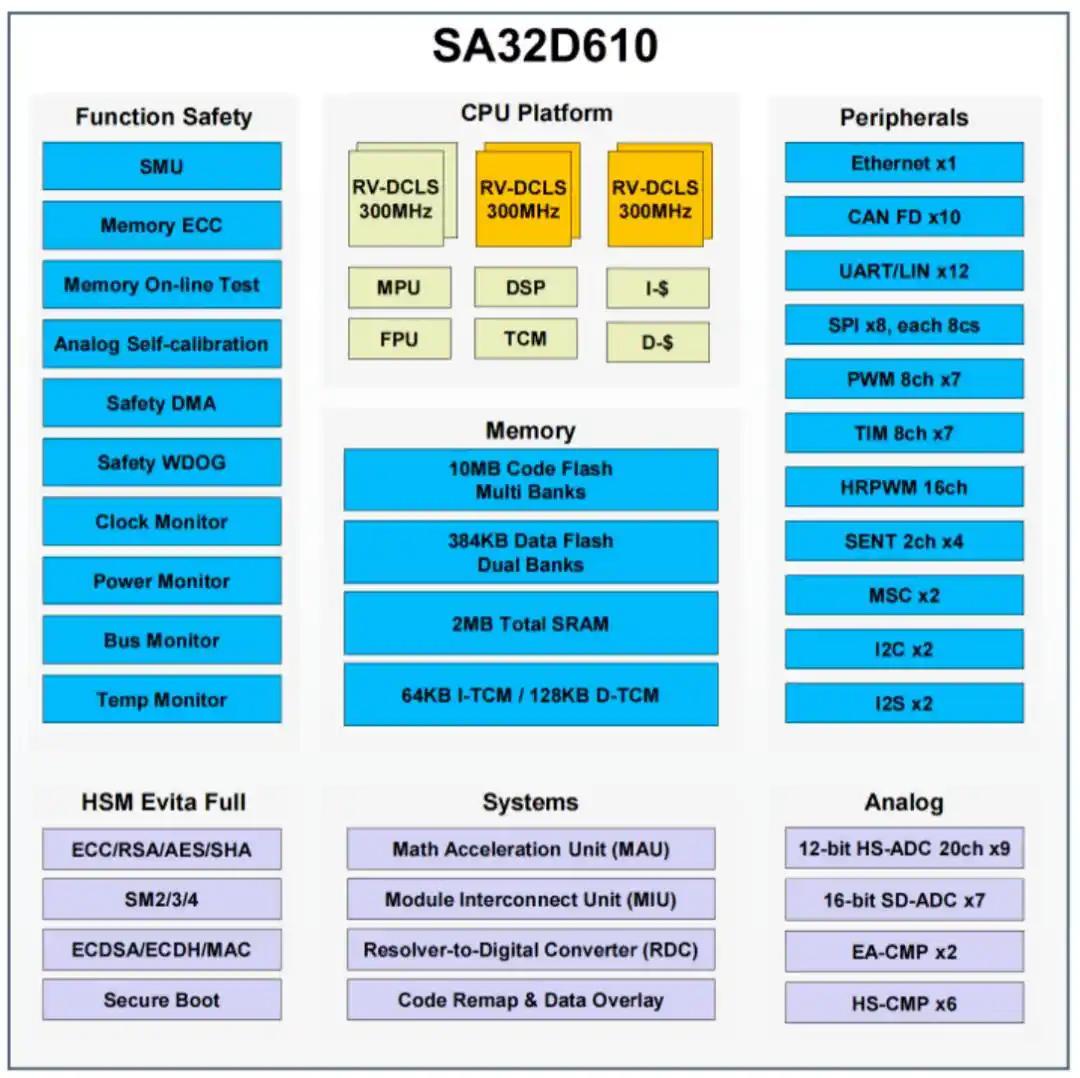
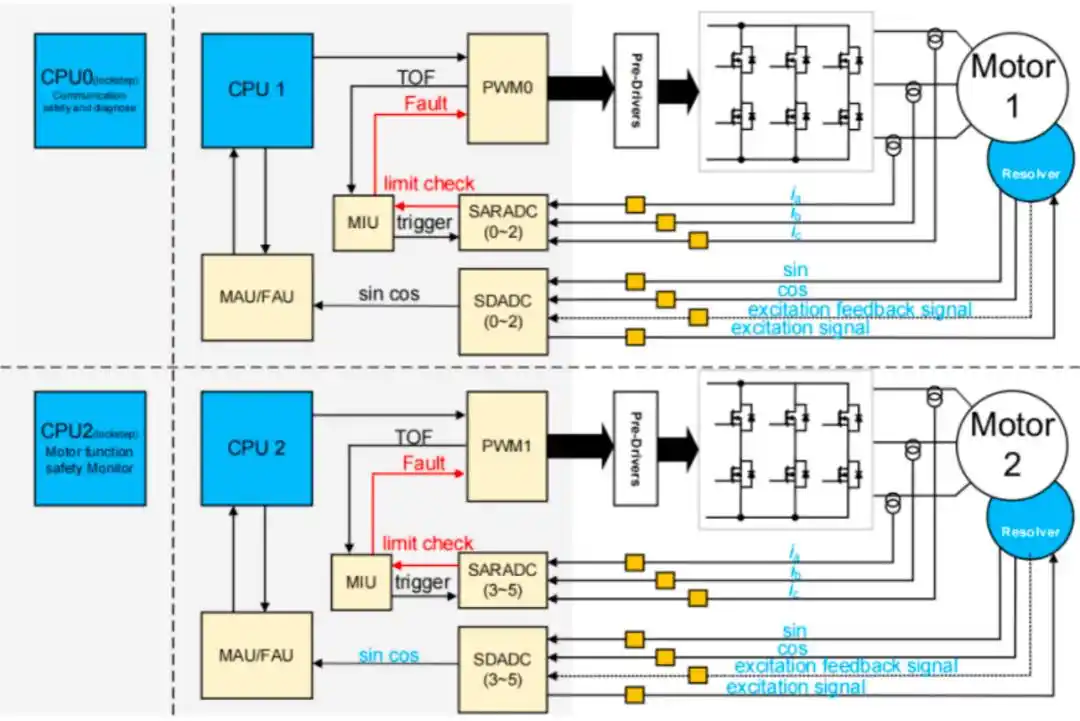
For Silergy, this acquisition completes a crucial piece in its automotive-grade MCU product strategy. CloudWay specializes in Arm-based automotive MCUs, with products already deployed in body control, intelligent cockpits, and steer-by-wire chassis systems. The two companies differ in technical roadmaps and product maturity. The acquisition enables Silergy to simultaneously advance both RISC-V and Arm architectures, shortening time-to-market and accelerating market expansion.
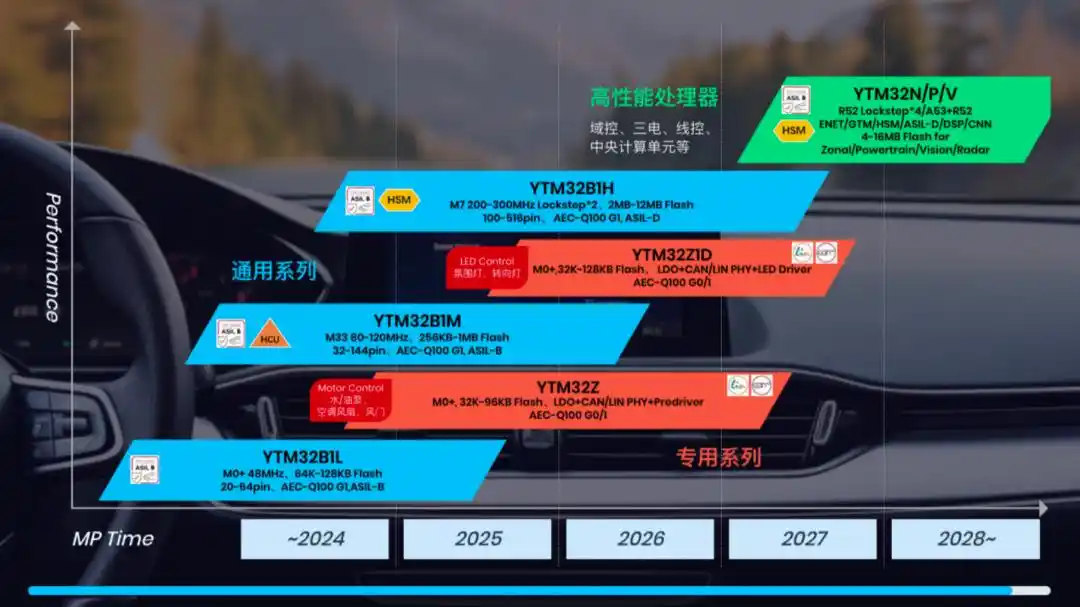
CloudWay Semiconductor’s official slogan is “True 32-bit Automotive-Grade MCU Supplier.” From its product roadmap, it includes YTM32B1L, YTM32B1M, YTM32B1H, YTM32Z, and YTM32N/P/V series, with ongoing launches of high-performance processors in the pipeline.
Final Thoughts
Physical AI and Edge AI are so hot that these acquisitions come as no surprise. Fundamentally, future competition is no longer just about who has the most powerful MCU or lowest power consumption—it’s about who can best integrate computation, sensing, connectivity, and control into a holistic solution.
From an engineer’s perspective, the changes brought by acquisitions go beyond merely extending product lines. What truly matters is whether legacy products will continue to be available, if development tools will keep receiving updates, and if software libraries and technical support will remain sustained.
Some engineers on EEWorld noted that after Microchip acquired Atmel, many of Atmel’s offerings disappeared (especially memorable was the loss of its Zigbee DIY event in later versions). It remains uncertain what will happen to these newly acquired chips. Others mentioned that having grown accustomed to older vendors’ components and tools, being acquired often means rebranding or gradual phase-out—leading to widespread discomfort.
Of course, acquisitions don’t necessarily lead to product line contraction. Leveraging the larger parent company’s R&D resources, manufacturing capacity, and distribution networks, the acquired firm’s technology will likely gain greater growth potential. Ultimately, success depends on each vendor’s integration strategy.
Source: Electronic Engineering World
Disclaimer: Contains third-party opinions, does not constitute financial advice


HuggingFace's "AI Duck" Goes Viral, Boosting Chinese Chip Supplier Rockchip
09-02
14 Executives Depart, Horizon Unleashes a Robot Legion
08-11
Nokia Snatches AI Optical Chip Race, Stock Soars 52%
08-07
AI stocks down 40%-60%, yet NVIDIA's valuation is at a 10-year low
08-06
HBM Bottleneck Migration, NVIDIA Also Aims to Downgrade
08-06
AI Servers Fuel Demand for Minor Metals: Prices Surge Over 70% in Half a Year
08-06
Cloud vendors first declined then surged—why the divergence in AI assets?
08-05


