The "rat race" in East Asian education is being re-exported through AI
The "rat race" in East Asian education is being re-exported through AI

2026-09-11 18:05
Lead: AI can replicate training methodologies, but not score-based evaluation. "It's over." Shortly after Perspeak AI’s first product launch, a user completed a multi-party discussion training session and, upon seeing the system-generated score—60 points—immediately blurted out those three words.
"It's over."
Shortly after Perspeak AI’s first product launch, a user completed a multi-party discussion training session and, upon seeing the system-generated score—60 points—immediately blurted out those three words.
Courtney, Perspeak AI’s founder, was reviewing user feedback with her team at the time. That comment struck like a warning bell: if AI merely translates “communication ability” into a cold, impersonal number, it replicates not motivation for improvement, but the most feared aspect of East Asian education—the evaluative mechanism that quantifies individual worth through scores and rankings, a verdict of “you’re not good enough.”
This specific reaction from a real user ultimately overturned Perspeak AI’s entire evaluation framework: shifting from “how many points did you get?” to “what did you do, and how can you improve?”
This was not an isolated incident. Over the past two years, a cohort of Chinese entrepreneurs have collectively hit the same wall. Their mission sounded simple: take the training methodology East Asian education excels at—goal setting, task decomposition, iterative practice, and timely correction—and reorganize it with AI to sell globally to learners. But the “60-point” incident revealed only the tip of the iceberg: while training methods may be replicable, the evaluation systems, cultural context, and intrinsic motivation underlying them are far less transferable.
This business is now being validated simultaneously by capital and genuine demand. Data from HolonIQ released in July this year shows global edtech venture investment reached approximately $1 billion in the first half of 2026, down 26% year-on-year. Yet amid this overall cooling trend, transaction volume in East Asia surged by 37%. Grand View Research estimates the global AI education market will reach $11.4 billion by 2026. In a16z’s Top 50 Global Consumer AI Mobile Apps list published in March this year, education platforms such as Gauth, Brainly, Photomath, and Learna AI still held spots—AI education is no longer just a concept in funding markets, but a reality embedded in students’ daily repetitive learning behaviors.
The gap between capital and demand is now driving a bifurcation in AI education: large tech companies leverage traffic, capital, and content ecosystems to rapidly dominate general-use scenarios, while lighter teams sidestep direct competition and focus on small, unresolved pain points within the learning process. Pmis co-founded ShuTa AI to target textbook reading; Jia Zijian founded Inspired AI to tackle speaking and listening in language acquisition; Courtney built Perspeak AI to address communication stress among international students during discussions and presentations. Behind these three examples lies a shared trajectory: integrating the foundational training logic of East Asian education with AI and exporting it globally.
The question left by the “60-point” incident will resurface repeatedly across each of their journeys—just in different forms.
What East Asian “Grind Culture” Produces Beyond Scores
When discussing East Asian education, “grind culture” is nearly unavoidable—a constellation of problem-solving, exams, rankings, pressure, and standardized answers. But beneath these controversial surfaces lies a robust method for cultivating ability: setting goals, decomposing tasks, iterative practice, and continuous refinement via feedback.
AI education is now reactivating exactly this foundational logic.
The most representative example is the ability to solve problems around goal-oriented frameworks. In highly results-driven environments, students habitually confirm required benchmarks before identifying pathways to achieve them, then complete repeated cycles of training within limited timeframes.
Pmis is no stranger to this logic: entering elementary school at age four and a half, taking the Gaokao at sixteen, and completing rigorous training at a prestigious high school often dubbed “Liaoning Hengshui.” This experience shaped her pragmatic view of efficiency: pressure cannot be entirely avoided, but clear goals and sustained effort can cultivate focus, learning capacity, and depth of inquiry.
This mindset continues to inform her current learning approach. When facing unfamiliar courses, she typically sets a goal first, then identifies the path to completion. When using AI to process hundreds of pages of foreign texts, she compresses information processing time, redirecting saved energy toward acquiring knowledge in other domains. Here, AI does not replace learning—it enhances efficiency under predefined objectives.
Beneath goal awareness lies a deeper belief in the value of training.
East Asian education rests on a simple premise: ability is not solely determined by innate talent; repetition, error correction, and consistent effort drive progress. This belief is often overshadowed by the negative narrative of “involution,” yet for some learners, “grinding” is not purely externally driven—it can also be a form of proactive self-iteration.
Courtney falls into the latter category. She once named her social account “Courtney Is the Grind King,” later changing it. As an English teacher, she acknowledges the value of practice. In her view, even Western education emphasizing interest and autonomy requires foundational skills to be honed through repetition. The real flaw in East Asian education isn’t excessive practice, but the tendency to stop short at standardized answers without extending into authentic contexts.
“Silent English” exemplifies this rupture. Many East Asian students master vast vocabularies and grammar rules, perform well in reading and exams, yet struggle to speak naturally in real-life conversations.
They aren’t lacking fundamentals—they lack training in transforming knowledge into action. When language shifts from an exam subject to a communication tool, learners must not only produce correct sentences, but also navigate unpredictable responses, determine when to enter a discussion, handle disagreements, and form personal viewpoints without relying on standard answers.
This implies that the training methodologies developed in East Asian classrooms remain effective—but their endpoint must evolve: from achieving correct answers to completing tasks in authentic settings.
Meanwhile, a strong result orientation makes these entrepreneurs emphasize educational efficacy over chasing technological novelty. During his tenure at Xue’er Si, a quote that circulated internally deeply impacted Jia Zijian: “If you can’t teach well, you’re stealing money.”
To him, this set the baseline for any education business. Education can be monetized and scaled, but it cannot divorce itself from tangible outcomes. A product might gain users through advertising, but it cannot sustain word-of-mouth or long-term operation without demonstrable learning impact.
Being accountable for results also means accepting that both education and entrepreneurship require long-term accumulation. Jia describes himself as “slightly grinded,” but more accurately “grinds himself, not others.” In his view, growth rarely comes from sudden breakthroughs—it stems from continuously identifying knowledge gaps and filling them one by one. Similarly, entrepreneurship is a marathon where sustained learning and iterative refinement of core components matter more than short-term intensity.
Though these entrepreneurs understand East Asian education differently, they all converge on a shared foundational cognition: complex abilities can be deconstructed, fundamentals require practice, errors should receive timely feedback, and investment must be validated by final outcomes. While not representative of East Asian education in its entirety, this logic constitutes a broadly applicable training framework within the system.
The emergence of AI further amplifies the value of this training capability. Explaining problems, translating materials, generating model essays—all are becoming increasingly effortless. Knowledge hasn’t lost value, but the cost of obtaining standardized answers is plummeting. The new competition is no longer about who has more answers, but who better understands how to structure answers into training and help users transform knowledge into actionable competence.
However, a training methodology effective in East Asian classrooms won’t automatically apply globally just because it’s powered by AI. What can truly go global is the underlying structural framework of training—not the attached exam targets, classroom order, or cultural habits. Separating the two has thus become a critical challenge for Chinese AI education entrepreneurs venturing abroad.
Methods Can Go Global, Classrooms Cannot Be Copied
The easiest part of exporting AI education products is language localization; the hardest to underestimate is what lies beneath the language—lived experience.
Pmis maintains a cautious stance. “ShuTa AI currently serves overseas Chinese communities. If we expand into local markets, we’ll prioritize regions with closer cultural proximity—East and Southeast Asia.” The reason: curriculum design, course material formats, and learning paces vary significantly across regions. Needs identified among Chinese international students cannot be directly extrapolated to local Western students.
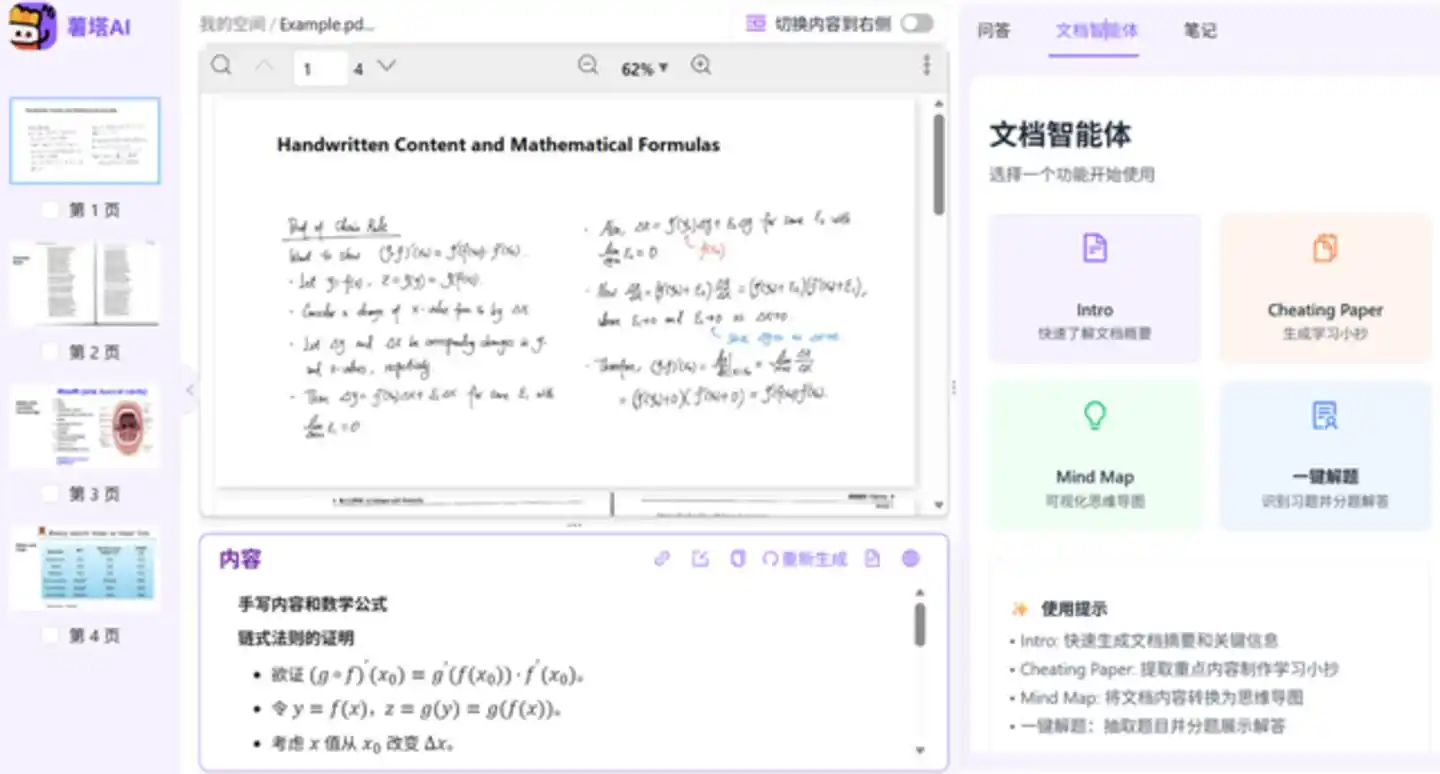
ShuTa AI Product Design
User feedback diverged sharply from her expectations. Pmis initially envisioned ShuTa AI as a comprehensive learning space covering “pre-study, study, review.” But once live, users favored neither summary features nor AI Q&A—instead, they loved a seemingly low-tech function: viewing Chinese translations side-by-side while reading English course materials. “This feature has little to do with AI,” she explains, “but everyone loves it.” Her reasoning: tools like Youdao Translate or DouBao require manual clicks or screenshots for translation, whereas ShuTa AI enables “seamless browsing and translation”—this fluidity, rather than deep functionality, is what first and most directly retains users.
Real, raw user feedback remains the most fundamental driver of product iteration and optimization.
Courtney notes that many international student users told her they feel discriminated against abroad due to language differences, perceived inadequacy, and their identity as Asians or Chinese. Some have experienced bullying or false accusations, struggled to make local friends, integrate into social circles, or earn grades in collaborative assignments. These students say they would welcome a safe environment to practice and experience group discussion dynamics before stepping into campus life. This is the true origin point of Perspeak AI’s “AI High-Pressure Communication Training”: not whether to grind or not, but recognizing that these students already carry unspoken anxiety and isolation into foreign countries—can the product first catch that raw vulnerability?
Courtney also observed that some Chinese students habitually wait until they’ve fully formed their opinions before speaking, deferring to others. In their educational and cultural context, this is seen as polite. But in overseas seminars or group discussions, turns are often immediate and overlapping—few formally pass the baton. Waiting for your turn could mean never finding a chance to join the conversation.

Perspeak AI Simulating Multi-User Interaction Scenarios
Thus, AI must not only understand what users say, but also interpret what their behavior signifies in local cultural contexts. Does direct questioning signal conflict? Is silence attentive listening or disengagement? How can opposition be expressed clearly without undermining collaboration? These are not issues solvable by simply translating Chinese courseware into English.
Yet cultural differences must not be reduced to fixed labels. “Individual variation far exceeds any label,” Courtney emphasizes. True localization demands continuous feedback from local users and real-world usage scenarios. The same expression can yield vastly different outcomes in different classrooms and cultural milieus. AI must understand the communicative context within specific situations—not rely on regional or cultural stereotypes.
When training objectives and usage contexts shift, evaluation systems must evolve accordingly. This is the essential transformation East Asian training methods must undergo when going global: schools provide external pressure through exams and admissions; in consumer markets, users can exit anytime—products must rebuild motivation through interest, value, and real needs.
Acquisition and user feedback thus become two practical gateways to validate localization. A team capable of translating a product into dozens of languages doesn’t necessarily know how to acquire users across dozens of countries. Mature teams scale via multilingual social media, paid campaigns, app stores, and word-of-mouth; early-stage teams often start with campus clubs, student ambassadors, and seed users from one or two schools.
Just as ShuTa AI tests both online and offline channels, Perspeak AI plans to establish real case studies in Australian universities, while Inspired AI mandates that its core team respond daily to user emails and feedback across regions. Markets aren’t understood in a single “go-global” decision—they’re relearned through every piece of feedback, every ad campaign, and every batch of lost users.
Just as East Asian education thrives on iterative feedback loops to refine learning, outbound teams must use the same method to refine themselves. Treating a country or region as a long-term course to study—observing users, gathering feedback, adjusting content and product—may be the commercial extension of this very educational philosophy.
Only when training goals align with local culture can users stay engaged long-term; only with sustained engagement can the training advantages of East Asian education be transformed by AI into a viable business.
Is AI + East Asian Education Export Really a Good Business?
Today, Jia Zijian’s Inspired AI has navigated its toughest phase. Founded late 2023, during a wave of AI enthusiasm, it secured early investments and is now operational, generating tens of thousands of dollars monthly—according to him, “one of the few truly profitable AI companies.”
Behind this success lies steady perseverance. “Education isn’t something that can be rushed,” Jia says. He cites three 20-year-old examples: Duolingo, Xue’er Si, and New Oriental—“they were built day by day.” Looking back at peers who launched alongside them, “most have either pivoted or shut down,” while his team remains one of the few still playing.
Inspired AI offers two distinct products—TalkMe (for overcoming speech hesitation) and ListenLeap (for improving listening comprehension)—backed by nearly 100 million user data points. In Taiwan, they consistently rank in the top two of education apps; globally, their user rating stands at 4.9.

TalkMe AI Simulates Real Conversations
Jia summarizes his customer acquisition strategy in three parts: first, multi-language, multi-region operations from day one—“formerly, one product had one language per region; now, one product has N languages per region, and we have multiple products—N × N × N”; second, overseas and domestic social media matrices generate nearly ten million impressions monthly; third, word-of-mouth—“our team has a strong habit: every morning, core members return to users’ feedback, comments, and emails, striving for response to every message.” He admits the necessity of paid ads: “Anyone claiming they don’t spend on ads and spend zero is lying.”
For retention, his answer echoes an old industry saying: “Short-term expectations govern retention; long-term expectations govern payment.” On product level, AI plays three roles humans cannot: first, content producer—while traditional teaching teams require 20–30 people, their content production is fully AI-driven via a rigorous production pipeline; second, real-time feedback—traditional platforms leave users stranded post-class, with feedback delays up to 72 hours; AI delivers instant, emotionless responses; third, deeper user understanding—through accumulated behavioral data, AI can anticipate where a user will likely stall next, proactively preparing the next learning step.
The real question worth asking is whether the “training” capability emphasized in East Asian education represents genuine demand abroad?
Jia offers a counterintuitive comparison: roughly 4 million people take IELTS annually worldwide, but over 1.7–1.8 billion people learn languages globally each year. This means the group East Asian education excels at serving—students obsessing over IELTS, TOEFL, and college admissions exams—is actually a tiny pool. The massive market lies in those learning languages for work or daily life: Mexican-American immigrants in the U.S. need restaurant English and trucking terminology; users in Japan, Korea, and Chinese Taipei are driven by work, travel, and pop culture.
There’s nothing wrong with East Asian training methods—“the overall English foundation among East Asians is actually quite solid, but they need more advanced, systematic practice.” However, if entrepreneurs remain fixated on the old IELTS/TOEFL and K12 pathways, they risk missing a much larger, more authentic demand pool.
So demand is real—but not where these founders are most familiar. It exists instead in broader, more fundamental life necessities. Whether this business model truly works depends not on how advanced the AI technology is, but on whether founders are willing to follow Jia’s advice: “start from a small point and persistently nurture the first wave of users”—using the patience and relentless refinement that East Asian education excels at, to capture a global demand that exists outside the original East Asian evaluation system, yet is undeniably real.
Source: Xia Guang AI Lab
Disclaimer: Contains third-party opinions, does not constitute financial advice


Anthropic Opens Near-Internal Access to External Security Teams, CEO Says Model Capability Development Should Be Slowed Down
5 hours ago
Hy4 Preview Lightweight Version – Tencent Hunyuan's Open-Source Hy4 Quantized Compression Model
10 days ago
Flop Labs builds an AI agent compute marketplace, with the FLOP token used to pay for GPU compute power
10 days agoHuggingFace's "AI Duck" Goes Viral, Boosting Chinese Chip Supplier Rockchip
10 days ago
Claude Fable 5.1 – Anthropic's Latest Flagship Large Model
10 days ago
GoPro Acquired by Starman Optical for $285 Million, Will Retain Public Company Status and Expand into AI Infrastructure Market
11 days agoFlorida and Texas Halt Flock License Plate Camera System Over Privacy Concerns
11 days ago


