AI companies need to pay more to influencers to get favorable endorsements.
AI companies need to pay more to influencers to get favorable endorsements.

2026-09-02 18:00
Lead-in: Anti-AI sentiment spreads across the U.S., with influencer collaboration risk premiums reaching 20%-30%. In America, speaking on behalf of AI—especially for monetary gain on behalf of AI firms—is increasingly becoming a socially toxic act.
In the U.S., advocating for AI—particularly when paid by AI companies—is rapidly turning into a reputational liability.
A national survey released in August by the Annenberg Center for Public Policy at the University of Pennsylvania found that 39% of American adults anticipate negative impacts from AI over the next decade, while only 18% hold positive views; 68% believe government regulation of AI is insufficient.
The same survey revealed that opposition to building data centers near residential areas rose by 12 percentage points within four months, reaching 61%. Another Pew Research Center survey published in August showed that 71% of respondents believe AI will reduce job opportunities in the U.S.
Public sentiment is already influencing collaborations between AI companies and influencers.
Since August, multiple creators have faced backlash—from OpenAI’s brand trip to Claude and ByteDance’s Dreamina—as several high-profile campaigns were met with protests. Some issued apologies, while others began publicly delineating boundaries around their AI usage.
Currently, AI remains the most pivotal narrative in U.S. capital markets, and AI firms are among the few remaining clients still investing heavily in influencer traffic acquisition. According to media interviews with agents, top-tier AI companies allocate budgets ranging from five to seven figures in USD to secure influencer partnerships, sometimes seeking multi-month contracts.
AI firms aim to leverage influencers to build public trust, while influencers rely on brand deals for income—originally a mutually beneficial arrangement. Now, accepting an AI sponsorship means taking a public stance on AI and bearing risks of follower loss, boycotts, and reputational damage.
Agents have started pricing this risk. One agent disclosed that when dealing with well-funded large AI firms, he may add a 20% to 30% premium to an influencer’s standard rate.
AI brand deals are now carrying a “reputational premium.”
A typical AI brand deal is evolving into a moral indictment
In China, influencers partnering with AI companies is commonplace; the harshest criticism typically amounts to a simple “cash-grabbing”, and rarely do audiences demand public accountability from influencers for engaging with an AI firm.
In the U.S., however, an AI collaboration is transforming into a moral judgment. Promoting AI for money invites backlash; attending brand events invites scorn. Even without a formal deal, merely using ChatGPT in professional work can lead to fan scrutiny.
The dramatic reversal of OpenAI’s first brand trip, “Summer Club,” epitomizes American netizens’ emotional release.
Early August, OpenAI invited about 30 creators to stay at the luxury resort Wildflower Farms in upstate New York to experience ChatGPT Work, accompanied by organic meals, beekeeping, and wellness activities.
The influencers documented the trip as standard lifestyle content. Grace McCarrick chatted about her trip while filling her bathtub; Nat Lucy filmed a deer passing by her cabin.
These videos received lukewarm responses initially—McCarrick’s video garnered fewer than 300 likes, Lucy’s under 15,000 views—but two critical videos produced around the event collectively surpassed 500,000 views.
To the influencers, it was a relaxed, dignified brand experience. To critics, the combination of luxury resort, natural scenery, and OpenAI branding constituted an out-of-place public relations spectacle.
Instead of discussing ChatGPT Work, commenters interpreted the $2,000-per-night room rate as compensation for endorsing AI. The green fields captured by Lucy were mocked as ideal locations for data center construction.
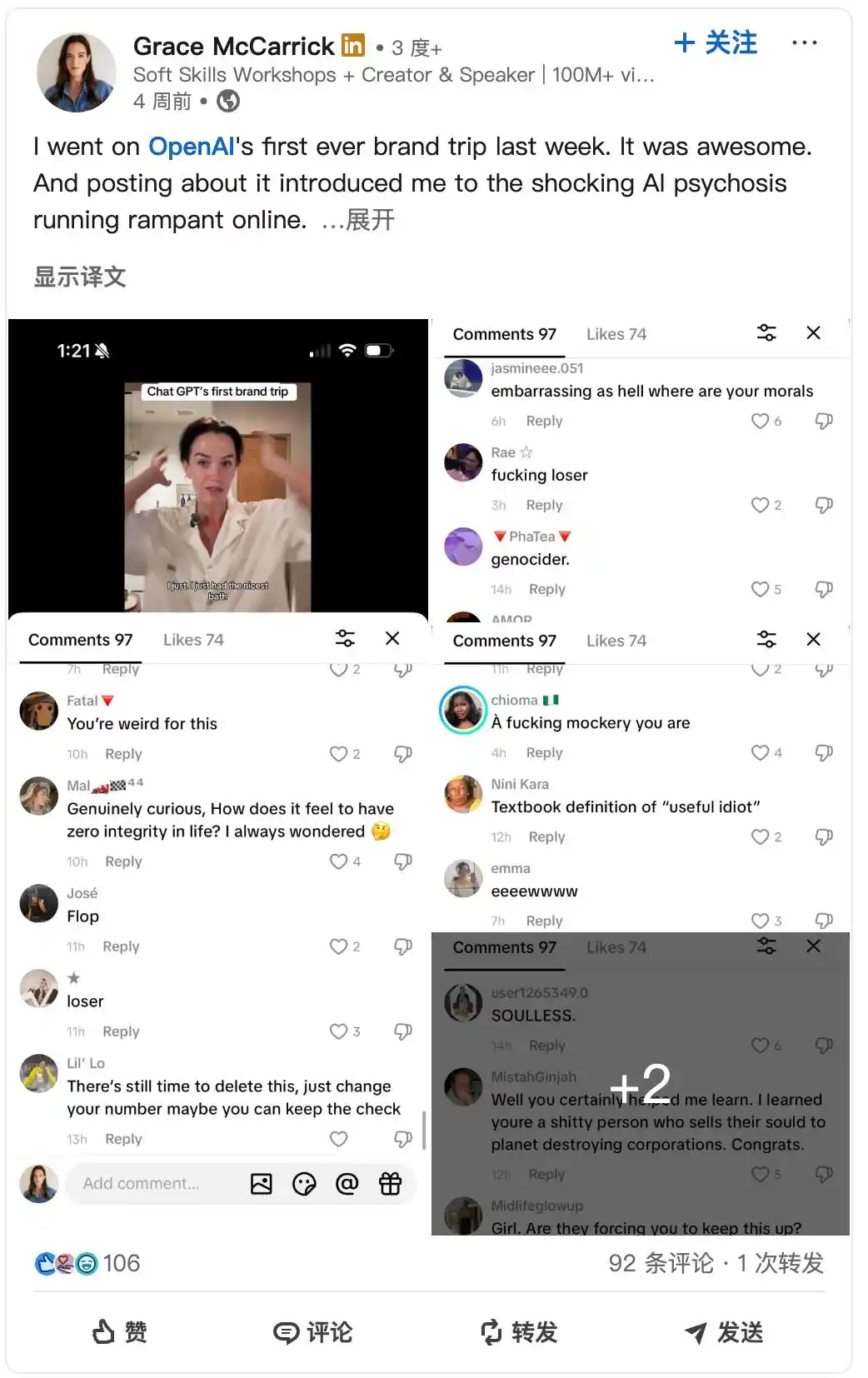
McCarrick later responded that she never anticipated controversy and believed some critics were overreacting to AI. She questioned why those same critics didn’t also confront their own use of smartphones, Amazon, Instagram, and TikTok—yet placed the full moral burden solely on influencers who attended the event.
Yet this rebuttal did not shift public opinion. Instead, online discourse intensified: Why had a career-focused communication creator shown no preparedness for AI controversies before promoting OpenAI?
Within this wave of anti-AI sentiment, all disputes ultimately converge on one question: Are you on the side of AI?
Creator Emma Orhun, formerly of Shopify, faced backlash after promoting Claude and later had to clarify that while she uses AI for coding assistance, she opposes AI replacing human artistic creation.
Science communicator Hank Green, who never accepted a paid sponsorship, was still criticized for relying heavily on ChatGPT to gather and organize research materials during video production. Fans accused his content of losing its authentic personal voice. Green subsequently apologized and established stricter internal guidelines for AI usage.
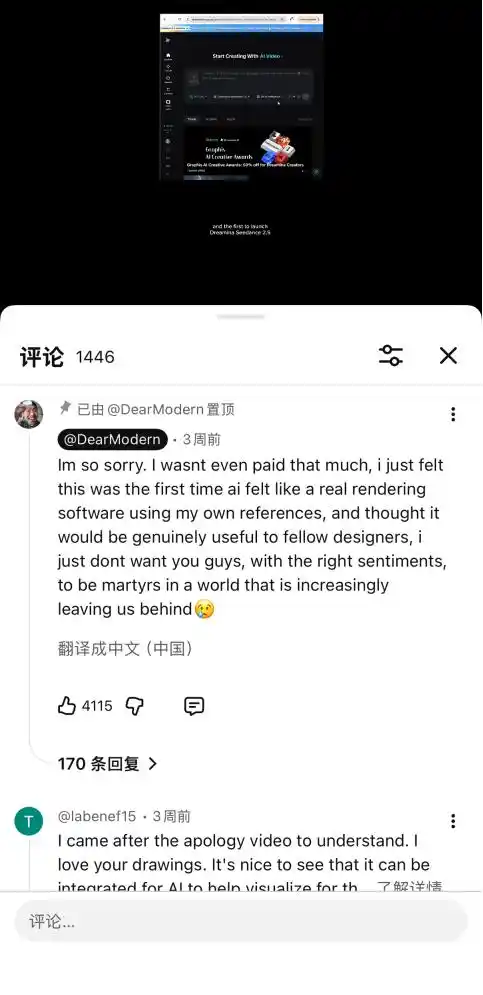
Even ByteDance’s Dreamina faced similar backlash in the U.S. Design influencer Cliff Tan explicitly stated in his ads that he dislikes AI replacing human thinking, using it only to convert hand-drawn floor plans into animations. Yet comments still demanded he “don’t sell out to AI.”
Tan later apologized, commenting beneath his original video: “I didn’t even get paid much.”
Revenue is charged per ad, but the backlash endured by influencers is essentially punishment for the entire AI industry.
Americans are growing resentful toward AI, and AI companies aren’t helping
AI is becoming a cornerstone of U.S. economic growth, simultaneously creating new fault lines of interest.
Governments and capital markets view AI as foundational to economic expansion and national competitiveness, while ordinary citizens care more about income, employment, electricity bills, and pollution.
The Federal Reserve Bank of St. Louis estimates that investments in software, R&D, information processing equipment, and data centers—key AI-related sectors—accounted for 39% of real GDP growth in the U.S. through the first three quarters of 2025.
But the more AI investment grows, the greater the need for data centers. This increases pressure on electricity and water resources, shifting opposition from online discourse into local policy. In August, The Wall Street Journal reported that Governor Greg Abbott of Texas—once heralding the state as an “AI development hub”—has paused approvals for numerous data center projects due to energy and water constraints.
A second source of tension comes from employment. Large language model vendors repeatedly emphasize AI’s ability to boost efficiency and replace certain jobs, while tech firms simultaneously lay off staff and redirect more resources toward AI development. These actions reinforce a perception: AI companies grow richer, while workers bear the cost.
Silicon Valley’s image has deteriorated rapidly. AI firms command capital, technology, and political influence, yet the narrative that “AI innovation inevitably leads to progress” no longer automatically wins public favor.
At a time when resentment is mounting, AI companies continue executing “provocative” strategies, attempting to cement the idea that AI is everywhere and inevitable in daily life. Repeated influencer campaigns and advertisements, however, often backfire—instead of normalizing AI, they constantly remind audiences of what they dislike.
Among the 66 ads aired during the 2026 Super Bowl, 15 promoted AI companies or used AI in production. Meltwater analysis shows nearly half of related discussions were negative, with audiences expressing fatigue toward “another AI ad.”
Amazon’s Ring also advertised an AI-powered pet-finding feature during the Super Bowl, but viewers questioned whether it was disguised community surveillance, given the imagery of entire neighborhoods’ cameras activating simultaneously.
Anthropic and its founder Dario Amodei have long positioned themselves as industry outliers—developing AI while openly emphasizing its risks, safety, and ethical responsibility. Yet even this contrarian approach can misfire.
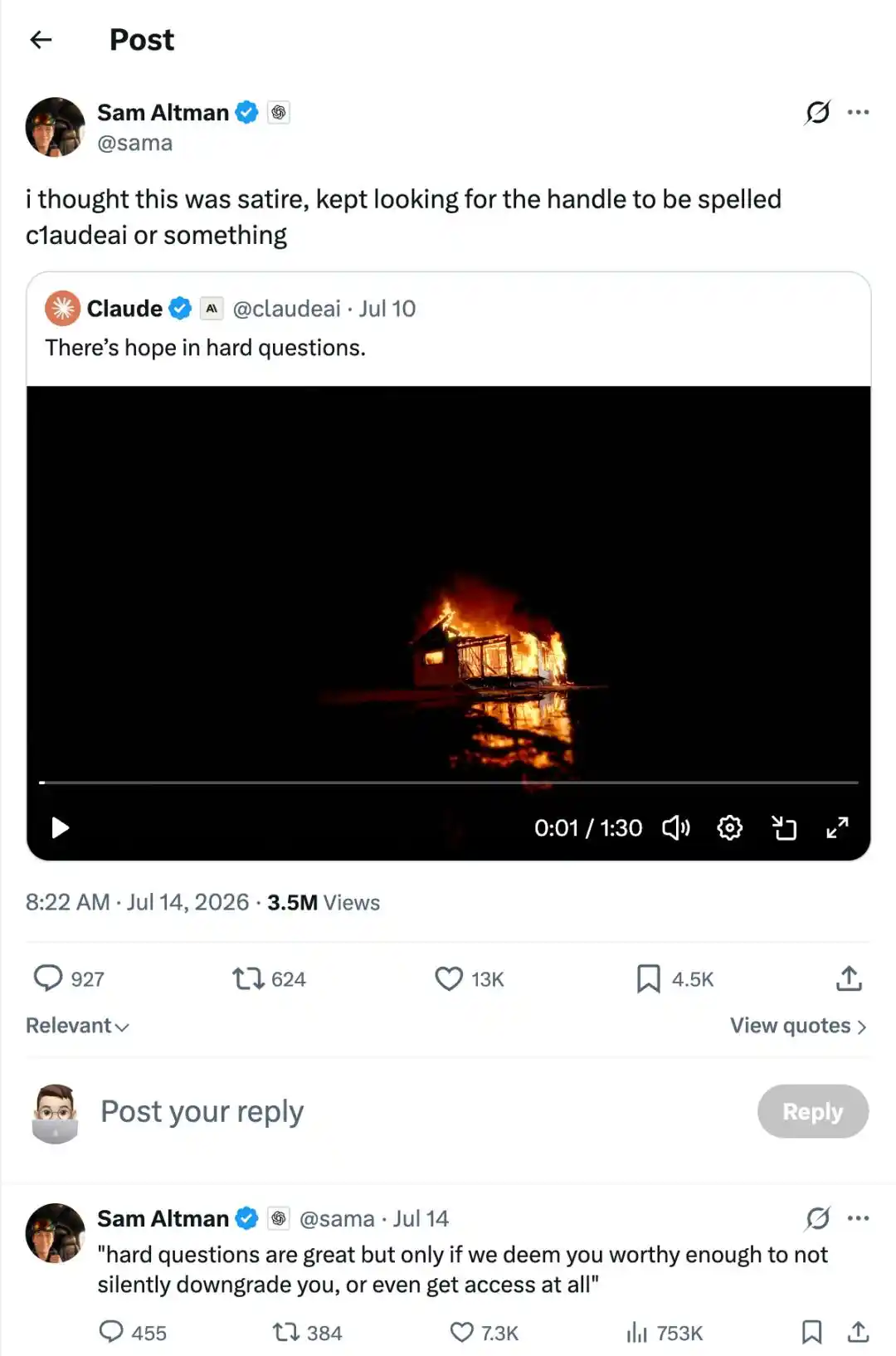
In July, Anthropic launched a brand film titled “There’s Hope in Hard Questions” during the World Cup. The ad juxtaposed burning homes, facial recognition, homeless people, and rows of graves with scenes of mothers and daughters, whales, and medical workers. It repeatedly asked whether AI could be trusted—without offering answers. Sam Altman joked he initially thought it was a satire account’s creation.
Some AI companies are even exploiting social media’s outrage mechanics for user acquisition.
By late August, a serialized content series named “Oreogate” went viral on Instagram. A creator used 13 videos to narrate a conflict in a kindergarten parent group sparked by a child bringing Oreos, then transformed chat logs into songs using the AI music tool Suno. The story escalated dramatically, prompting audience polarization and debate—its first video amassed over 10 million views.
Later, it emerged the creator was a paid partner of Suno. She refused to confirm whether the chat logs were authentic. Suno acknowledged a commercial partnership but denied involvement in scriptwriting.
An ambiguous, controversy-driven piece of content ultimately became a promotional vehicle for an AI product.
The harder AI firms try to make AI appear natural and ubiquitous, the more they expose the public’s deepest fears: privacy erosion, job displacement, and synthetic content proliferation.
Influencers cannot ignore AI firms’ financial power, nor can they avoid AI tools already embedded in creative and workflow processes.
Refusing deals means lost revenue; accepting them means shouldering the company’s backlash.
AI is unavoidable—but AI brand deals are becoming increasingly difficult to accept.
Those unable to stop AI are now targeting those who use it
A recent commentary in The Guardian argues that the backlash against data centers and big tech in the U.S. reflects a broader emotional current: increasing numbers of people feel that major decisions shaping their lives are being controlled by a small group wielding capital and technology.
Ordinary individuals can choose whether to open ChatGPT today, but they cannot decide which models a company trains, where a data center is built, or prevent their job from being restructured.
They don’t necessarily reject the convenience AI brings—they resent having no say in how AI enters their lives.
Unable to halt data center expansions or influence corporate layoffs, comment sections become one of the few spaces left to express resistance. Influencers, visible in public and dependent on reputation, are more accessible than corporate executives—and thus become early targets of pressure.
Social platforms amplify this dynamic. Research from Northwestern University’s Kellogg School of Management and others finds that social media users frequently overestimate others’ anger levels. Highly emotional expressions receive more engagement, leading newcomers to perceive such intensity as the norm in online discourse.
Thus, “I don’t like this product” evolves into “You betrayed your fans”; accepting an AI sponsorship gets interpreted as supporting the entire AI ecosystem.
Influencers must earn a living—so they play the game of “wealth in risk.” Either refuse deals deemed too risky upfront, or include potential follower loss and reputational damage in their pricing.
AI companies need influencers’ authentic personas and audience trust to vouch for them—but these partnerships erode the influencer’s own credibility.
This “reputational premium” means influencers either decline deals—or force AI companies to pay extra for the risk.
Premium pricing may compensate for one instance of reputational risk, but whether this business model can sustain long-term remains uncertain.
Source: AlphaAI
Disclaimer: Contains third-party opinions, does not constitute financial advice


Hy4 Preview Lightweight Version – Tencent Hunyuan's Open-Source Hy4 Quantized Compression Model
1 day ago
Flop Labs builds an AI agent compute marketplace, with the FLOP token used to pay for GPU compute power
1 day ago
HuggingFace's "AI Duck" Goes Viral, Boosting Chinese Chip Supplier Rockchip
1 day ago
Claude Fable 5.1 – Anthropic's Latest Flagship Large Model
1 day ago
GoPro Acquired by Starman Optical for $285 Million, Will Retain Public Company Status and Expand into AI Infrastructure Market
2 days agoFlorida and Texas Halt Flock License Plate Camera System Over Privacy Concerns
2 days agoCaterpillar leverages its automated mining expertise for AI deployment, launching the Cat AI voice assistant and planning a $100 million investment over five years to train employees
4 days ago


