Robots from China have expanded to 141 countries, with after-sales service emerging as a new opportunity
Robots from China have expanded to 141 countries, with after-sales service emerging as a new opportunity

2026-09-02 09:00
Introduction: Product leadership is just a ticket in, going global is a battle for ecosystem dominance. “Product leadership is just a ticket in, going global is a battle for ecosystem dominance.” The CEO of a Guangzhou-based industrial robotics firm felt truly uncertain this year for the first time.
“Product leadership is just a ticket in, going global is a battle for ecosystem dominance”
The CEO of a Guangzhou-based industrial robotics company felt genuine uncertainty for the first time this year. While product technology remains strong and export volume continues to grow, overseas clients are becoming increasingly demanding. “I don’t want just one machine—I need a deployable, end-to-end solution. Do you handle after-sales service, secondary development, and scenario customization? These phrases are appearing more frequently in negotiations.”
This is not an isolated struggle. At the 2026 World Robotics Conference, Jack Perry, Chairman of the UK’s “48 Group,” outlined European procurement needs and proposed a “try-before-you-buy” model—requiring European enterprises to pilot robots in real-world environments before deciding on bulk procurement. This underscores that overseas clients are no longer seeking standalone machines but ready-to-deploy production solutions.
Perry clearly identified key European markets: logistics and warehousing, where applications are mature and demand is urgent; hospitality, food service, and retail, where high labor costs create substantial potential; and agriculture, which he views as the most transformative sector. However, he also acknowledged that current robot sales volumes in Europe remain low. Unmet demand does not automatically translate into orders—simply shipping products overseas is far from sufficient for Chinese firms.
Similar discussions are spreading beyond Europe, even reaching Southeast Asia. Chen Zhihui, Chair of the ASEAN Smart Industry Federation, noted that countries like Singapore, Malaysia, and Thailand are eagerly awaiting industrial robots. Yet humanoid robots remain rare in Southeast Asia, still in early stages with application markets yet to be cultivated. Robots are bulky and deployment is complex—relying heavily on system integration and localized service capabilities, not a traditional transactional sale-and-abandon model.
Thus, overseas clients have never wanted merely a single machine—they seek complete, turnkey solutions encompassing deployment, commissioning, training, system integration, and ongoing support. Products may be mature, but services still lag behind.
01. Where Is the Growth in Robotics?
In the first seven months of 2026, industrial robot exports reached 7.34 billion yuan, up 13.2% year-on-year, with products shipped to 141 countries and regions. In the first quarter, humanoid robot exports surged by 210% year-on-year, reaching 148 countries and regions globally, with Europe, Southeast Asia, and the Middle East emerging as primary markets. By mid-year, China had shipped over 40,000 humanoid robots, capturing 97% of the global market share.
During the same period, industrial robot production rose 28.5% year-on-year. Since January, when a dedicated customs tariff code was introduced, smart bionic robot exports grew over fivefold within six months. From January to May 2026, revenue at China’s large-scale robotics enterprises surpassed 90 billion yuan, up 26.9% year-on-year. China has maintained its position as the world’s largest industrial robotics market for thirteen consecutive years.
Data looks promising—but challenges remain glaring.
Export value is rising, but after-sales support, secondary development, and scenario adaptation remain neglected. No single outbound enterprise can build a vast overseas service network alone. Kim Jae-hwan, Secretary-General of the Korean Artificial Intelligence Robotics Industry Association, stated at WRC that China has achieved overwhelming leadership in robotics. This dominance stems from integrated capabilities across the entire value chain: materials, components, complete machine manufacturing, commercial applications, and data services.
China’s robotics industry is undergoing a collective globalization upgrade—from pure product export to concurrent supply chain and service export. Overseas importers now choose Chinese robots not solely for cost-effectiveness or durability, but because the Chinese robotics sector is evolving from product export to capability and ecosystem export. Leading domestic companies are actively collaborating with overseas software giants, research institutions, and local integrators through joint innovation, replacing simple product sales with technology partnerships and localized co-development.
2026 marks a decisive year for China’s robotics global expansion. Product leadership alone is insufficient amid shifting tides. The rules are shifting from product competition to ecosystem competition. Whoever establishes an overseas service network first, completes localization adaptation fastest, and secures the full data and computing power pipeline will claim pricing power in the next phase.
02. Three Replicable Model Cases
The three core pain points in current robotics production are: inadequate service support, solo operations, and poor scenario adaptability. The following cases offer targeted solutions to these critical challenges.
- Leju Robotics: Overseas Strategic Partnership Center Model
On August 20, during the 2026 World Robotics Conference, Leju Intelligent (Shenzhen) Co., Ltd. formally established deep partnerships with STELLARIS ROBOTICS and DF PREXEL ROBOTICS, launching Leju UK Strategic Partnership Centers and Leju Netherlands Strategic Partnership Centers respectively.
Leju Robotics will leverage these two centers to serve educational, research, secondary development, commercial guidance, and industrial demands in the UK and the Netherlands, delivering full-scenario embodied intelligence solutions. Simultaneously, it will supply multiple series of robotic products—including Aelos, Roban, and Kuavo—to both partners, providing robust hardware support for regional business implementation.
During the conference, Leju secured over ten thousand overseas distribution orders and established regional distribution systems in the UK and the Netherlands. With overseas channel partners backing, Leju has successfully proven its go-global model. Meanwhile, Leju also reached a deep strategic collaboration with German industrial giant Schaeffler, combining “top-tier global supply chain” with “Chinese embodied humanoid capabilities” to achieve complementary strengths in industrial applications, data training platforms, and new technology R&D.
Leju Robotics’ exhibition booth was the only one at this year’s WRC achieving uninterrupted, full-scenario, fully autonomous, and round-the-clock robot operations. Previously, Leju had already established a strategic partnership center in Singapore, accelerating its embodied intelligence expansion in Southeast Asia.
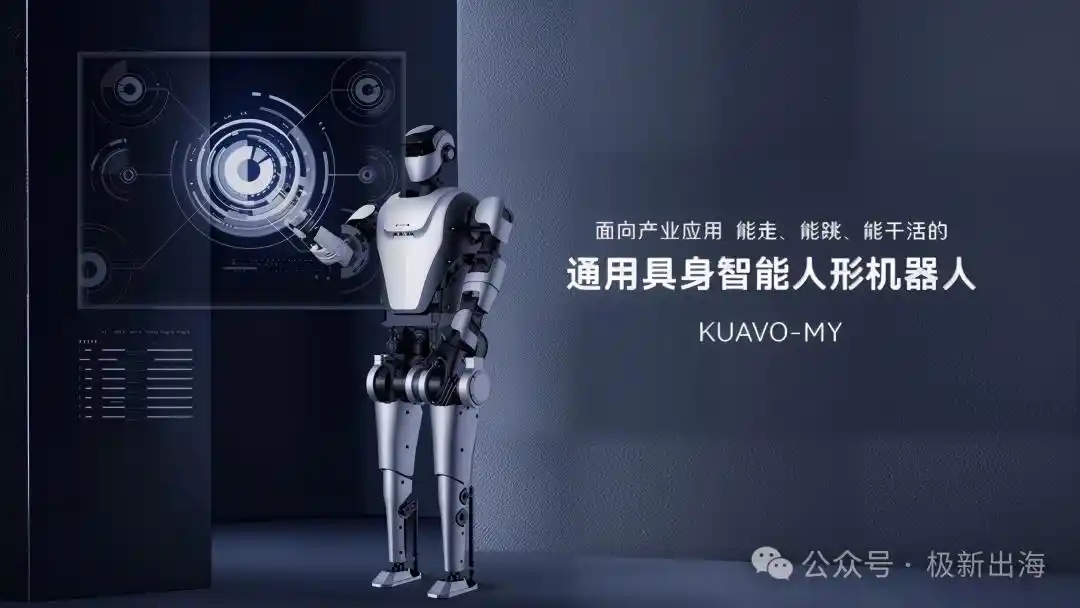
Its core logic lies in co-building service centers with established local partners, ensuring delivery, after-sales, and secondary development are all covered. From Singapore to the UK and the Netherlands, then to Germany, Leju Robotics’ overseas strategic partnership centers are forming a connected network.
- Dachi Yuequan: Industrial Export Ecosystem Model
On August 20, the parallel forum “Bionics Empowering the Future: Technological Breakthroughs and Ecosystem Co-Creation in Bionic Embodied Intelligence Robots” was held at the Beiren Yichuang International Convention Center. Organized by the International Society of Bionics Engineering, Changchun Municipal Chamber of Commerce and Industry, Changchun Municipal Bureau of Industry and Information Technology, and the Jilin Provincial Bionic Robotics Manufacturing Innovation Center, the event brought together over 300 participants including academicians, experts, industry players, and venture capital institutions.
Professor Ren Lei, founder of Yuequan Bionics, delivered a lecture on bionic tensile-compressive robot theory and technology, unveiling self-developed product lines including the Y-Hand series of dexterous hands, YQ Motors series of motors, and YQ Muscles series of artificial muscle modules. Among them, the Y-Hand series includes M0, M1, and M2 models, offering tiered compatibility for lightweight general-purpose tasks, balanced light-duty operations, and high-precision applications.
During the forum, Yuequan Bionics completed two major signings: “Co-Development and Scenario Application Agreement for Bionic Embodied Intelligence Robot Outcomes” accelerated the transition of research results into real-world scenarios; “Strategic Ecosystem Collaboration Agreement for Bionic Embodied Intelligence Industry Export” aims to establish a global export ecosystem. The agreements aim to bridge the bidirectional flow from domestic deployment to overseas output, building a full-value-chain ecosystem covering technology transfer, scenario application, talent cultivation, and industrial export. FV Group (600742) also joined the agreement, establishing the “FV-Yuequan Joint Lab” focused on R&D in automotive parts manufacturing and other segments.
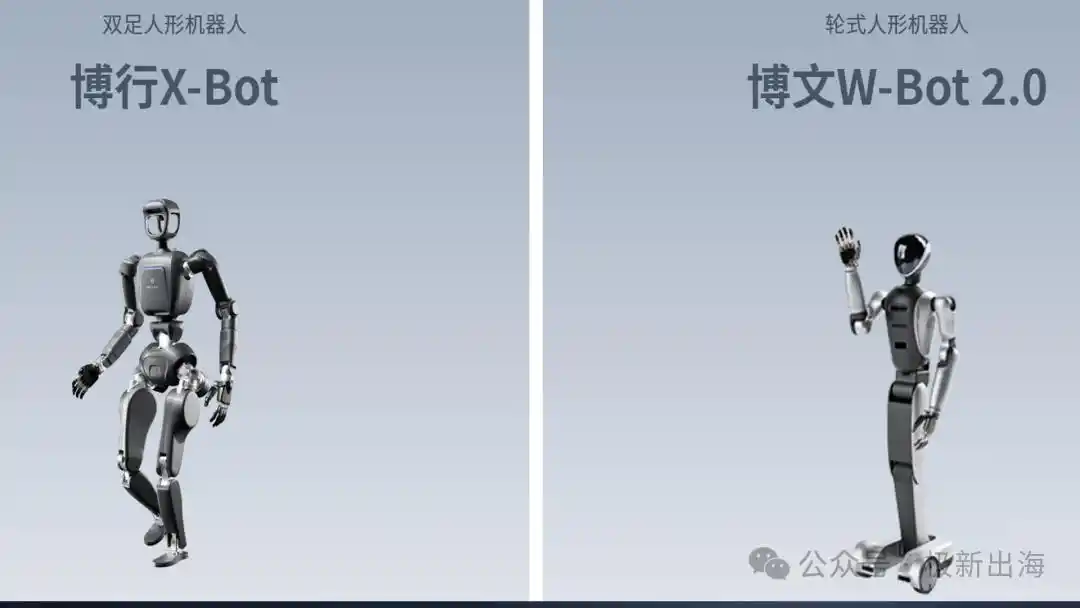
(Source: Yuequan Bionics official website)
Its core strength lies in integrating technology transfer, scenario application, talent development, and industrial export into a seamless full-chain ecosystem—transcending mere product export. It enables the entire robotics ecosystem to go global together.
- CAS Innovation: Full-Chain Collaborative Model
CAS Innovation (Guangzhou) Intelligent Technology Development Co., Ltd. specializes in intelligent operation and maintenance for the power energy sector, primarily producing multi-scenario intelligent inspection robots and embodied dexterous operation robots.
At this year’s World Robotics Conference, CAS Innovation finalized two strategic cooperation agreements.
On May 25, 2026, CAS Innovation signed a comprehensive strategic partnership with Unitree Robotics, focusing on full-chain collaboration in footed humanoid robots for smart inspection and operations, as well as energy and power sectors. The collaboration covers development upgrades, scenario adaptation, market promotion, and project delivery, jointly driving embodied intelligence robots into real industrial settings.
Simultaneously, a strategic agreement was signed with Xinzhansu at the conference. The partnership focuses on three directions: ecosystem collaboration at the chip and storage level, ensuring full domestic control of robot main control systems; CAS Innovation supporting Xinzhansu’s entry into embodied intelligence and power energy industries; Xinzhansu partnering with CAS Innovation to expand into industrial manufacturing and inspection operations; and joint efforts in brand promotion, exhibition activities, and resource integration.
At the summit forum, Dr. Huang Shuo, R&D Director at CAS Innovation, asked Mr. Sun Dan, Chairman of Xinzhansu, about “the current state of computing power development.” Sun Dan introduced the AI90 architecture, which integrates high-performance SSDs into GPU memory systems, constructing a HBM+DRAM+SSD three-tier storage architecture, enabling large-model inference to be affordable and executable at the edge.
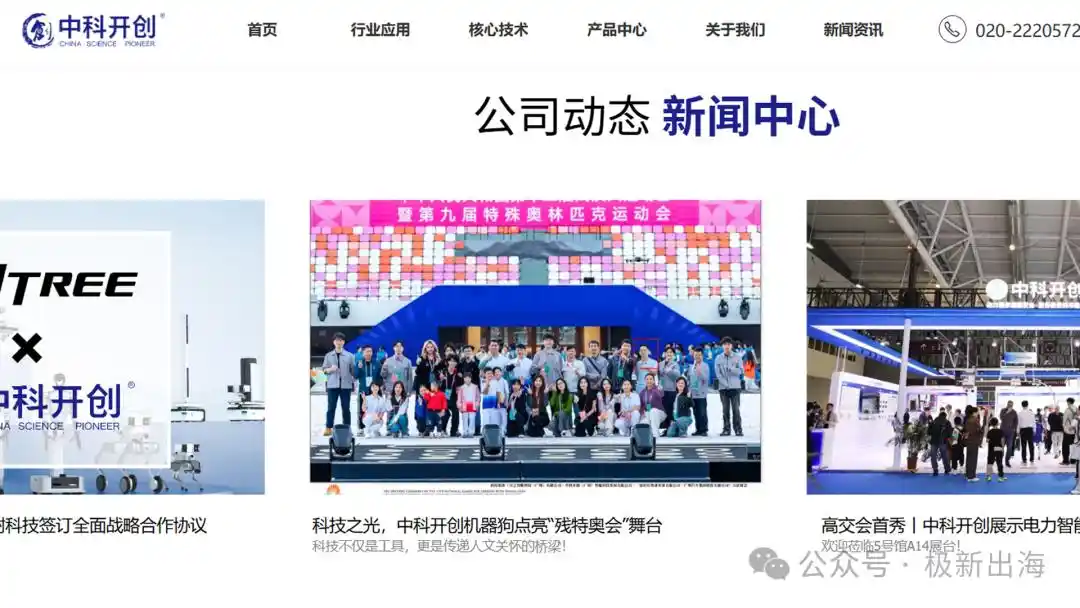
(Source: CAS Innovation official website)
CEO Ouyang Kaiyi of CAS Innovation told reporters at the event that the exhibition unveiled four new embodied intelligence products, covering critical aspects such as spatial understanding, collaborative control, and edge-side intelligent control. Its core philosophy is no longer solitary development—it leverages upstream and downstream collaboration for targeted R&D. Partnering with Unitree Robotics addresses the application side; partnering with Xinzhansu tackles the computing power side. Two legs moving simultaneously, using ecosystem strength to overcome the limitations of solo operations.
Leju solves inadequate service; Yuequan addresses solo operations; CAS Innovation resolves scenario adaptation. Now that these models are proven viable, robot founders must determine which model best fits their company’s trajectory.
03. Our Export Recommendations
- Stop selling standalone machines; sell solutions + local services
The core logic of the Leju model has been validated. Leju’s establishment of strategic partnership centers in the UK and the Netherlands, along with securing over ten thousand overseas distribution orders, demonstrates success.
Leju is the most representative example. JD.com launched JoyRobocare robot maintenance services in Europe, establishing robot repair centers in Bedford, UK, and Duisburg, Germany. “Robot ambulances” provide on-site service covering major cities in the UK, Germany, France, and the Netherlands. Most faults can now be resolved without returning robots across borders, drastically reducing maintenance and after-sales costs.
Gu Jie, founder of Fourier Intelligence, shared an insight: the second biggest challenge in going global is localization. Overseas clients demand high-level local technical support and service presence—requiring hiring local staff and building teams capable of rapid pre-sales consultation and post-sales response. Xinsong Robotics has already established local service teams in Germany, Singapore, Mexico, Japan, and Thailand, responsible for project execution, system commissioning, and operational support.
Robotics’ core customers are enterprises—delayed after-sales service means one day of production line downtime. An overseas service network is a powerful accelerator for enterprise growth.
- Learn to collaborate ecologically before expanding globally
On May 25, CAS Innovation and Unitree Robotics announced a comprehensive strategic partnership in the power and energy sector, focusing on full-chain collaboration involving footed humanoid robots in smart inspection, operations, and key industrial scenarios. “Ecosystem collaboration” means the application party defines requirements, supply chain partners provide core components, and computing power partners ensure fast, accurate data transmission.
McMai Tech has launched its first overseas subsidiary and ASEAN headquarters in Malaysia, hiring local after-sales personnel to support business rollout. Its target for this year: deliver one thousand agricultural robots. Ubtech doesn’t sell individual robots—it offers complete solutions including customized software and delivery services, keeping overall unit prices below 500,000 RMB.
On August 21, the Singapore Robotics Society released two initiatives: “Commercial Deployment of Embodied Intelligence” and “Global Supply Chain Collaboration,” calling for the establishment of a joint after-sales and maintenance center for Chinese robotics exports, using Singapore as a base to cultivate tech talent across Southeast Asia. The initiative signals a trend: future export is a collective action across the entire supply chain.
- Turn data and computing power into your moat
For embodied intelligence export, data must be “transmitted fast, computed accurately.”
Melyssa Banda, Senior Vice President of Edge Storage Solutions at Seagate Technology, pointed out that in physical AI applications, 30% to 40% of data must remain local. Robots, intelligent vehicles, and industrial vision systems require real-time access to local data—making centralized cloud processing impractical for all decisions.
3D reconstruction and real-time inference are extremely compute-intensive tasks. Traditional on-premise server models lead to mismatches between compute demand and available resources, resulting in persistently high costs. Training embodied intelligence requires handling diverse data types—images, videos, point clouds, tactile feedback, force feedback, trajectories—where fixed infrastructure cannot meet scaling R&D demands.
Li Zhen, Product Vice President at Xinzhansu, said Xinzhansu plans to provide customized storage modules and chips for CAS Innovation’s robots, enabling data to be “transmitted fast, computed accurately.” Whoever first secures the full chain—from storage to connectivity to AI management—will make customers irreplaceable.
In 2026, China’s robot exports spanned 141 countries and regions, with humanoid robots accounting for 97% of the global market. Products have proven themselves. All successful pathways converge on one direction: China’s robotics export is evolving from product export to ecosystem export.
Source: Jixin
Disclaimer: Contains third-party opinions, does not constitute financial advice


HuggingFace's "AI Duck" Goes Viral, Boosting Chinese Chip Supplier Rockchip
20 days ago
Yushu Surges 629% on First Day of Trading, Humanoid Robots Sell 5,500 Units
08-19
14 Executives Depart, Horizon Unleashes a Robot Legion
08-11
Yushu's 61 Billion IPO: Who Will Make Money?
08-07
Former Huawei Genius Youth: Building 5,000 Reliable Robots This Year Won't Exceed 3 Companies
08-05
China's climbing robotic vacuum cleaner captures 70% of the global market
08-05Musk spent nearly half of the Tesla earnings call discussing AI and robotics, with automotive business accounting for less than one-third of total revenue
08-05


