25x Sales Multiple, Momenta Slumps on First Trading Week
25x Sales Multiple, Momenta Slumps on First Trading Week

2026-07-29 20:06
Introduction: Mass-produced ADAS software is now cash-generating, but Robotaxi revenue remains zero—Huang Renxun’s physical AI narrative sustains premium valuation, yet amplifies downside pressure
During the period Momenta filed its IPO prospectus, Horizon founder Yu Kai posted a microblog stating that Horizon had never claimed titles such as “first stock in autonomous driving chips,” “first stock in autonomous driving,” or “first stock in physical AI,” branding itself as a “rather boring” company. Though unnamed, the timing and the label “first stock in physical AI” align too precisely to be coincidental, sparking widespread speculation.
In reality, this post served more as an opening gambit than a definitive statement. What truly warrants deeper analysis lies beneath the surface of that label. And behind it, Momenta’s prospectus and its stock performance during the first week of trading have already provided numerous clues.
This article aims to follow those clues, offering some less common market perspectives: separating the calculation of a company’s intrinsic value from the valuation of its narrative.
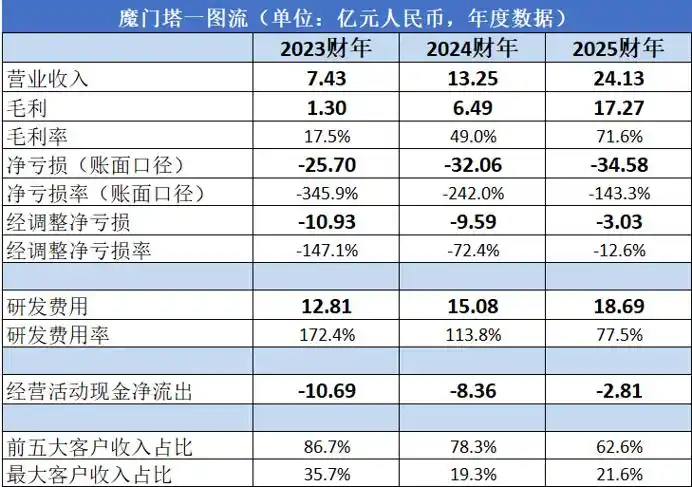
(A one-graph summary of Momenta’s financials follows, in RMB hundred million; data sourced from Wind, compiled by CaiBaoJi)
01 Mass Production Generates Cash Flow, Robotaxi Still in Development
A flywheel with two legs, is Momenta’s core strategy.
The flywheel refers to the technical closed-loop formed by data-driven algorithms, massive road test data, and an automated, closed-loop toolchain. The two legs represent: (1) mass production business—providing customized ADAS solutions to OEMs, earning one-time technology development service fees and recurring software licensing fees based on vehicle sales volumes; and (2) scalable autonomous driving operations—Robotaxi—targeting long-term, fully L4-level autonomous driving.
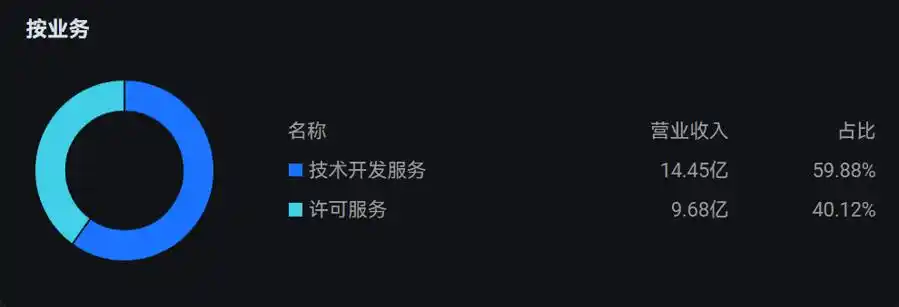
From a financial standpoint, this strategic deployment has gained recognition from the real industrial market. Momenta’s software licensing revenue grew from RMB 0.23 billion in 2023 to RMB 9.68 billion in 2025—a more than 40-fold increase over three years—and its share of total revenue rose from 3.1% to around 40%.
Licensing revenue features extremely low marginal cost. As vehicle production scales, the positive feedback loop strengthens, which directly reflects in gross margin. Momenta’s gross margin surged from 17.5% in 2023 to 71.6% in 2025.
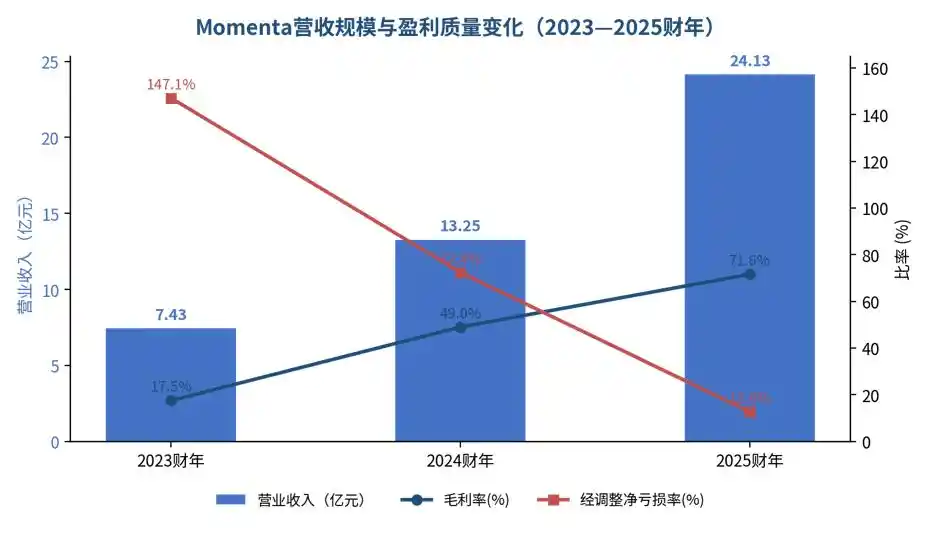
Source: Momenta’s prospectus and financial statements, fiscal years 2023–2025
Looking at revenue breakdown, the business structure currently shows single-leg support: mass production solutions contribute nearly all revenue, while Robotaxi commercialization remains unlaunched.
The mass production leg has indeed achieved scale effects. Prior to listing, Momenta’s production-ready solutions were deployed across over 1 million vehicles, with more than 210 model variants locked in, covering almost all major domestic automakers and nine of the top ten global OEMs. A notable detail: it took 24 months for Momenta to achieve its first 100,000 production deliveries in 2022, whereas today the fastest turnaround is just 40 days. Delivery efficiency has jumped from “year-level” to “day-level”—the flywheel effect is materializing.
But progress on the other leg needs acceleration. Robotaxi operations are still limited to pilot collaborations with platforms like Uber, Grab, and Xiangdao Travel, as well as trial engagements in Munich, Germany, and have not yet generated scalable revenue. In the prospectus, “other L4-related revenue” remains zero.
02 Fundamentals Improving, Momenta Gaining Self-Sustaining Capability
Now examining profitability.
One set of numbers in the prospectus is prone to misinterpretation: under IFRS accounting, Momenta’s reported net loss expanded from RMB 2.57 billion in 2023 to RMB 3.458 billion in 2025—increasing over three years rather than decreasing. On the surface, this suggests the company is losing more money over time.
However, upon deeper financial analysis, we find that the bulk of this bookkeeping loss stems from fair value changes in convertible, redeemable preferred shares. The faster the company’s valuation grows, the larger this non-cash loss becomes—unrelated to actual operational performance. Excluding these one-off, non-cash items, Momenta’s adjusted net loss is actually narrowing year by year.
From RMB 1.093 billion in 2023, it dropped to RMB 959 million in 2024, and further narrowed to RMB 303 million in 2025—corresponding to a net loss rate dropping from 147% to 12.6%. Operating cash outflow also contracted, from RMB 1.069 billion to RMB 281 million. The company maintains cash reserves exceeding RMB 10 billion.
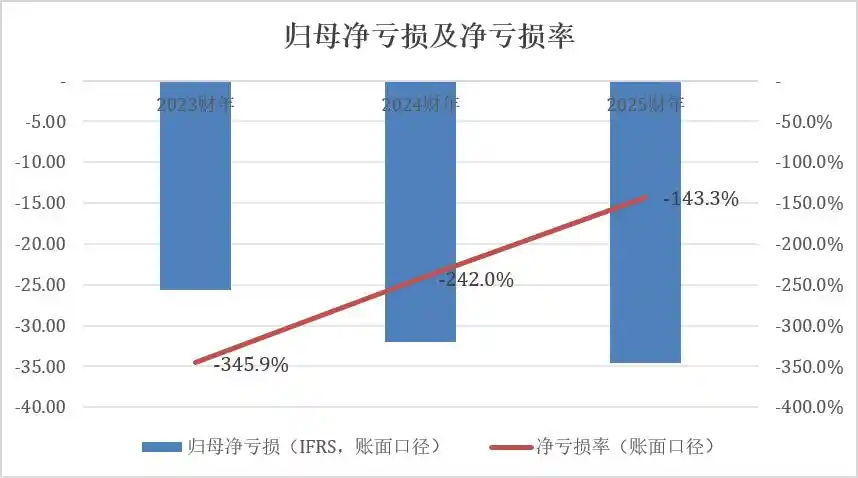
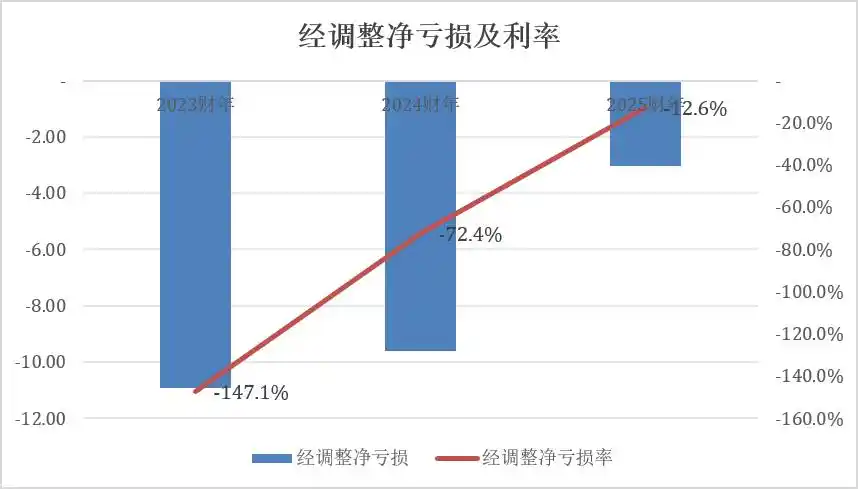
Together, these figures indicate Momenta is transitioning from a capital-dependent startup into a company increasingly approaching self-sustaining operations.
Overall, Momenta’s fundamentals are improving.
Placing this in context with peers, let’s compare it to Horizon Robotics, already listed. The two companies are telling increasingly similar stories—one starting from software into hardware, the other born from integrated software-hardware synergy—converging on the same competitive track.
Momenta vs. Horizon: Key Metrics Comparison (2025)
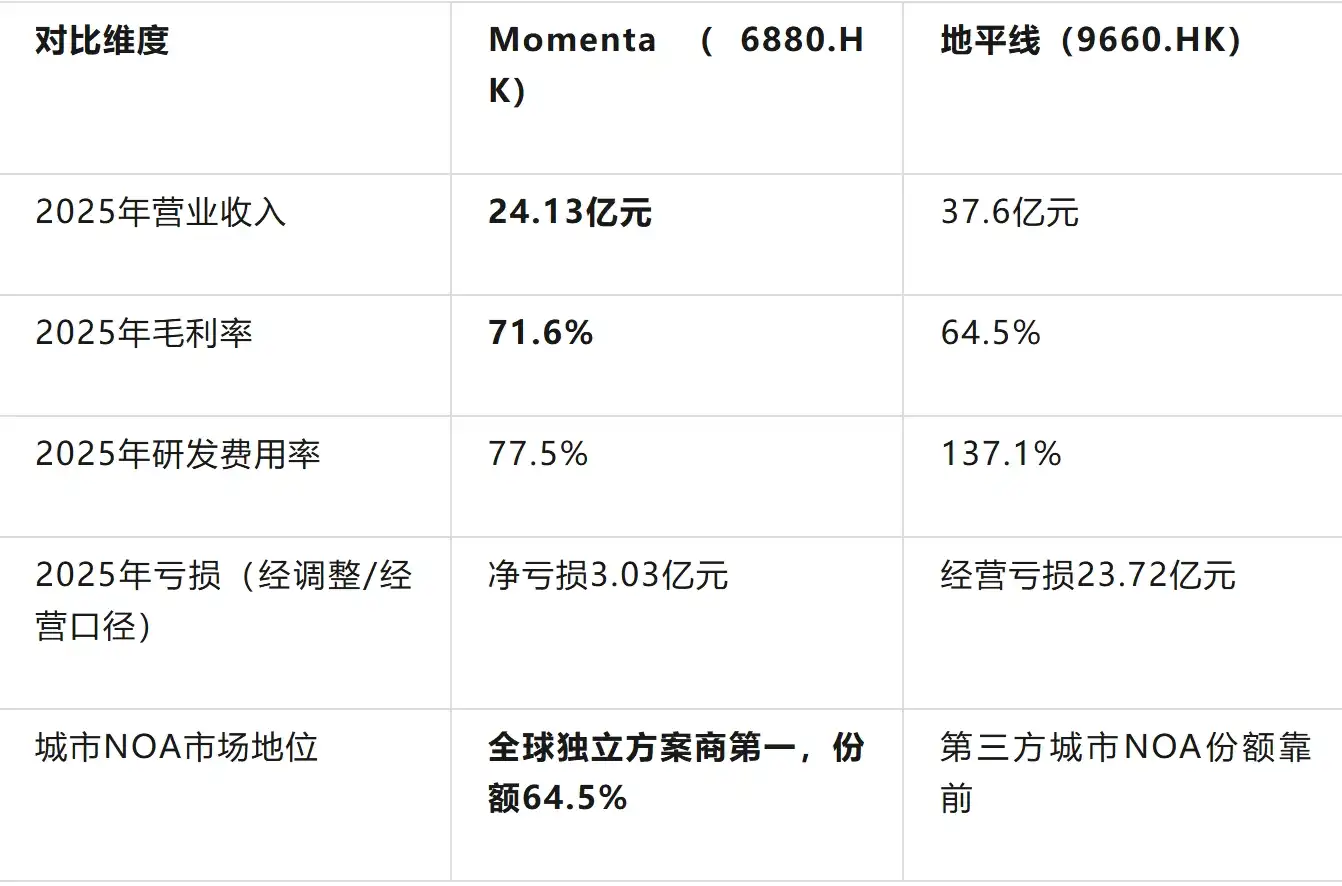
Source: 2025 annual financial reports and prospectuses of both companies
Breaking down the table: Momenta’s revenue scale is smaller than Horizon’s, but its gross margin is significantly higher—owing to its pure-play software licensing model without the drag of semiconductor hardware costs. Its R&D expense ratio is far lower than Horizon’s, due to no self-developed chip segment, resulting in naturally lighter investment intensity. While direct comparison of loss metrics isn’t straightforward, Momenta’s adjusted net loss rate has narrowed to 12.6%, clearly closer to breakeven than Horizon.
03 25x Revenue Multiple—Valuing Expectations, Not Earnings
Yet, for a technology-driven firm tagged as “physical AI,” these fundamentals alone aren’t sufficient to justify current valuations.
Momenta’s IPO included an uncommon detail: no price range was set, with the issue price fixed at HK$295.6 per share—indicating strong market demand. The base issuance size reached approximately HK$5.89 billion, potentially rising to HK$6.8 billion if the greenshoe option was fully exercised. Nearly half of the issuance was subscribed by 14 cornerstone investors, retail offering was oversubscribed 413 times, and institutional demand in the international allocation exceeded HK$100 billion. At this price, the company’s market cap briefly surpassed HK$70 billion, corresponding to HK$2.413 billion in 2025 revenue—a revenue multiple of approximately 25.1x.
This is a noteworthy figure. Traditional auto parts or automotive-grade software suppliers are valued far more conservatively. Only through the lens of the “physical AI” narrative can such a high valuation be justified.
Economist Robert Shiller, in *Narrative Economics*, posits that once a story goes viral, it spreads like an epidemic and influences asset prices—even when fundamentals remain unchanged. The phrase “physical AI” is, to some extent, functioning as such a narrative—causing the valuation of an ADAS software company to pre-price a robotic future that hasn’t yet materialized.
Here’s a cautionary note: Of the HK$70 billion valuation, how much is priced for delivered ADAS solutions versus how much for the unfulfilled robot narrative? These two components must be viewed separately.
04 First Week Post-IPO: Market Delivers Preliminary Signals
If valuation levels are subjective, then post-IPO stock performance represents the market’s real vote—cast in hard currency.
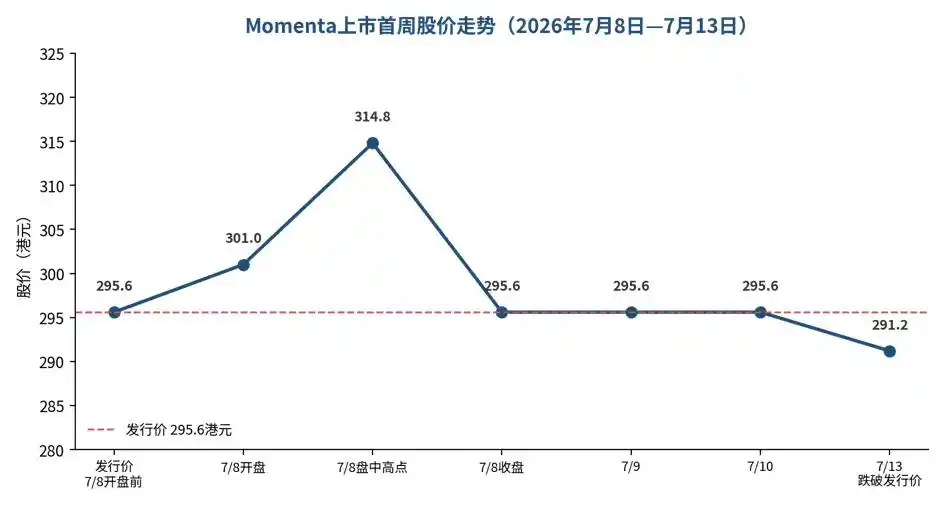
Source: Hong Kong Exchange public trading data, July 8–13, 2026
On its debut day, July 8, Momenta opened 1.83% higher at HK$301, briefly peaking at HK$314.8 (+6%), before retreating and closing precisely at the issue price of HK$295.6—with no gain or loss. On July 9 and 10, the stock recorded 0% change—uncommon for a newly listed, highly sought-after IPO, suggesting deliberate market intervention to maintain stability.
The real signal came on July 13, the fourth trading day post-listing: the stock broke below the issue price, closing at HK$291.2, down 1.49%.
This break occurred within the greenshoe stabilisation period. Under rules, the stabilisation agent could have bought shares at or below the issue price to support the price—meaning ammunition remained available. Yet, the breach indicates either overwhelming sell-side pressure the stabilisers couldn’t absorb, or a deliberate decision by the stabiliser not to defend HK$295.6. Either way, it’s a signal that’s far from benign.
05 Conclusion: Every AI Ticket Needs Validation
Over the past year, Huang Renxun has repeatedly argued that physical AI is the next wave in the AI industry. This view is grounded in industrial logic: digital AI has entered a phase of slowing growth and homogenous competition in a saturated market, while AI capable of sensing, understanding, and manipulating the physical world points to a market space far larger than the purely digital realm.
This isn’t empty rhetoric—the physical AI sector attracted over USD 6.4 billion in funding in Q1 2026 alone, proving the direction is real.
But a real direction doesn’t mean every ticket on the journey is worth the price. Momenta has indeed executed many things correctly over the past decade. Financially, the company is steadily achieving self-sustaining operations.
What truly matters is this: of the HK$70 billion valuation, how much reflects pricing for “Momenta, an ADAS software provider,” and how much for “foundational model builder in physical AI”—a future identity being paid for prematurely?
The stock’s performance during the first week post-IPO has already delivered preliminary signals. No matter how compelling the story, ultimate validation will come only when Robotaxi and other L4 operations generate tangible revenue. A sexy label is not enough. For now, the title “first stock in physical AI” remains unproven and awaits further market validation.
Source: CaiBaoJi
Disclaimer: Contains third-party opinions, does not constitute financial advice


AI drives SK Chairman's divorce settlement bill to KRW 94.4 billion
4 days ago
30 Million KRW Threshold, AI Chip Leverage Cooling Down
5 days ago
$13.7 Billion Prediction Market: Are Retail Investors Making Way for AI?
5 days ago
Will Google Cut AI Spending First? Markets Panic the Night Before Earnings Release
7 days ago
$230 Mini Hardware Just Released, OpenAI Sued by Apple Immediately
13 days ago
DeepSeek Races for Sci-Tech Innovation Board Listing: Valuation Reaches $71 Billion
14 days ago
Why Did A-Share Memory Stocks All Drop Right Before Changxin's IPO?
14 days ago


