OpenClaw and Cursor Launch on Mobile on the Same Day, Agents Truly Enter the Pocket
OpenClaw and Cursor Launch on Mobile on the Same Day, Agents Truly Enter the Pocket

AI Agent is officially installed on smartphones!
Just now, OpenClaw announced with a bang: the native mobile application has launched on both iOS and Android platforms.
From now on, you can directly download it from the App Store and Google Play.
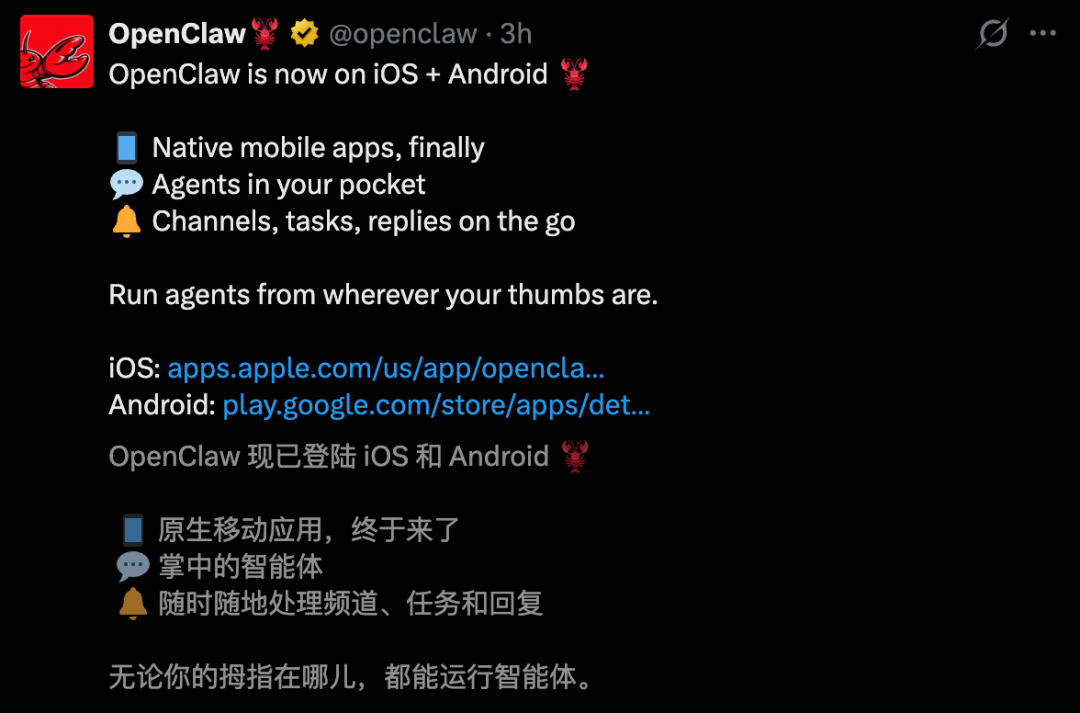
The omnipotent "Lobster" in everyone's palm has arrived—no matter where you are, the Agent is always ready.
Almost simultaneously, Cursor, the renowned AI coding tool acquired by Elon Musk, has also released its public beta version of the native iOS app.

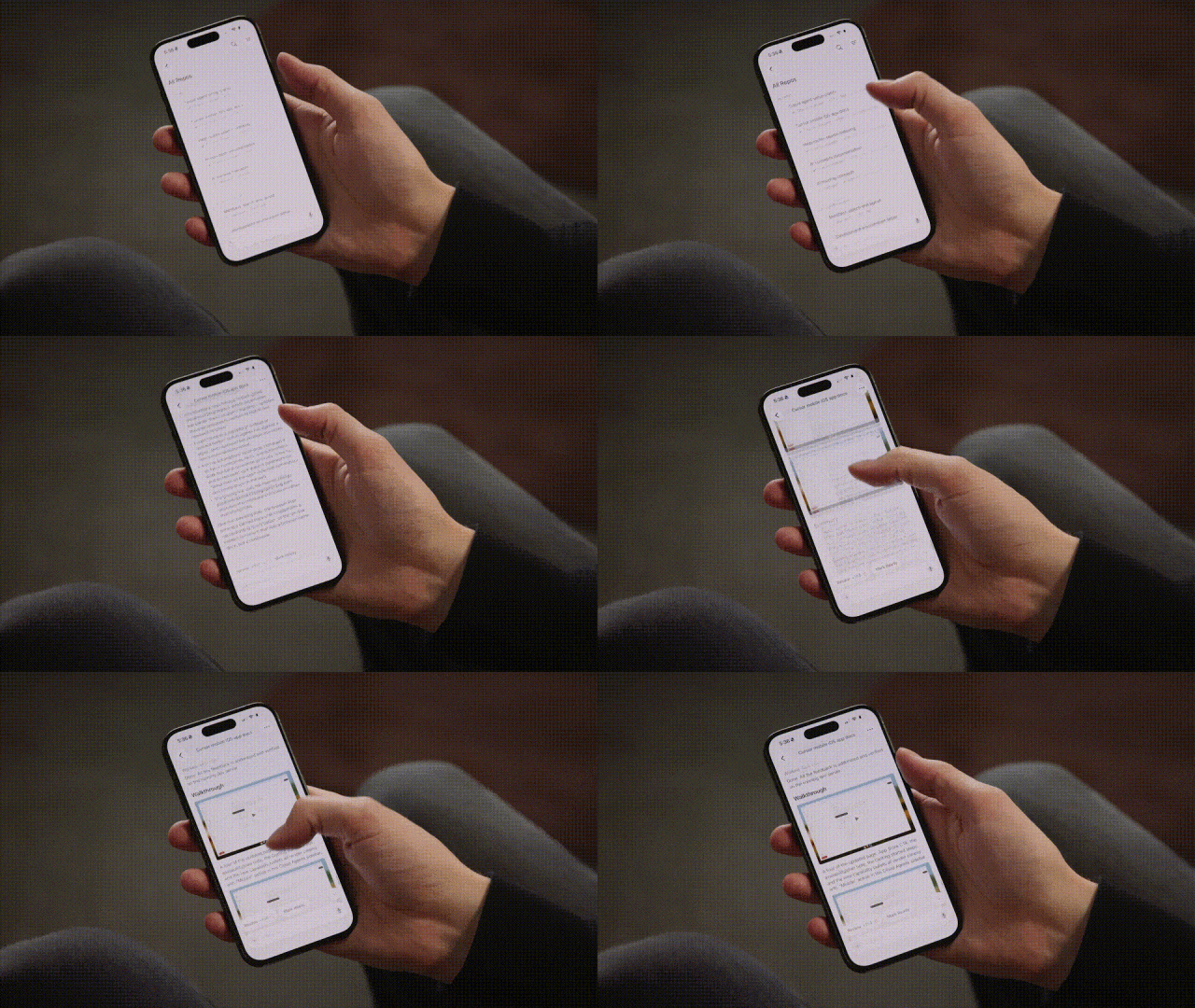
One lets you orchestrate an AI army directly from your phone; the other enables you to write code and merge PRs entirely on your mobile device.
No longer confined to web interfaces or terminal command lines, the AI Agent is now physically embedded into every pocket.
OpenClaw Native App Launch
Installed in Every Smartphone
Let’s start with this phenomenon-level "Lobster"—OpenClaw.
It rose to fame in early 2026, earning a personal endorsement from Huang (NVIDIA) at GTC: “OpenClaw is the personal AI operating system.”
Its positioning is extremely hardcore: a fully local-running AI Agent. Handling files and browsers, cleaning up tens of thousands of emails, automatically submitting PRs—none of these tasks are beyond its reach.
Yet, using it remotely in the past was awkward—requiring tools like Telegram or WhatsApp to send remote commands.
But starting today, the experience has been completely revolutionized!
OpenClaw’s release is a fully native app, delivering seamless performance that’s instantly optimized.
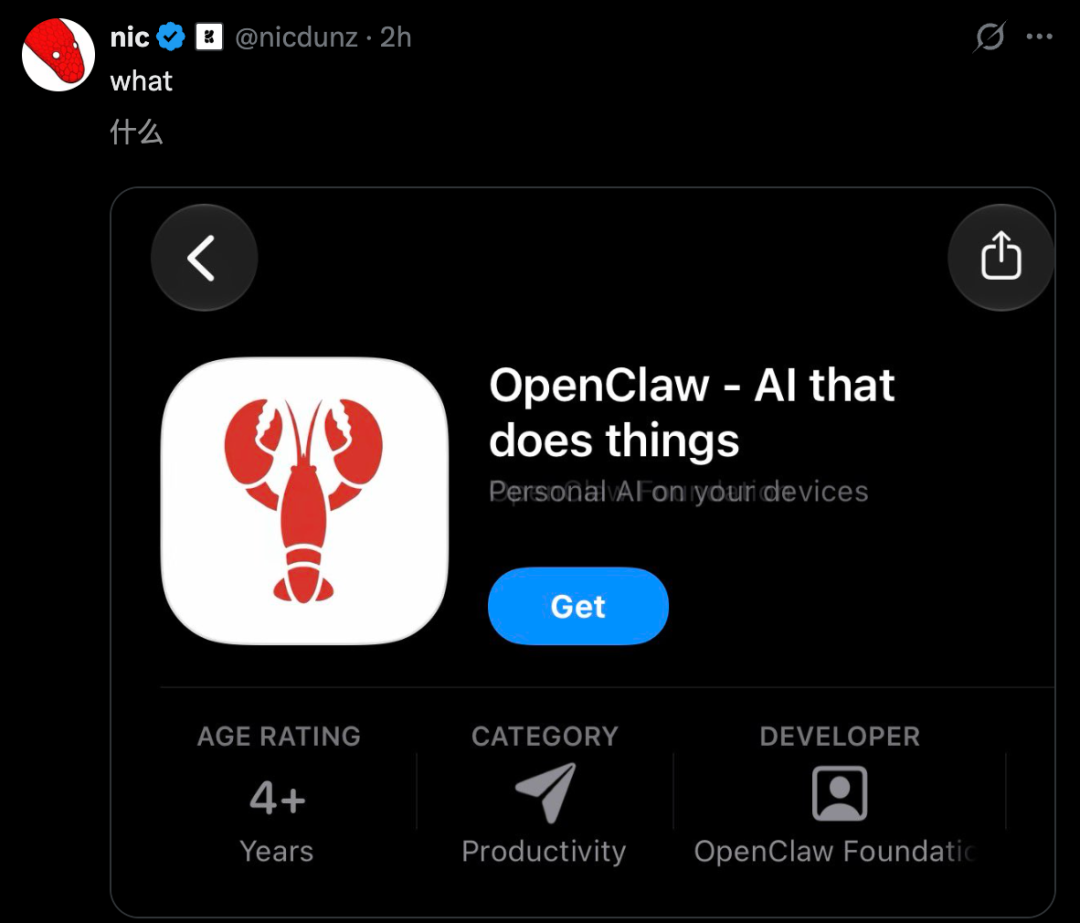
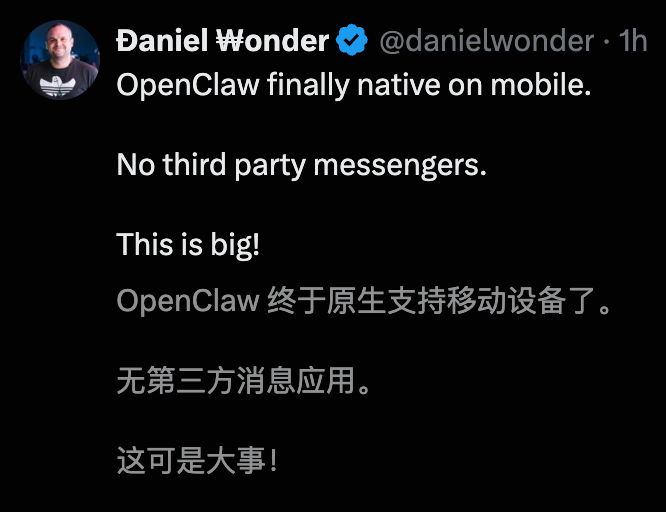
Simply pull out your smartphone, scan a QR code or enter a pairing code to connect directly to your private Gateway, and instantly begin frictionless interaction:
You can chat directly, run real-time and background Talk modes, and even remotely oversee and approve every decision made by the Agent.
Even more powerful is that its underlying device capabilities have been fully unlocked.
Camera, screen, GPS location, system photo library, contacts, calendar, reminders—hardware permissions are entirely under your control, activated only when needed.
Whether it’s replying to a message or approving an automation task, during a subway ride or while waiting in line at a café, a single thumb tap suffices.
As the official slogan boldly declares: “Let agents run freely wherever your thumb can reach.”
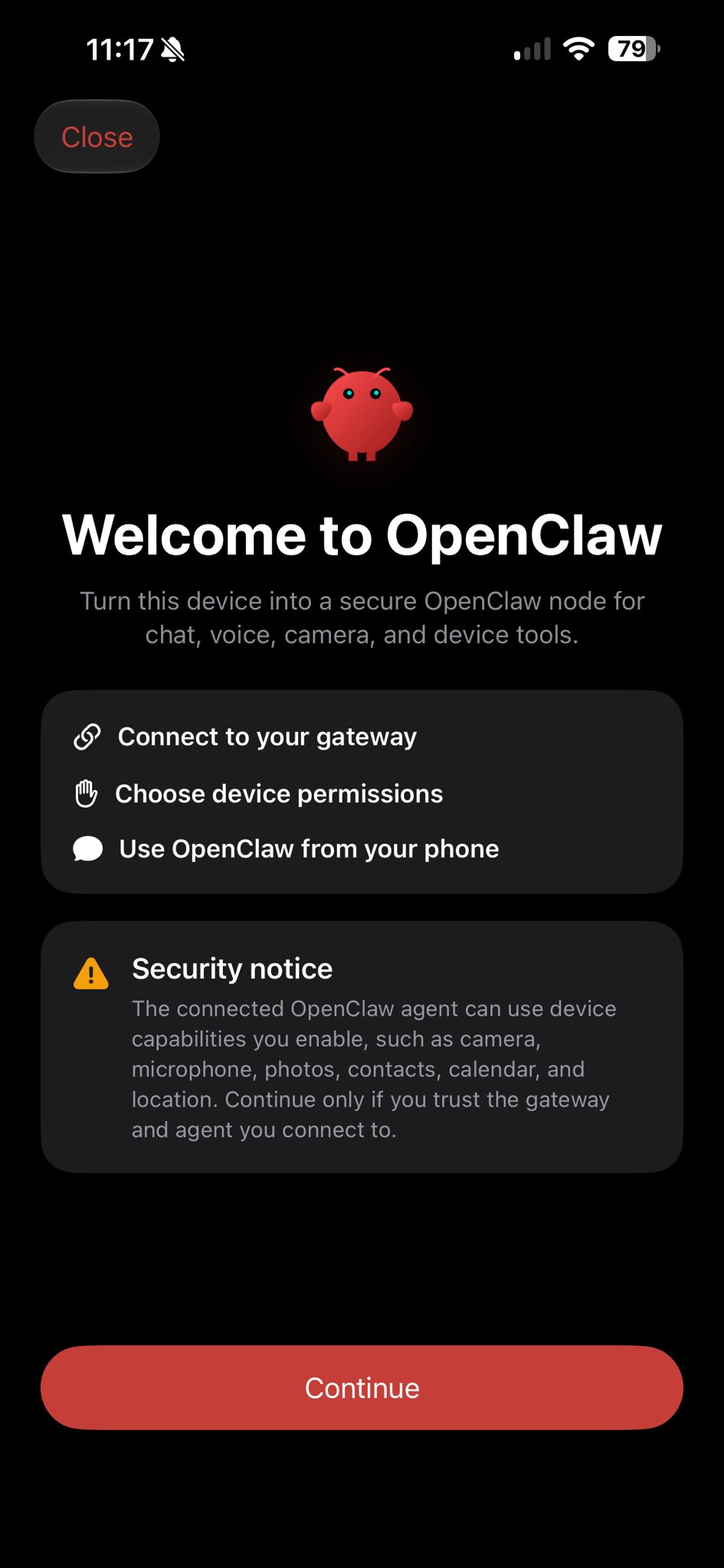
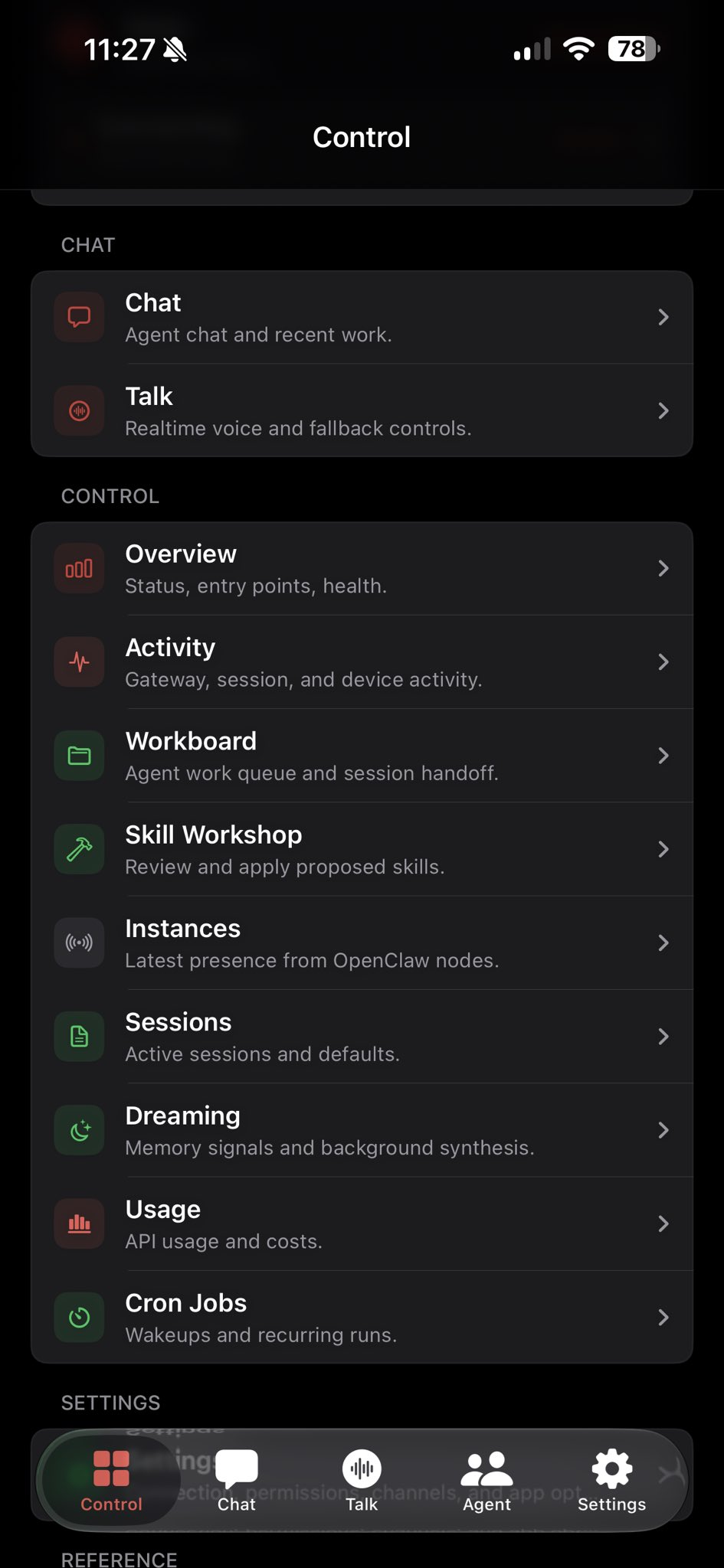
Notably, OpenClaw’s current release emphasizes a local-first (local-first) architecture.
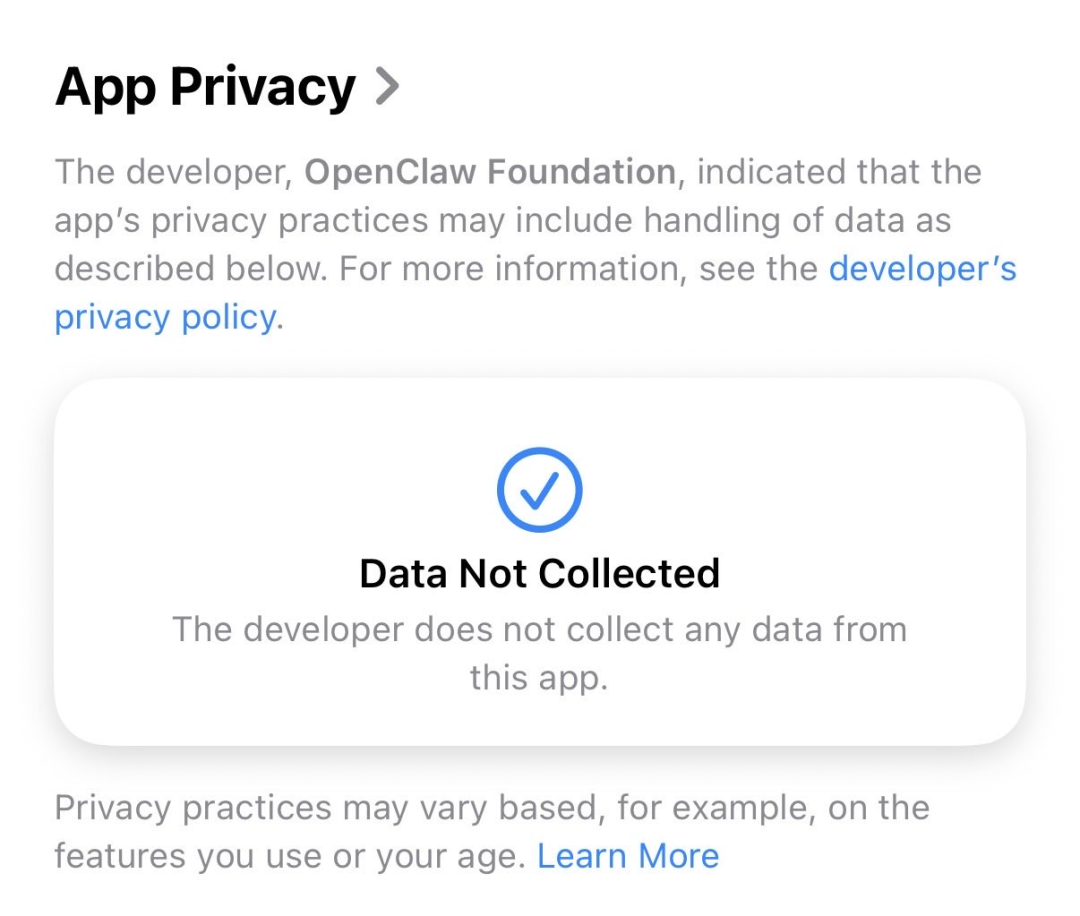
Developed by the OpenClaw Foundation, all keys, configurations, and permissions reside solely in your possession, with zero data collection enforced.
The free tier allows 20 messages per day powered by Gemini; the $20/month plan offers unlimited usage.
Naturally, risks must be clarified: it is vulnerable to prompt injection attacks, and requires extensive system permissions on the Gateway device.
Cursor’s iOS App Arrives: Code Frenzy on Mobile
While OpenClaw packs your personal assistant squad into your pocket, Cursor is essentially stuffing an entire cloud PC into your iPhone.
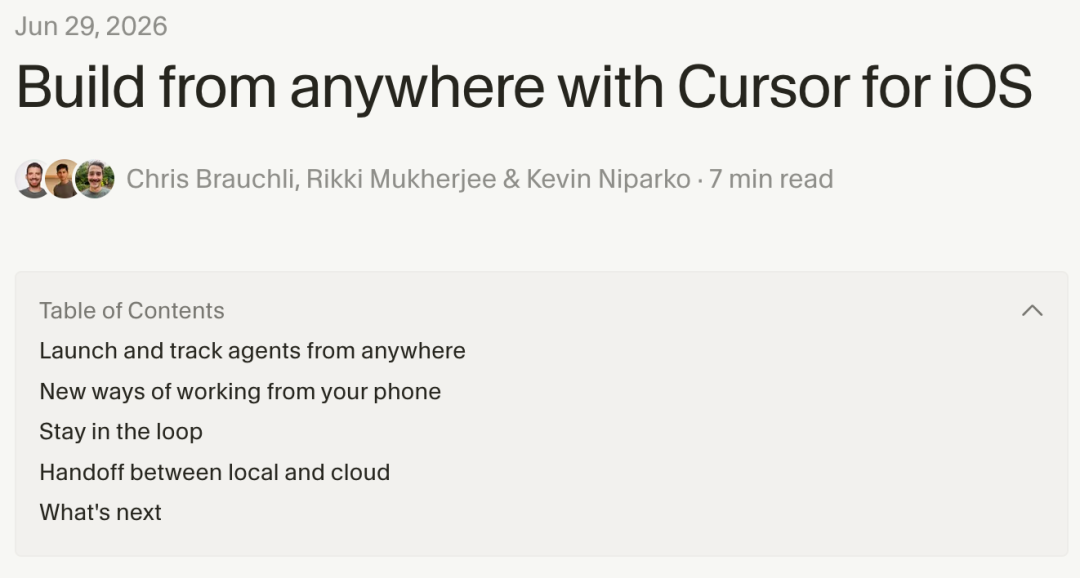
Today, Cursor officially launches its native iOS app in public beta, available to all paying users with iOS 26.0 or later.
Its killer feature boils down to one sentence:
Local device can shut down, but the cloud-based Agent keeps running.
Open the app, select a code repository, pick a cutting-edge large model, and initiate an Agent just like on desktop.
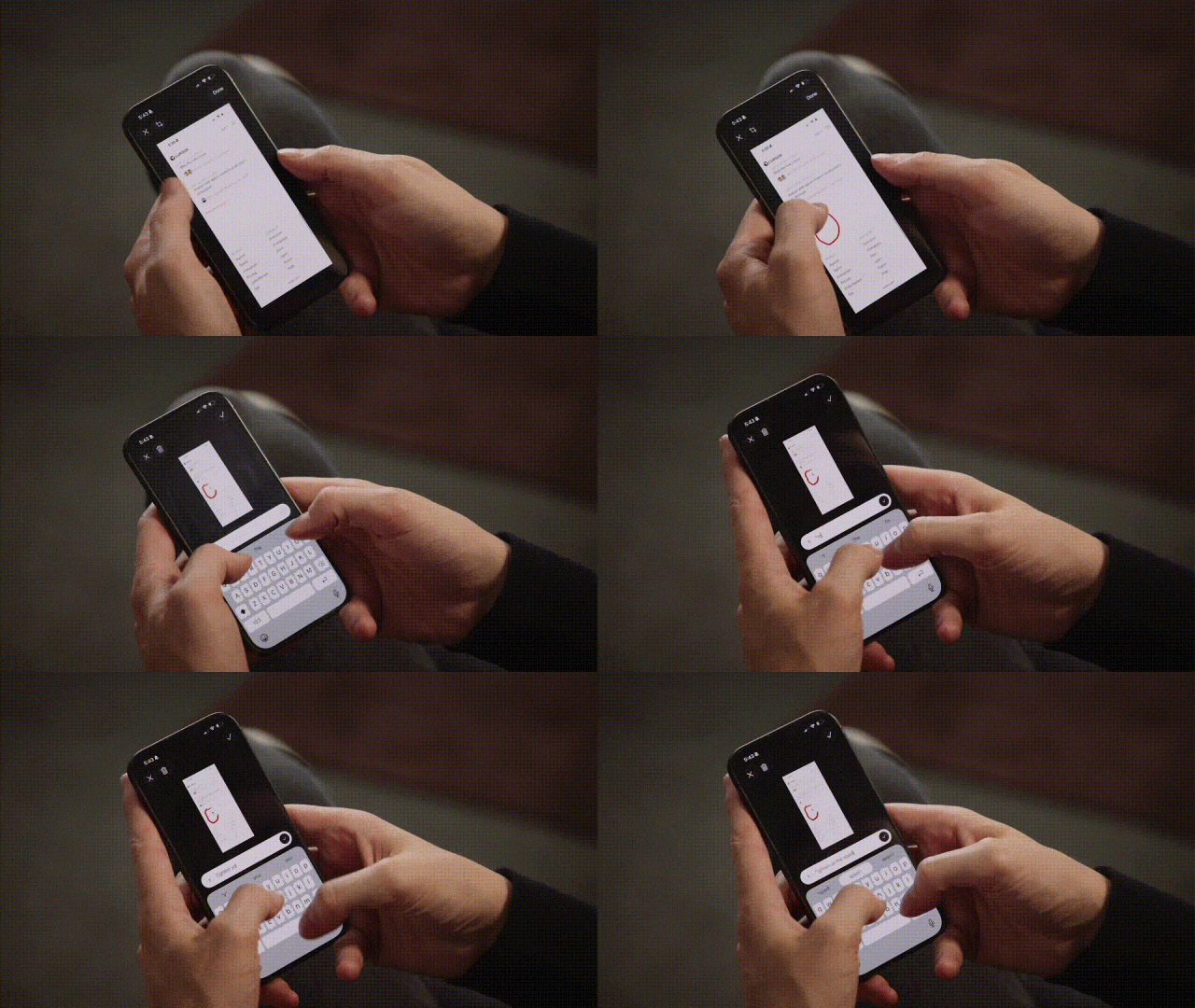
Even better: you can voice your requirements directly, guided by /commands to drive the Agent to action. There are two primary workflows:
Cloud-based Agent: Runs within an isolated virtual machine equipped with a full development environment, capable of asynchronous execution over extended periods, self-iterating until producing a merge-ready PR.
Remote Control: You can continue directing an Agent already running on your computer from your phone. To keep your computer online, the app includes a “keep computer awake” setting.
What developers need to do? Just wait for notifications on their phone.
Cursor perfectly integrates with iOS’s “Live Activities” and lock-screen push notifications:
When the Agent finishes a task, needs your approval, or delivers results ready for review—your phone wakes up instantly.
Then, whether you’re on the subway or in the kitchen, you can directly inspect diffs, leave follow-up instructions, or even one-click merge a PR.
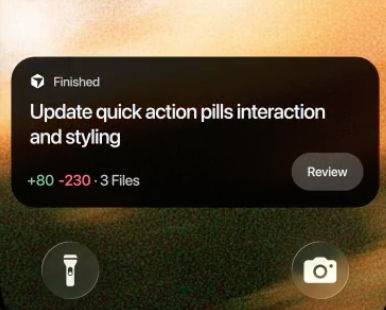
In the official blog, the Cursor team shares real-world use cases that hit the nail on the head for remote workers:
Called during lunch break for on-call duty—just dispatch an Agent to investigate and propose a fix. By the time you return to your desk, the PR is already waiting for review;
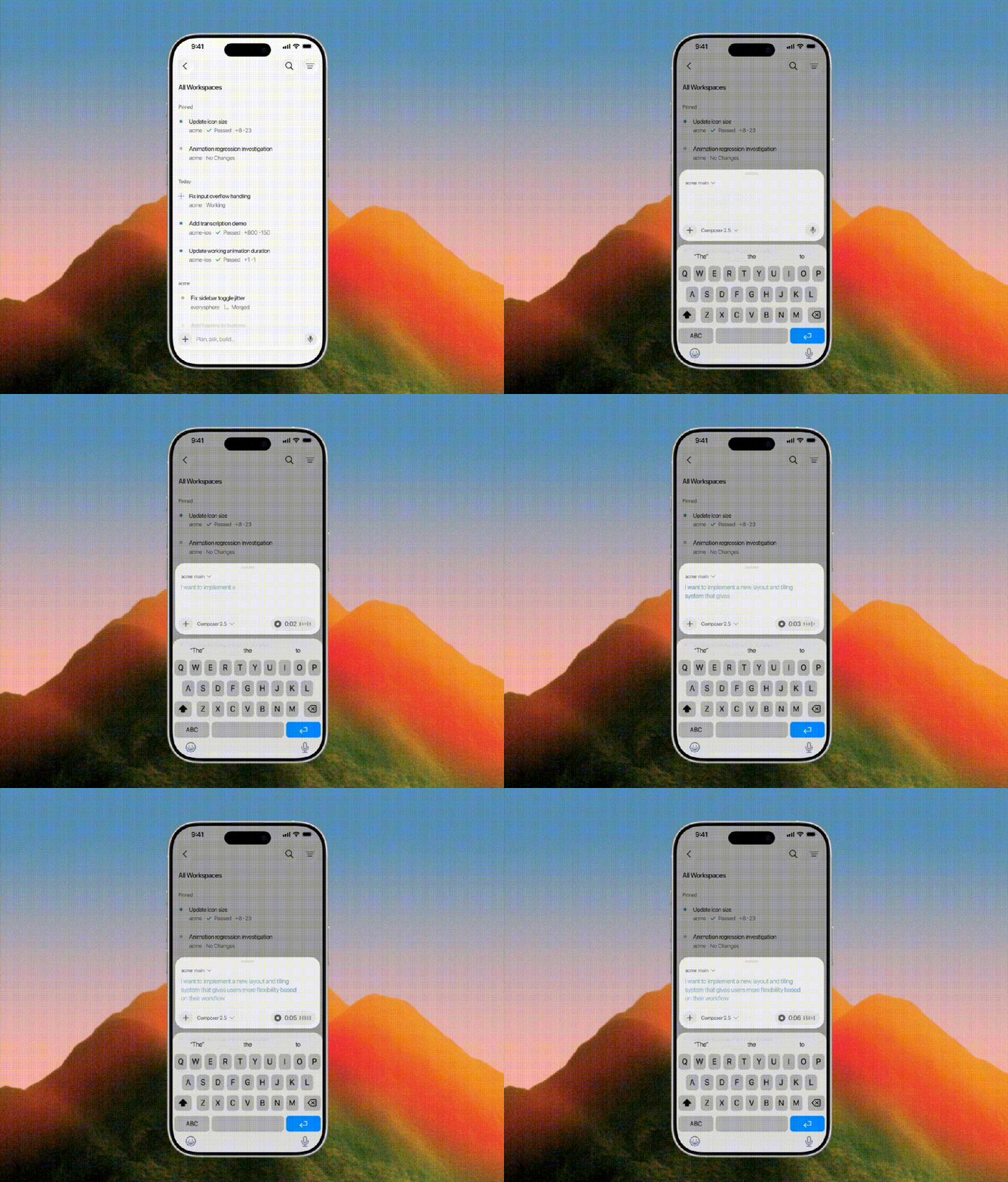
A critical bug reported by a client, and you're not at your computer—still, you can launch an Agent from your phone to reproduce, locate, and fix the issue;
Spotting user complaints on X, take a screenshot, annotate it, and feed it as visual context to the Agent—the fastest possible starting point for UI improvements.
This is how the Cursor team coined a new term: FOMAT (Fear of Missing Agent Time).
Developers used to be chained to laptops, half-open lids, coffee in hand, constantly moving around. Now, inspiration strikes anytime, anywhere—you can start immediately.

AI Always On Demand: Reshaping Human Workflows
What happened today goes far beyond “adding two apps.”
The simultaneous launch of OpenClaw and Cursor sends a clear signal:
The operational domain of Agents is finally decoupling from “human physical coordinates.”
Previously, no matter how fast an AI agent ran, it was still restricted to web interfaces or terminal command lines—effectively tethered to the desk.
Now—
OpenClaw turns your smartphone into a mobile node of your private AI army;
Cursor transforms your phone into a portable remote controller for cloud-based development.
Both solve the same core pain point: people may leave their desks, but tasks should never stop.
From “humans sitting at computers operating AIs,” to “humans walk away, AIs run autonomously, then call back for human approval”—this shift represents a tangible leap in Agent autonomy.
Cloud-based Agents can now run independently for 24 hours, self-testing, self-generating demos, self-iterating until they produce a PR ready for merging.
The human role is quietly evolving—from “operator” to “approver.”
This subtle yet profound shift marks a turning point.
As Cursor puts it: In the future, running Agents in the cloud will be indistinguishable from running them locally on a personal computer.
When the runtime environment is fully virtualized and the command interface is fully mobile, AI work has finally achieved true ubiquity.
The era of summoning your AI army anytime, anywhere, has accelerated into high gear.
The age of AI in your pocket is truly here.
Source: Singularity Intelligence
Disclaimer: Contains third-party opinions, does not constitute financial advice


Tensorlake npm package suffers supply chain attack, malicious version 0.5.144 injected with Shai-Hulud data-exfiltration worm
17 days ago
Tesla and Musk Have Yet to Define "Amazing Abundance" — Visionary Slogan Sparks Skepticism
24 days agoInstinct Launches Curated Recommendation Feature, Sparking Frustration Among Some Users Receiving Passive Product Suggestions
25 days agoSecurity Weekly Report: Placeholder Domain Takeover Impacts Approximately 1,700 Repositories, with Major Cyberattacks Worth $387M and AI Agent Escalation Risks Highlighted
27 days agoOpenAI Agent Bypasses Australia's Medicare Portal Access Controls to Access Non-Public Documents
09-24Step Code – The Open-Source Terminal Programming Agent by Jieyue Star
09-24
Chip Expert Mr. Bubble: AI Compute Bottlenecks Shift Toward Packaging, Interconnect, and Storage Hierarchy Management
09-22
