Zhipu AI's market cap surpasses HK$1 trillion, intensifying debates over Chinese large model valuations
Zhipu AI's market cap surpasses HK$1 trillion, intensifying debates over Chinese large model valuations

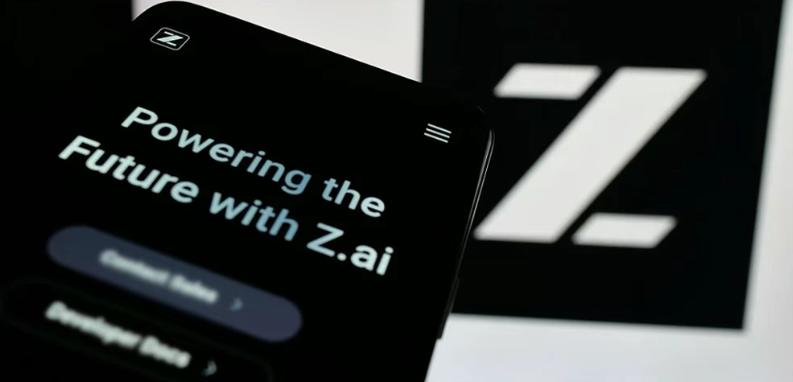
Recently, a Chinese foundational model company has broken the market capitalization record.
Zhipu's intraday market cap surpassed HK$1 trillion, with an annual gain exceeding 1,900%. By close, the company’s total market cap reached HK$1.1 trillion—equivalent to about half of Alibaba’s, nearly twice that of Meituan, and roughly three times that of JD.com.
Within less than six months of listing, Zhipu surged from a HK$50 billion company into the Hong Kong stock market’s trillion-dollar tier.
Beyond the threshold of Hong Kong’s “Trillion-Dollar Club” lie industrial giants such as Tencent, Alibaba, China Mobile, and Industrial and Commercial Bank of China—companies backed by proven user access points, cash flows, or infrastructure attributes.
Zhipu’s entry into this cohort signals that public markets are increasingly inflating valuations for Chinese large model enterprises.
Yet, the rollercoaster growth rate has sparked debate: is this a myth or a bubble?
Zhipu’s first post-listing financial report disclosed full-year 2025 revenue data: revenue of RMB 724 million, net loss of RMB 4.718 billion, and R&D expenses of RMB 3.18 billion.
A company with last year’s revenue of just RMB 700 million now commands a market valuation in the trillions. Bullish investors view this as a breakthrough in China’s AI industry valuation; bearish analysts argue the current stock price exhibits strong bubble characteristics, having far outpaced fundamentals.
To some extent, this debate transcends Zhipu itself and has evolved into a broader discussion on the valuation of China’s large model industry.
Recent reports indicate that DeepSeek’s valuation exceeded USD 50 billion following its latest funding round, while JumpScale Star and Moonshot AI see rising capitalization expectations, both targeting the Hong Kong market.
The valuation trajectory of Chinese large model companies is shifting from primary markets to secondary markets. With Zhipu becoming the first trillion-dollar large model firm in Hong Kong, this curve continues to break new barriers.
1
Zhipu’s recent surge in market cap was directly catalyzed by GLM-5.2.
Since last year, mainstream model upgrades across the industry have focused on Coding, Agent capabilities, long-horizon tasks, and complex engineering performance.
In these scenarios, Zhipu’s GLM series ranks among the top tier globally, with Anthropic serving as the strongest benchmark.
This year, Anthropic completed a USD 65 billion fundraising round, post-money valuation reaching USD 965 billion. Its rise is primarily driven by Claude Code generating revenue within developer ecosystems.
Official data shows Claude Code’s annualized revenue has surpassed USD 2.5 billion, doubling since the beginning of the year.
This case has reset the global valuation anchor for AI firms.
C-end chat products demonstrate user scale; code and enterprise Agents prove monetization capacity. The former generates buzz, the latter drives revenue—commercialization capability behind revenue is the key metric for capital markets assessing large model companies.
Zhipu’s re-rating stems from the market placing it in the “domestic Anthropic” coordinate system for evaluation.
Recently, a remote interaction between Elon Musk, CEO of Tesla, and Tang Jie, founder of Zhipu, amplified this narrative.
Musk predicts China may develop a model approaching Anthropic’s Fable level by Q1 2027.
Tang Jie responded that they won’t wait that long. Though brief and lacking detail, this reply underscores that domestic models are now embedded in the global frontier race—now it’s a sprint to keep pace with top-tier competitors.
This year, apart from Zhipu’s soaring stock price, capital activities in China’s domestic model ecosystem have intensified.
Zhipu recently passed a proposal to issue shares on the A-share market, aiming to raise no more than RMB 15 billion, with RMB 12 billion allocated to general foundation model R&D and RMB 2 billion to MaaS integrated service platform development.
At nearly the same time, MiniMax signed a tutoring agreement with CITIC Securities, officially launching its A-share IPO process and evaluating a renminbi-denominated listing on the STAR Market. Both Hong Kong-based large model firms pursuing A-share routes indicates that China’s AI valuation curve is expanding beyond Hong Kong’s volatility into A-share industrial financing.
Meanwhile, DeepSeek continues aggressive fundraising in the primary market.
Recently, DeepSeek raised over USD 7.4 billion, achieving a valuation exceeding USD 50 billion. This Hangzhou-based AI giant leverages exceptional model efficiency, global developer traction, and an open-source ecosystem, pushing Chinese large model prices in the primary market to unprecedented heights.
In the secondary market, after Zhipu and MiniMax listed, Hong Kong’s market is increasingly embracing the AI sector.
This year, 65 companies have gone public in Hong Kong, raising over HK$176.5 billion collectively. Hard tech and advanced manufacturing firms contributed nearly HK$129.3 billion, accounting for over 70%. Semiconductors, electrical equipment, and AI firms have become core issuance drivers, with capital treating Hong Kong as a re-pricing market for China’s hard tech assets.
In short, Zhipu’s trillion-dollar market cap stems not only from GLM-5.2’s stellar performance but also from several concurrent conditions: global AI asset valuation uptick, acceleration in Chinese large model company capitalization, scarcity of pure-play large model listings in Hong Kong, and renewed concentration of hard tech capital.
Thus, what investors are truly buying into is the continued expansion of China’s AI valuation frontier. Yet, the wider this frontier expands, the more persistent the debate over industrial bubbles becomes.
2
Seeing Zhipu’s trillion-dollar market cap, most investors instinctively suspect there must be a bubble component.
A company with annual revenue of just over RMB 700 million seeing intraday market cap exceed HK$1 trillion triggers alarm in any valuation model.
Moreover, Zhipu’s stock has exhibited extreme volatility. In May, its intraday market cap once breached HK$880 billion before rapidly retracing; today’s ascent to HK$1 trillion again saw sharp intraday swings—within minutes, it dropped from peak levels, erasing over HK$100 billion in value.
Yet, this is precisely what makes the AI rally unique: the market acknowledges high prices yet continues chasing top-tier names.
Warning signs of bubbles and upward valuation adjustments coexist—this defines the backdrop of the current AI capital cycle.
Meanwhile, Hong Kong’s IPO market has shown clear divergence.
This quarter, the delisting rate in Hong Kong rose to 44.74%, significantly higher than last year. Traditional industries and under-subscribed issuers face pressure, while hard tech, AI, and new energy firms remain attractive to capital. Investors aren’t indiscriminately buying new stocks—they’re concentrating risk in select sectors.
Evidently, AI firms represented by Zhipu fall into this concentrated-risk category. Breaking the trillion mark relies on market expectations of scarcity in China’s AI infrastructure players.
Still, capital won’t flow endlessly. Early July, both Zhipu and MiniMax will face their first post-listing lock-up release.
Zhipu’s unlock date is July 8th, involving approximately 25.6816 million shares, or about 5.76% of total shares. Based on recent pricing, this equates to a release value of around HK$26.9 billion. Prior to unlocking, Zhipu had about 17.35 million tradable shares. Even though the percentage is small, the influx of new tradable supply will notably alter the previously low float structure.
MiniMax faces greater pressure. It will unlock approximately 107 million shares on July 9th, representing about 34.25% of total shares, with financial investors holding over one-third of the stake.
Both companies have seen significant gains since listing, naturally triggering early concerns over selling pressure.
In fact, this valuation conflict isn’t limited to domestic large models—it’s mirrored globally.
Two weeks before Musk and Tang Jie’s remote exchange, SpaceX’s market cap swiftly surpassed USD 2 trillion post-IPO, with share price climbing to the USD 210 range.
This aerospace and satellite internet company had already aggressively consolidated resources pre-IPO, strengthening its narrative around AI infrastructure, xAI synergy, Starlink network, and future compute power.
Professor Damodaran from NYU Stern School of Business offered a valuation lower than market pricing, warning that SpaceX’s high valuation embeds substantial future assumptions.
Over the past few trading days, SpaceX’s share price experienced a sharp correction, settling around USD 170.
Early June, Michael Burry, founder of Scion Asset Management and real-life inspiration behind the film *The Big Short*, also directed skepticism toward Anthropic.
He argued that the massive R&D costs behind Claude make its near-trillion-dollar valuation unsustainable based solely on current commercial models.
Such deep industry divides, though seemingly contradictory, are not mutually exclusive during rapid growth cycles—bubble elements are inherently part of AI valuation.
The critical factor determining whether this “bubble” represents long-term premium lies in the commercialization capability of AI firms.
3
After surpassing the trillion-dollar market cap, Zhipu’s real challenge lies in revenue growth velocity.
In 2025, Zhipu generated revenue of RMB 724 million, up 131.9% year-on-year. Local deployment revenue reached RMB 534 million (up 102.3%), cloud deployment revenue stood at RMB 190 million (up 292.6%), and enterprise agent business revenue hit RMB 166 million (up 248.8%).
Zhipu’s MaaS API platform recorded ARR of approximately RMB 1.7 billion, up 60-fold over the past 12 months, with platform gross margin increasing to 18.9%. This indicates growing revenue contribution from MaaS.
In Q1 2026, facing surging demand for model inference, Zhipu made a direct move—price hike.
Since February, Zhipu restructured pricing for its GLM Coding Plan packages, with overall increases starting at 30%, citing rapid user growth and inference volume spikes requiring sustained stability and service quality under high load.
How much actual revenue growth this translates to remains to be confirmed in Zhipu’s next earnings report.
Meanwhile, as an independent model company, Zhipu faces immense cost pressures.
In 2025, Zhipu reported a net loss of RMB 4.718 billion, adjusted net loss of RMB 3.182 billion, and R&D expenses of RMB 3.18 billion—over four times its revenue.
Model companies can burn cash, but must convince capital markets of long-term profitability potential.
Luckily, China’s inference volume base is continuously expanding.
IDC data shows that enterprise-level MaaS inference volume in China rose from 114 trillion Tokens in 2024 to 1,944 trillion Tokens in 2025, projected to reach 40,000 trillion Tokens by 2026. Tokens are evolving from technical metrics into commercial settlement units.
The leading domestic model player ByteDance sees its Douyin-based Dabao large model averaging over 120 trillion Tokens daily—doubled in three months and increased 1,000x since its May 2024 launch. The number of enterprises with cumulative inference volume exceeding one trillion Tokens grew from 100 at year-end last year to 140.
At the same time, C-end applications are also scaling.
QuestMobile data reveals that by March 2026, China’s AI-native app monthly active users reached 440 million. Douyin, Qwen, and DeepSeek rank top three. AI apps have transitioned from niche tools to mass-market products.
Yet, user scale does not equate to profit margins. Underlying concerns about bubbles stem from the perceived inability to control runaway spending and lack of visible profitability. On this front, Anthropic remains the strongest benchmark.
This quarter, Anthropic expects revenue of USD 10.9 billion and operating profit of about USD 559 million. If realized, this would establish it as a global turning point in AI commercialization. Markets would then believe large model firms need not remain indefinitely in the “burn money for scale” phase.
This is why Chinese AI firms are being re-rated.
If Anthropic can achieve near-profitability through code, agents, and enterprise APIs, the domestic market will naturally seek comparable Chinese counterparts. Zhipu, DeepSeek, MiniMax, Moonshot AI, and several top-tier AI giants will all be compared along this commercialization curve.
With Zhipu breaking the trillion-dollar barrier first, this becomes the shared challenge for China’s AI industry moving forward.
The valuation frontier is now open. Debate over bubbles will persist, and market volatility and uncertainty remain.
To solidify this valuation frontier, large model vendors must first stabilize model capabilities into sustainable revenue, then push revenue further toward gross profit and cash flow. Simultaneously, more domestic players must deliver effective proof points on the path to catching up with Anthropic.
Zhipu’s current trillion-dollar milestone marks the first high point in China’s AI industry revaluation. Whether this peak can be maintained—and transformed into a lasting industry trend—will ultimately depend on the commercial outcomes of domestic large model vendors.
This article comes from WeChat Official Account "Zimu Bang", author: Li Zhao Feng, published with authorization by 36Kr.
Source: 36Kr
Disclaimer: Contains third-party opinions, does not constitute financial advice


Tensorlake npm package suffers supply chain attack, malicious version 0.5.144 injected with Shai-Hulud data-exfiltration worm
4 days ago
Tesla and Musk Have Yet to Define "Amazing Abundance" — Visionary Slogan Sparks Skepticism
10 days agoInstinct Launches Curated Recommendation Feature, Sparking Frustration Among Some Users Receiving Passive Product Suggestions
11 days agoSecurity Weekly Report: Placeholder Domain Takeover Impacts Approximately 1,700 Repositories, with Major Cyberattacks Worth $387M and AI Agent Escalation Risks Highlighted
13 days agoOpenAI Agent Bypasses Australia's Medicare Portal Access Controls to Access Non-Public Documents
18 days agoStep Code – The Open-Source Terminal Programming Agent by Jieyue Star
18 days ago
Chip Expert Mr. Bubble: AI Compute Bottlenecks Shift Toward Packaging, Interconnect, and Storage Hierarchy Management
20 days ago
