A customer service agent earning 5,000 RMB per month can be replaced by AI for just 200 RMB
A customer service agent earning 5,000 RMB per month can be replaced by AI for just 200 RMB
2026-07-13 11:22
Intro: A human customer service agent costs $5,000/month; an AI-powered counterpart costs just $200. The $4,800 gap is where value is either captured by merchants—or saved for them. Today’s breakdown focuses on the latter: the business of helping merchants cut costs.
Recently, a quiet but lucrative opportunity has emerged in North America: helping local small businesses deploy AI-powered customer service.
This isn’t about enterprise-grade intelligent CRM systems. Instead, it’s about leveraging off-the-shelf AI tools to train a bot capable of handling 80% of common customer inquiries autonomously.
What’s the most frequently asked question at a physical storefront?
Operating hours, location, parking availability, invoice issuance, and appointment booking—just a handful of recurring queries, endlessly repeated.
Hiring a person to sit at the front desk answering calls and messages costs at least $4,000/month. But what the owner truly needs is an automated response system.
This is your opportunity.

How to Find Clients
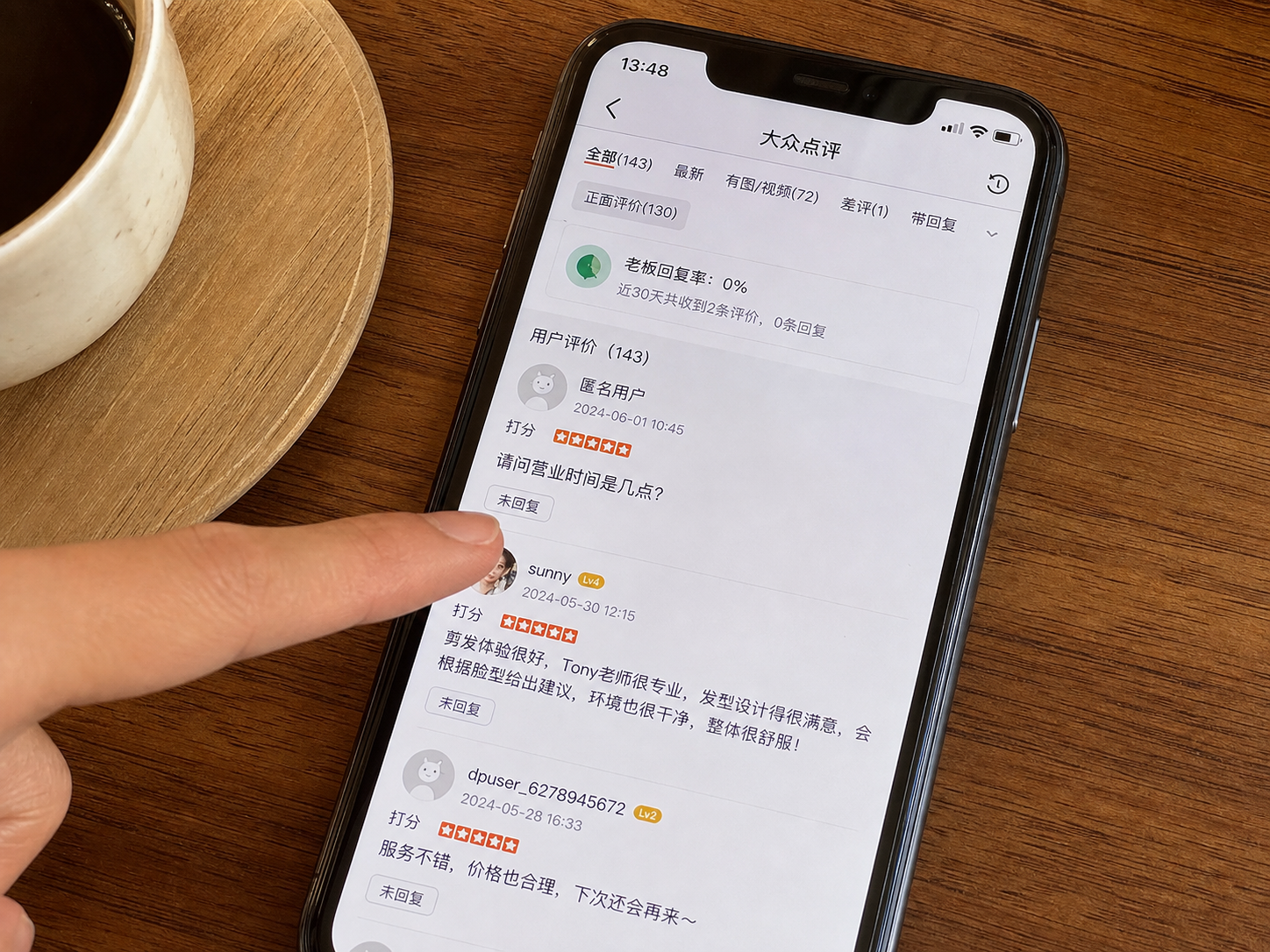
Start by searching local businesses on Dianping (Meituan). Identify those with high ratings but slow or nonexistent message responses—e.g., customers asking “Are you open today?” get no reply for three hours, or never at all. These are your ideal targets.
Approach the owner—not as a seller of AI, but as a provider of a solution: “Save yourself the cost of hiring a full-time customer service staff.”
The pitch is simple: “Every unanswered inquiry is a lost customer visit. I’ll set up an instant auto-reply system that answers every question within seconds. For only $800/month, it’s far cheaper than hiring someone.”
When they hear “cheaper than hiring,” they’ll listen.
How to Build It
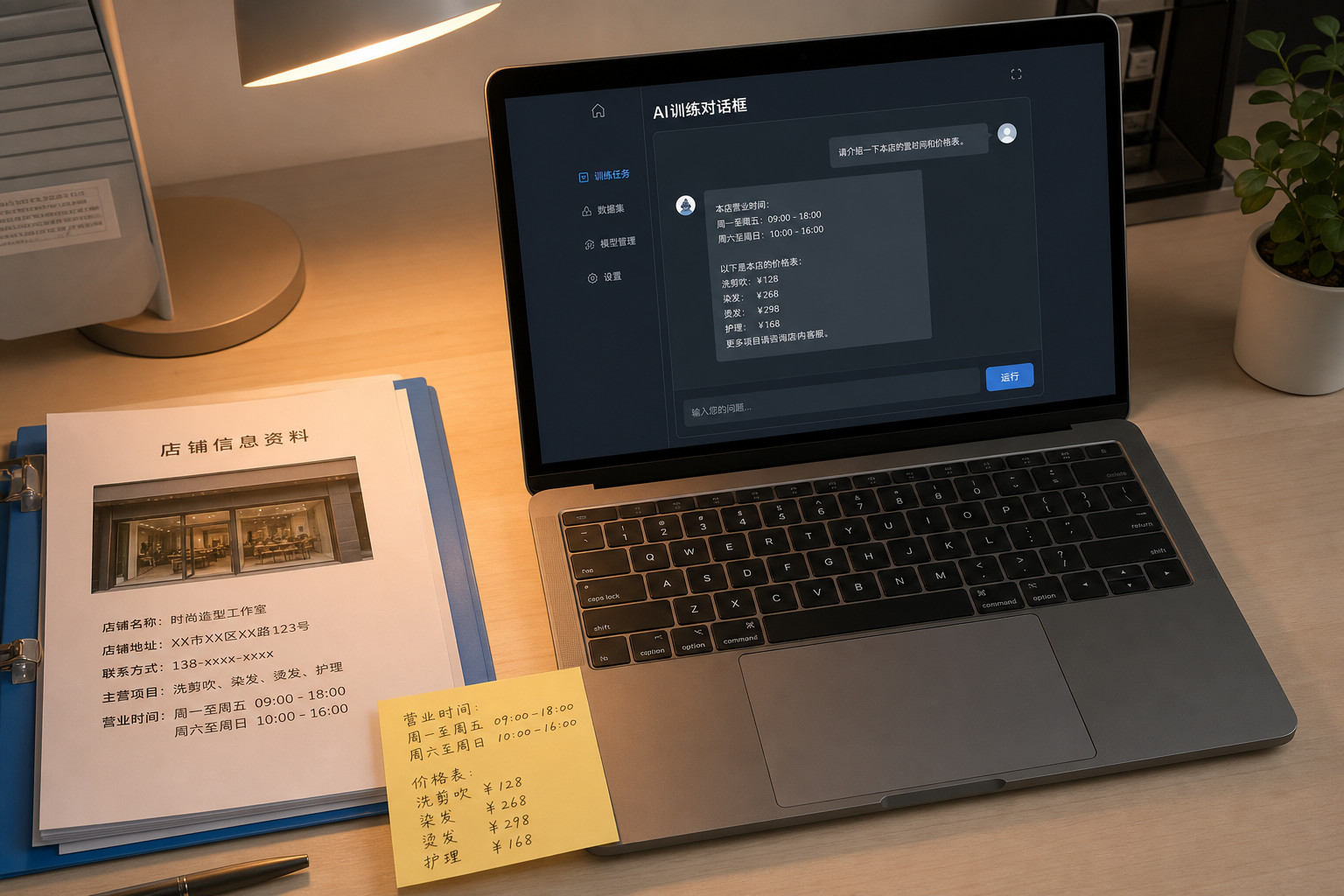
Step 1: Gather Information. Spend half an hour with the owner collecting every piece of operational data: operating hours, pricing tiers, reservation process, FAQs, nearby parking guidance, pet policy. The more granular, the better.
Step 2: Train the AI. Feed this information into an AI model. Provide a clear prompt: “You are a customer service assistant for a [Business Name] store. Based on the following details, respond to customer inquiries in a friendly, concise manner. If unsure, say ‘I’ll transfer you to a human agent.’” Then paste all collected data into the prompt.
Step 3: Integrate with WeChat. There are third-party tools available that connect AI to WeChat Official Account backends for around $100–$200/month. Customers send messages via the public account, and the AI replies instantly—complex issues are escalated to humans. Alternatively, a cheaper option: guide the owner to use a basic WeChat auto-reply tool, costing under $200/month.
Profit Potential
Charge $800–$1,500 per client monthly. Costs are near zero—once deployed, maintenance and updates are minimal. One operator can manage 15–20 clients effortlessly. Monthly revenue ranges from $12,000 to $22,500.
Churn rate is extremely low. Once merchants experience the convenience of not having to manually reply to every message, they won’t revert. As long as you avoid major failures, clients stay loyal.

How to Scale
Apply the same model across verticals: automate order replies for restaurants, appointment confirmations for gyms, course inquiries for training centers. The underlying AI architecture remains identical—only the input data changes.
You can also scale upward: build more complex solutions for mid-sized businesses—ticketing systems, post-sales support, return & exchange workflows. Pricing can range from $1,500 to $3,000 or even $5,000 per month.
The Pitfalls
The biggest risk isn’t technical—it’s boundary management.
Anticipate the consequences if the AI gives incorrect or inappropriate responses. For example, if a customer asks, “How does your store compare to the one next door?” and the AI makes disparaging remarks about the competitor, your client could face legal liability. During training, explicitly define boundaries: flag all sensitive or comparative questions for human escalation.
Avoid large e-commerce stores with massive customer volumes. Your $800/month package can’t handle hundreds of daily inquiries. For such clients, you’ll need higher-tier infrastructure—price accordingly. Start small with lightweight, low-volume businesses.
The best part of this space? Most merchants don’t understand the technology.
You don’t need to build your own AI. Off-the-shelf tools are already robust. Your role is simply to bridge the gap: feed the business’s operational data into the AI, and integrate the AI into the WeChat backend. Sounds straightforward—but 99% of business owners neither know how nor want to learn. That knowledge asymmetry is your profit margin.
Disclaimer: The above content is based on personal observation and sharing, and does not constitute any investment or commercial advice.
Disclaimer: Contains third-party opinions, does not constitute financial advice
Town – An active AI personal assistant that collaboratively coordinates schedules
17 hours ago
Seven exclusive closed-door sessions with top-tier decision-makers, uncovering the most authentic insights and cutting-edge judgments on AI deployment
1 day ago
The "rat race" in East Asian education is being re-exported through AI
1 day ago
ABot-Earth 0.7 – The World’s First 3D-Native Urban World Model Launches by Gaode
1 day ago
JPMorgan Bullish on Meta: Muse, Model API, and Subscriptions Drive $820 Price Target
1 day ago
GPT-6 Tops the Charts, Biggest Shock After AlphaFold, Emerges as the Most Powerful AI for Antibody Prediction
1 day ago
Nobel Heroes & AI4SCI Summit 2026 to Launch in Singapore This October
1 day ago
EchoWM – JD.com's Open-Source Interactive Multimodal World Model
1 day ago


