Low-Cost Side Hustle Earned Six Figures in USD – Case Study on Website Monetization
Low-Cost Side Hustle Earned Six Figures in USD – Case Study on Website Monetization
2026-05-27 05:27
Today, I’m sharing a real case of earning money through a website.
A U.S. guy, while holding a full-time job, spent his spare time building a website and eventually earned six-figure USD.
I was curious: how did he actually do it? So I invested some time researching and fully understood the entire revenue model, which I’m now freely sharing with you.
I. Who is he? What entrepreneurial project is he running?
This American guy’s name is Patrick Hess—Patrick Hess in Chinese. For simplicity, I’ll refer to him as “Old Pai.”
Like many others, Old Pai wanted to earn more money, so he explored various low-cost entrepreneurial projects.
Since he already had a stable full-time job, he aimed for a side hustle that could be managed by a single person. If the side project grew successfully, he’d have the confidence to quit his job.
Side note: I’ve consistently recommended this approach to many friends.
Don’t impulsively resign from your job. Stay disciplined and start with a side hustle first. Only consider quitting once your side project proves profitable.
After careful consideration, Old Pai ultimately chose: building a website to generate income.
Why a website?
Because during his full-time job, Old Pai had built several websites for his company. Moreover, he had hands-on experience in content marketing and SEO (Search Engine Optimization), helping his employer generate significant revenue.
Thus, Old Pai believed he could leverage these skills acquired at work to build his own website and monetize it.
II. What kind of website should be built?
The internet hosts countless types of websites, and Old Pai was initially overwhelmed, unsure what to focus on.
So he used familiar tools such as Ahrefs (a renowned SEO tool), Google Keyword Planner, and Google Trends.
He also conducted brainstorming sessions, setting three criteria for his website topic:
(1) Broad audience—content appealing to men and women, young and old alike;
(2) Personal interest—the topic must genuinely fascinate Old Pai himself, as he didn’t want to run a boring site;
(3) Moderate competition—low saturation in the niche.
Having built websites myself, I’ve found that long-term, profitable personal blogs typically meet at least these three conditions:
(1) Content with broad appeal—featuring a core theme and several sub-topics—ensures ongoing content creation and sustained traffic growth potential.
(2) Without genuine passion for the topic, it’s hard to maintain consistency and commitment over time.
(3) Highly popular topics are oversaturated, making it difficult for new sites to rank well on search engines.
Old Pai grew up influenced by his father’s love for billiards and even played in league tournaments with his brother. He also enjoyed darts, table football, and other bar games.
So he compiled a comprehensive list of all the bar games he had personally experienced—essentially creating a definitive bar game directory.
Ultimately, Old Pai decided on the website theme: “Classic Bar Games”:

Let me add one point: unlike China’s leisure habits, in the U.S., it’s common to unwind at bars after work.
People often finish work early and have ample free time, leading many to gather at bars—drinking, socializing, and playing games like pool or darts.
III. Building the Website
To make money via a website, you first need to build one.
Old Pai carried out five key steps:
(1) Purchasing a domain
The domain must align closely with the website’s content. Old Pai chose bargames101.com.
Simple reason: the site focuses on bar games, and “101” means “basics.” The domain instantly communicates: “This site teaches people how to play bar games.”
(2) Renting a server
He selected Cloudways—a globally recognized hosting provider.
(3) Choosing a website platform
Old Pai opted for WordPress. It’s completely free and ranks #1 globally in website platforms, powering 43% of websites worldwide.

(4) Buying a website template
Old Pai paid for a premium WordPress theme called GeneratePress.
(5) Logo and imagery
Although Old Pai knew Photoshop, he felt his self-made logo and images lacked professional quality. So he hired a designer online.
How to find a foreigner to design a logo on Fiverr?
In total, Old Pai spent $200 on website setup.
You might be thinking: “That’s quite expensive—some tasks could’ve been done cheaper if he’d done them himself.”
But remember: Old Pai has a full-time job. He only worked on this project during his spare time.
When he realized certain tasks were beyond his skill level or would take too long, he outsourced them to professionals. While it cost money, it saved him valuable time and energy.
Quick tip: AI image generation is now highly accessible—using AI, you can design any logo or image yourself, saving both time and money.
IV. Operating the Website
Building a website is just the first step. Next comes filling it with content.
Drawing on his expertise as a bar game enthusiast, Old Pai began writing detailed articles about various games.
No matter how visually impressive a website is, it needs high-quality content to attract visitors. A blank or poorly written site will never grow.
Once content was solid, the next phase was driving traffic.
Old Pai didn’t spend a single dollar on ads. His primary traffic sources were organic—social media and search engines.
He created official accounts on Facebook, Twitter, and Pinterest, and meticulously optimized for SEO. But initially, traffic remained negligible.
After several months, traffic began to grow noticeably—from dozens of daily visitors to hundreds per day.
From my own experience, SEO takes time to show results. It can take anywhere from 1–2 months to half a year before meaningful traffic appears.
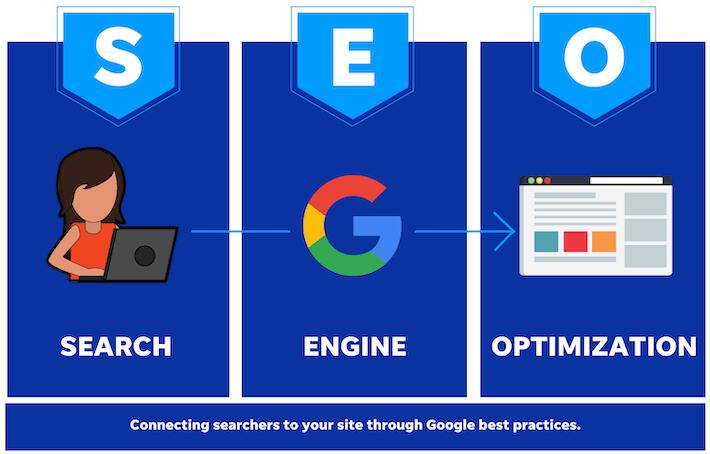
But soon, Old Pai hit another wall: he ran out of content ideas, and traffic growth stalled.
Fortunately, he realized: he needed to expand the scope beyond just bar games and explore related indoor or party games.
So he started researching new games and hired professional writers to boost content output and quality.
Let’s check how Old Pai’s website ranks on Google. Typing “classic bar game,” his site appears as the second result:
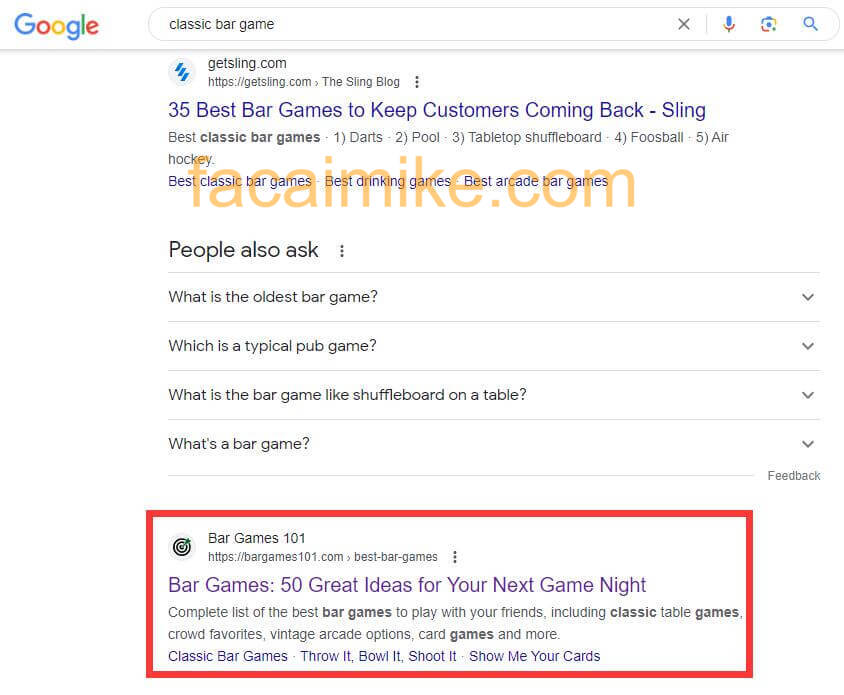
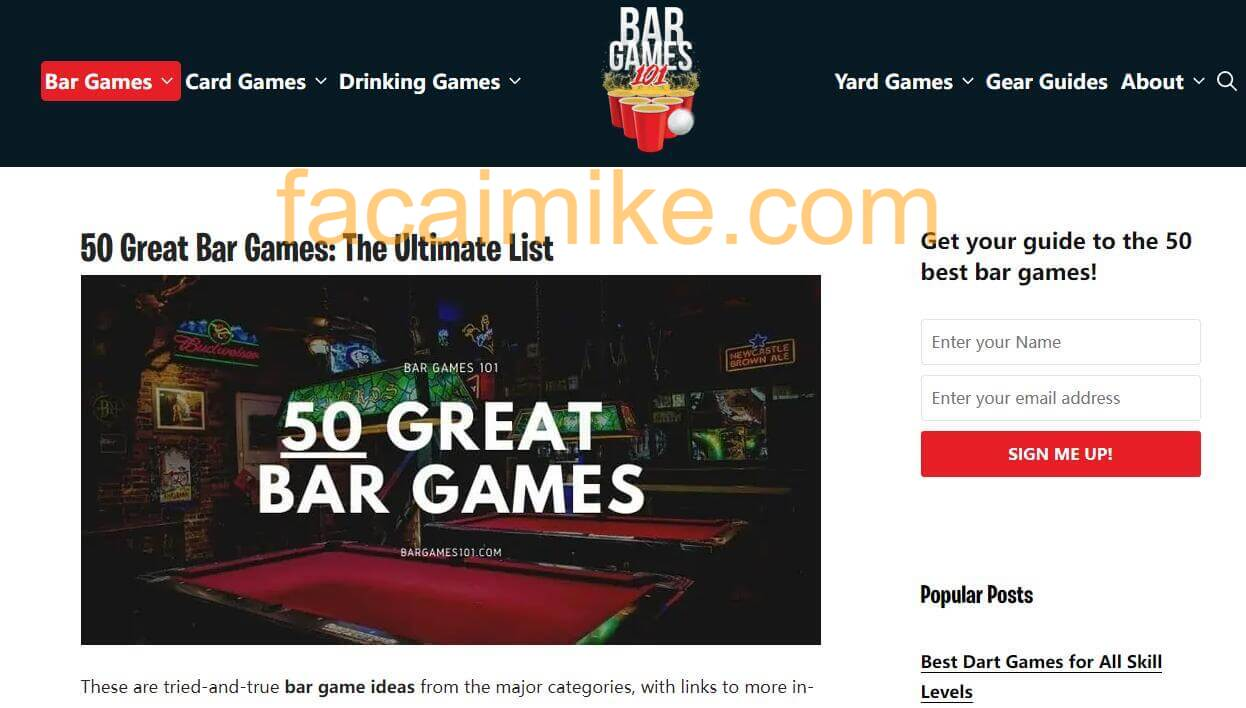
Ranking prominently on Google’s first page indicates that the Google algorithm strongly recognizes and trusts this site.
V. Monetizing the Website
Through Old Pai’s consistent efforts, the website continuously updated content and traffic steadily increased—eventually reaching 200,000 unique IP visits per month and an average monthly income of $3,500.
After analyzing his revenue streams, here are the three main ways he made money:
(1) Ad network integration via Mediavine—an ad platform similar to Google AdSense. It auto-serves ads across connected websites and pays site owners based on performance.
Mediavine offers higher payouts than AdSense but has stricter eligibility requirements.
It requires a minimum of 25,000 monthly pageviews to qualify—so new sites shouldn’t expect immediate approval. Wait until traffic grows.
This income qualifies as passive revenue—earning money while sleeping.
(2) Amazon Associates—a legitimate affiliate marketing program operated by Amazon:
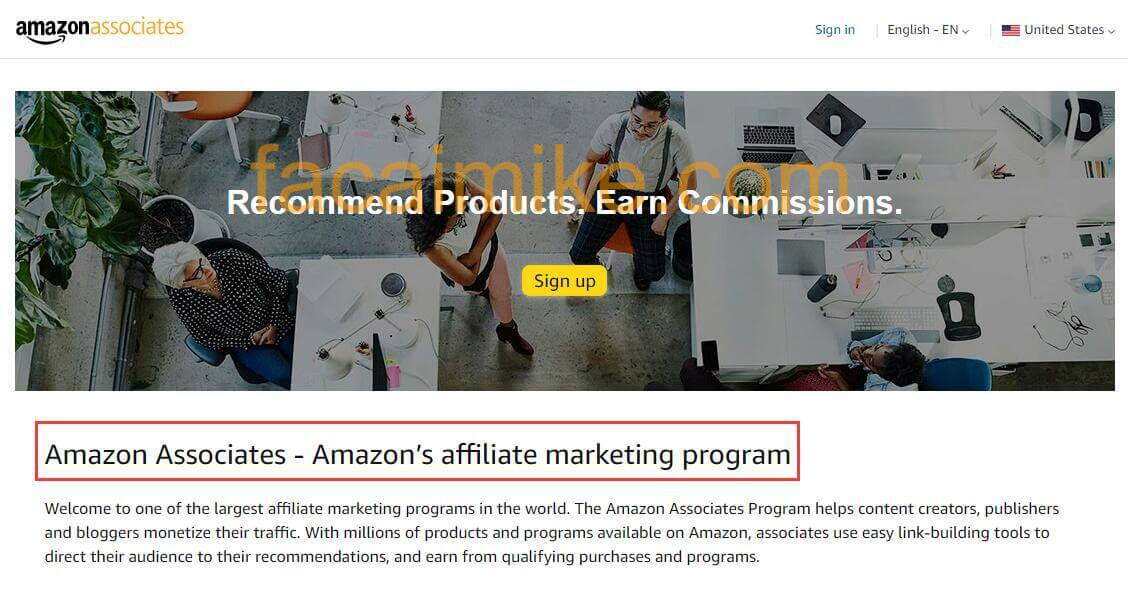
As long as your site has traffic, you can apply. This is also passive income—earn without active effort.
(3) Sponsored collaborations
Since the site focuses on bar games, its audience consists of gamers and enthusiasts. Consequently, game developers contacted Old Pai to promote their new titles.
These companies paid him to write promotional articles (soft reviews) published on his site.
This income is active—money earned only when you deliver the content.
At this point, you might be silently calculating: “Earlier you said Old Pai earned six figures—yet he only makes $3,500/month?”
Yes, $3,500/month amounts to $42,000 annually—but Old Pai didn’t just rely on recurring income.
He sold the website!
Though he didn’t disclose the exact sale price, I estimate it was six figures—tens of thousands of dollars. Given the site’s strong momentum, selling for just a few thousand would be unreasonable.
The U.S. has a mature market for website transactions, with dedicated companies and individuals buying high-potential, growing websites.
VI. Summary
Finally, here’s Old Pai’s proven strategy for building a profitable website:
Choose a topic you’re passionate about and launch a small, high-quality blog;
Write original content yourself while hiring freelancers to scale output, primarily relying on SEO to drive free organic traffic;
I’ve personally experienced that effective SEO generates sustainable, cost-free traffic—it’s incredibly powerful.
Once traffic grows significantly, monetization becomes possible through multiple channels: ad networks, affiliate programs, sponsored content, or outright website sale.
Reminder: When you own a solid website, you can either keep operating it long-term or, like Old Pai, sell it for a lump-sum profit.
Disclaimer: Contains third-party opinions, does not constitute financial advice
95% of Anthropic's internal business analytics powered by Claude—surprising secret isn't stronger models
3 hours ago
Just now, this domestically developed model has claimed the top spot on the Artificial Analysis Output Speed Leaderboard
5 hours ago
Lihexing Technology Strategically Enters the Scene! Xingcan Intelligence Gathers Three Major Industrial Capitals, Leading the Home-Based Embodied Intelligence Track
7 hours ago
NVIDIA CEO Huang Renxun announces full-scale production of Rubin, alongside the world's most powerful CPU
8 hours ago
At 17, unlocked the iPhone; at 18, took on NVIDIA—AMD proactively sent chips
9 hours ago
Mass production surpassing ten thousand units, rapid store expansion, Yujie rushes toward IPO to accelerate commercialization
11 hours ago
Tencent’s Ecosystem vs. CATL’s Meter: DeepSeek’s Fundraising Conceals a Dual Calculation
13 hours ago
"Internet Queen" Fund Leads Investment Round, AI Music Unicorn Valued at $5.4 Billion
15 hours ago


