Low-Cost Strategy for AI Music Channels: Creating Long-Duration Background Music Videos for Just a Few Cents
Low-Cost Strategy for AI Music Channels: Creating Long-Duration Background Music Videos for Just a Few Cents
2026-05-09 09:48
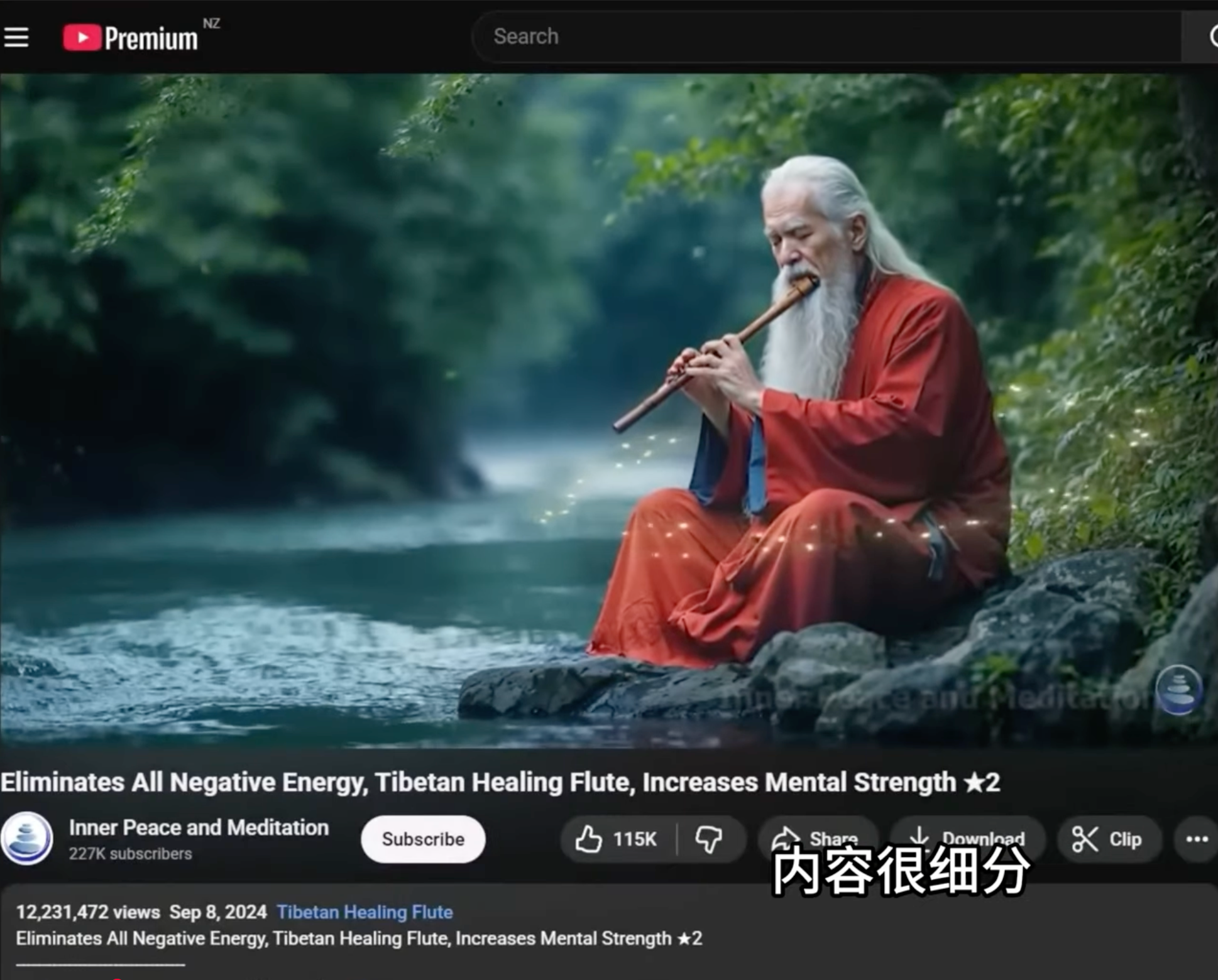
The opportunity in AI music channels lies hidden within niche, ambient scenarios that users tend to play for extended durations. Think Tibetan flutes, oud guitar, Regency-era British music from the 19th century, Eastern courtyard aesthetics, futuristic space vibes—content that doesn’t rely on human presence or complex narratives. Users might simply turn it on as background audio for an hour. One example: a Tibetan flute video has surpassed 12 million views, with the channel accumulating over 36 million total views in just 14 months. Based on creator feedback estimating $3–8 per 1,000 views, ad revenue potential can be substantial. However, this figure is merely an estimate—actual earnings vary significantly based on region, ad fill rate, channel status, and content type.
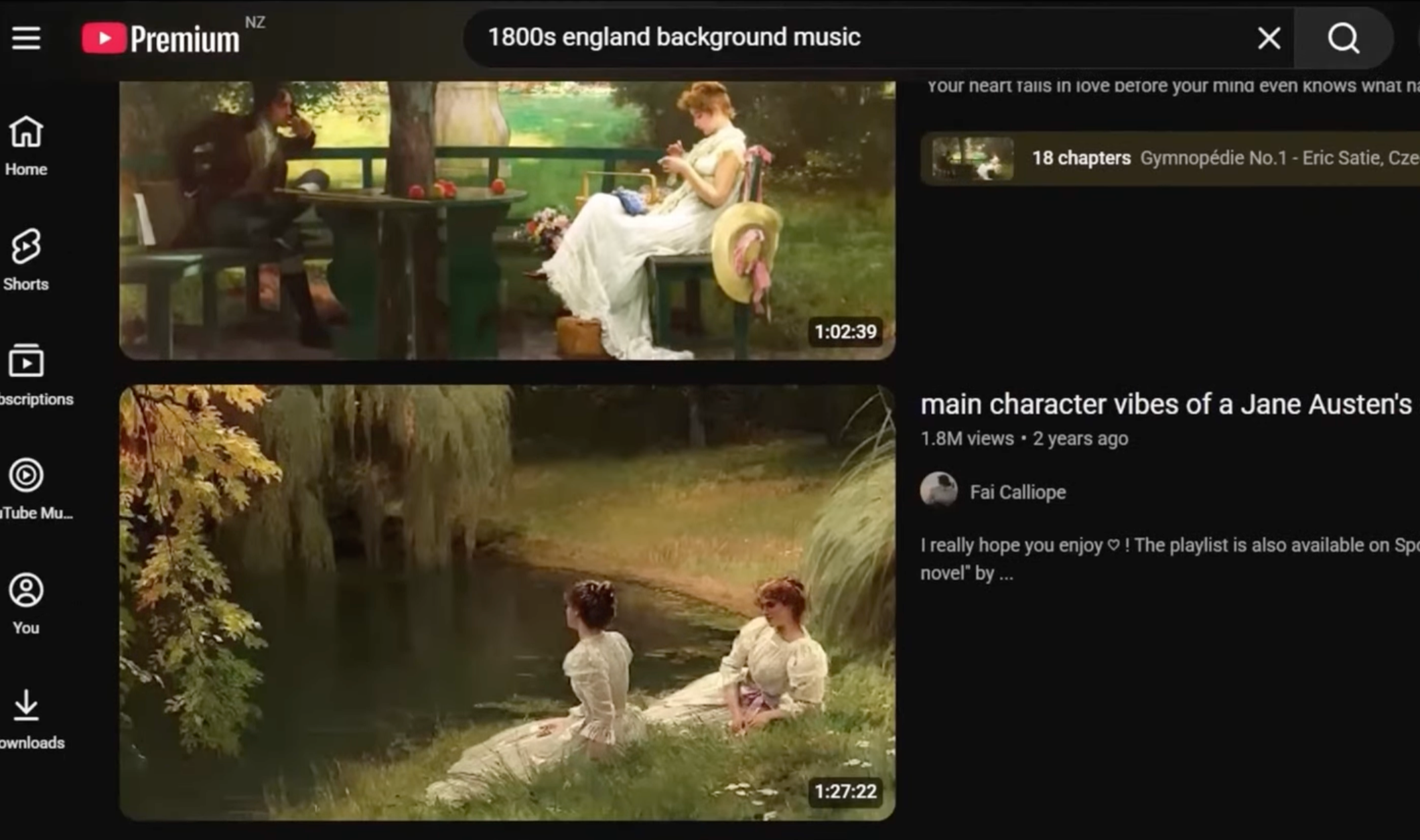
Step one is selecting a highly specific music theme, then using Suno (an AI music generator) to produce tracks. In the demo, we chose 19th-century Regency-era British music. The rationale is practical: while dark academic and Gothic-style content already exists on YouTube, high-quality Regency-themed music remains underrepresented, offering lower competition. At the same time, existing videos in this niche have demonstrated strong viewership—making it a viable model to emulate.
After entering Suno, click “Create,” select the latest version, and input your desired music style in the prompt box. For background music, choose “instrumental” to avoid vocal distractions. If you’re unsure how to craft the prompt, use ChatGPT to generate a Suno-compatible prompt by specifying the genre and adding “no lyrics” as a requirement—then paste it back into Suno for generation.

Each generation produces two songs, consuming 5 credits per track. The free tier grants 50 credits daily but prohibits commercial use. To monetize via YouTube, you must upgrade to Suno’s professional plan with commercial licensing.
Calculate costs carefully. Suno’s commercial plan starts at $10/month or $8/month when billed annually, providing 2,500 credits. At 5 credits per song, this equates to roughly 500 songs monthly—about $0.016–$0.02 per track. A single background music video requires only 5–10 tracks, reducing music production cost to under a dollar. After generating, access the Suno library to download satisfactory tracks. Unwanted segments can be edited directly: select the section, click “replace,” and Suno will generate two new versions for you.
For visuals, avoid investing in expensive tools upfront. Use Google AI Studio’s Nano Banana to generate background images—set resolution to 16:9 and input your desired atmosphere. It also allows removing unwanted elements like people or objects from the scene. Alternatively, Leonardo offers 150 free credits daily. After registration, select “Create Image,” set dimensions to 16:9, enter your prompt, and generate four watermark-free images. When images are low-resolution or color-accurate issues arise, refine them using Canva: first use the image enlargement tool to boost resolution, then adjust highlights, tone, and brightness via sliders. Finally, export in PNG format and scale the dimensions to 2x–3x original size.

To make static images feel more like video, import them into Kling (an AI animation tool) to create looping animations. In the demo, we used Kling 2.1: upload the same image as both the first and last frame, disable audio, describe subtle motion effects in the prompt, and select a duration of either 5 or 10 seconds. Since the first and final frames are identical, the output seamlessly loops.
Video production cost: a 10-second animation consumes 70 credits, a 5-second clip uses 35. A $7 subscription provides 660 credits—enough to support 9–18 background animations—bringing the average cost per video animation to approximately $0.38–$0.77.
Finally, assemble the final YouTube video using CapCut Desktop. Create a new project, import your music tracks, background images, or looped animations, and drag each song sequentially onto the timeline. Apply crossfade transitions between tracks: place the next song beneath the previous one, overlap the end and beginning slightly, then drag the small circular handles on the audio edges until you see black arcs—indicating fade-in/fade-out effects have been applied. For visual elements, stretch static images to match the full length of the music. For animated loops, duplicate the clip across the timeline to fill the duration. Note that 5–10 tracks may not span one hour—consider looping a 20–30 minute playlist twice. Once all assets are placed, export at 1080p (usually sufficient), then upload directly to YouTube.
This type of project has low entry barriers, but risks should not be overlooked. YouTube permits monetization of original AI-generated content that complies with its policies—but AI creation does not guarantee profit. Missteps such as poor topic selection, homogenized content, unclear music licensing, or failure to meet monetization thresholds can leave revenue purely theoretical. A more sustainable approach is to first identify underserved, high-demand niche atmospheres—then leverage Suno, Nano Banana, Leonardo, Canva, Kling, and CapCut to rapidly prototype a single video at minimal cost. Once launched, analyze watch time, traffic sources, and audience comments to determine whether to scale further with similar content.
Tool links:
Suno: https://suno.com/discover
Kling: https://kling.ai/
Disclaimer: Contains third-party opinions, does not constitute financial advice
95% of Anthropic's internal business analytics powered by Claude—surprising secret isn't stronger models
3 hours ago
Just now, this domestically developed model has claimed the top spot on the Artificial Analysis Output Speed Leaderboard
5 hours ago
Lihexing Technology Strategically Enters the Scene! Xingcan Intelligence Gathers Three Major Industrial Capitals, Leading the Home-Based Embodied Intelligence Track
7 hours ago
NVIDIA CEO Huang Renxun announces full-scale production of Rubin, alongside the world's most powerful CPU
8 hours ago
At 17, unlocked the iPhone; at 18, took on NVIDIA—AMD proactively sent chips
9 hours ago
Mass production surpassing ten thousand units, rapid store expansion, Yujie rushes toward IPO to accelerate commercialization
11 hours ago
Tencent’s Ecosystem vs. CATL’s Meter: DeepSeek’s Fundraising Conceals a Dual Calculation
13 hours ago
"Internet Queen" Fund Leads Investment Round, AI Music Unicorn Valued at $5.4 Billion
15 hours ago


