Dengling Technology's Hong Kong IPO listing day saw its stock price drop below issue price, with a market capitalization of approximately 11.4 billion RMB
Dengling Technology's Hong Kong IPO listing day saw its stock price drop below issue price, with a market capitalization of approximately 11.4 billion RMB

2026-11-10 16:00
Lead-in: Revenue in four months exceeds full-year 2025, with top five clients contributing 90%. Xintong Tech reported on November 10, 2026, that Denglinc Technology, a GPGPU (General-Purpose GPU) company based in Suzhou, Jiangsu, has just listed on the Hong Kong Stock Exchange.
Xintong Tech report on November 10, 2026, Denglinc Technology, a general-purpose GPU (GPGPU) firm headquartered in Suzhou, Jiangsu, has recently made its debut on the Hong Kong Exchanges and Clearing Limited (HKEX).
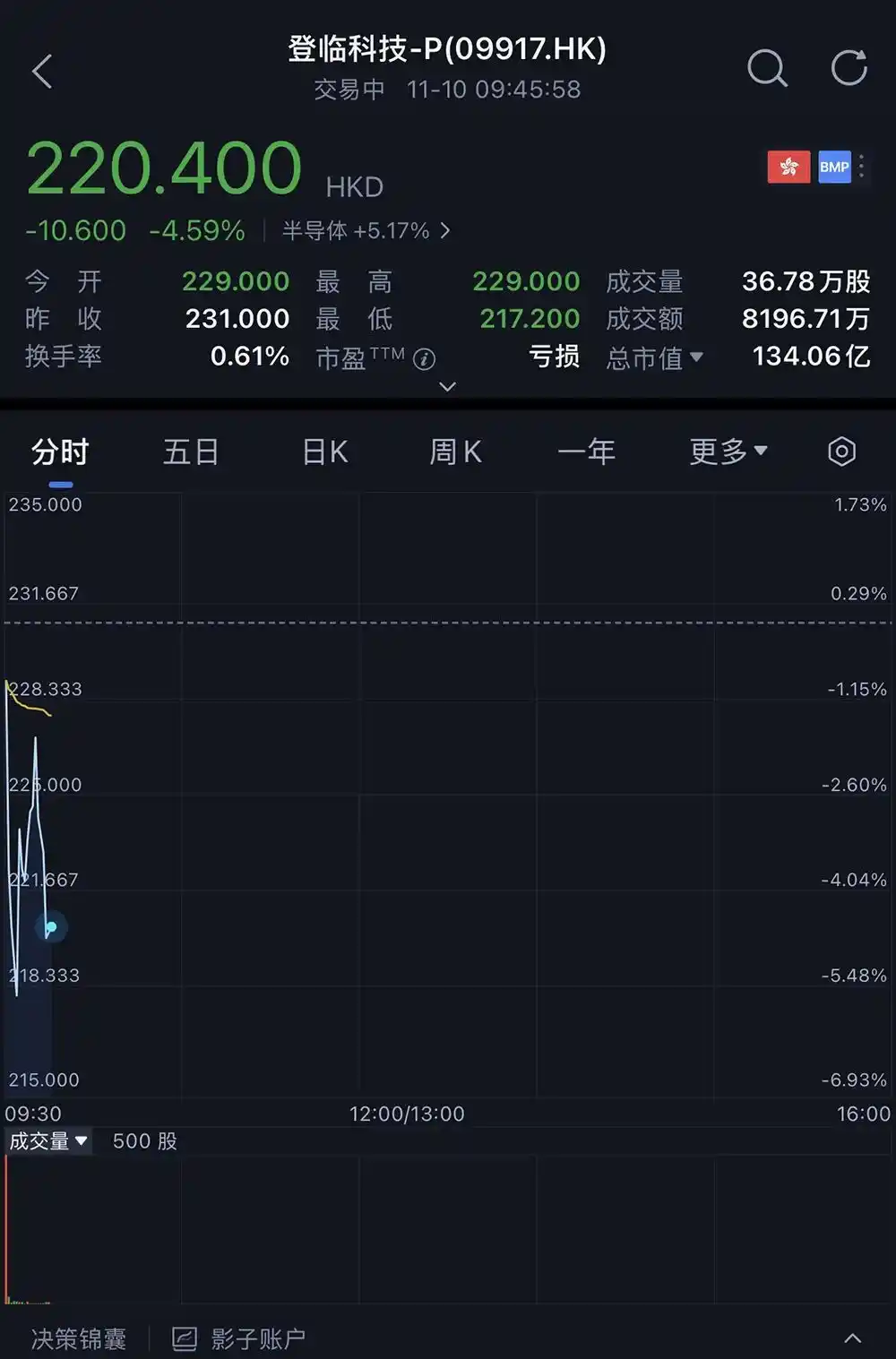
Denglinc Technology’s initial public offering price was HK$231.00 per share (approximately RMB 196.50), opening down 0.87% at HK$229.00 per share (approximately RMB 194.80). By 9:45 AM, its share price dropped as much as 5.97% to HK$217.20 per share (approximately RMB 184.76), with a market capitalization of HK$13.4 billion (approximately RMB 11.4 billion).
The prospectus reveals that Denglinc Technology was founded in November 2017 by multiple individuals, including Li Jianwen, Wang Chenhui, Wang Ping, and the late Wang Zhenyu. Among them, Chief Strategy Officer Li Jianwen and Chief Innovation Officer Wang Ping are alumni of Tsinghua University.
The company is built upon its proprietary GPU chip architecture, GPU+ (Minsky), targeting enterprise AI as its core market, while actively expanding into public cloud infrastructure and emerging fields such as robotics.
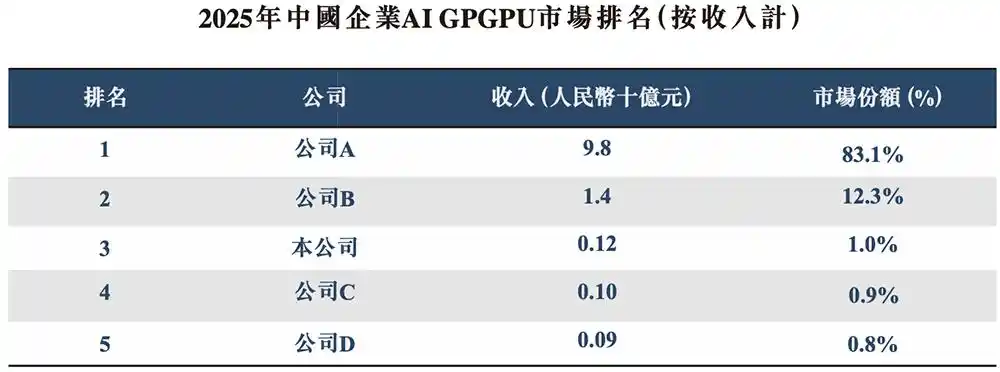
According to Frost & Sullivan data, based on 2025 revenue, Denglinc Technology ranks among the top ten in China's GPGPU market, with a market share below 1.0%; it is the third-largest player in China’s enterprise AI GPGPU segment, capturing a 1.0% market share.
Li Jianwen, Wang Chenhui, Wang Ping, Denglin Consulting, Denglinc Xingyi, Denglinc Longgui, Denglinc Wanhuay, and Lingxiao Ventures form a controlling shareholder group. Following the global offering, Denglinc Technology’s equity structure is as follows:
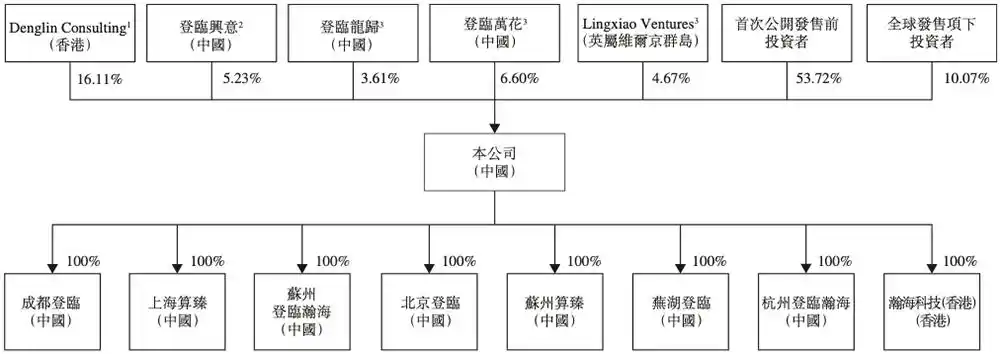
Among them, Denglin Consulting is wholly owned by Li Jianping. Key independent investors include China Internet Fund, Qualcomm China, Zhongxin Venture Capital, and Integrated Circuit Growth Fund. Other industrial investors comprise Hikvision’s Hikang Fund and Hainayuzhi, Zhonghe Automotive, Dongwei Semiconductor, and others.
01.
Revenue in first four months reaches RMB 200 million, exceeding total 2025 annual revenue
For 2023, 2024, 2025, and January–April 2026, Denglinc Technology’s revenue stood at RMB 28 million, RMB 83 million, RMB 171 million, and RMB 200 million, respectively, with net profit of -RMB 332 million, -RMB 297 million, -RMB 281 million, and -RMB 16 million, and R&D expenses of -RMB 258 million, -RMB 248 million, -RMB 238 million, and -RMB 65 million.
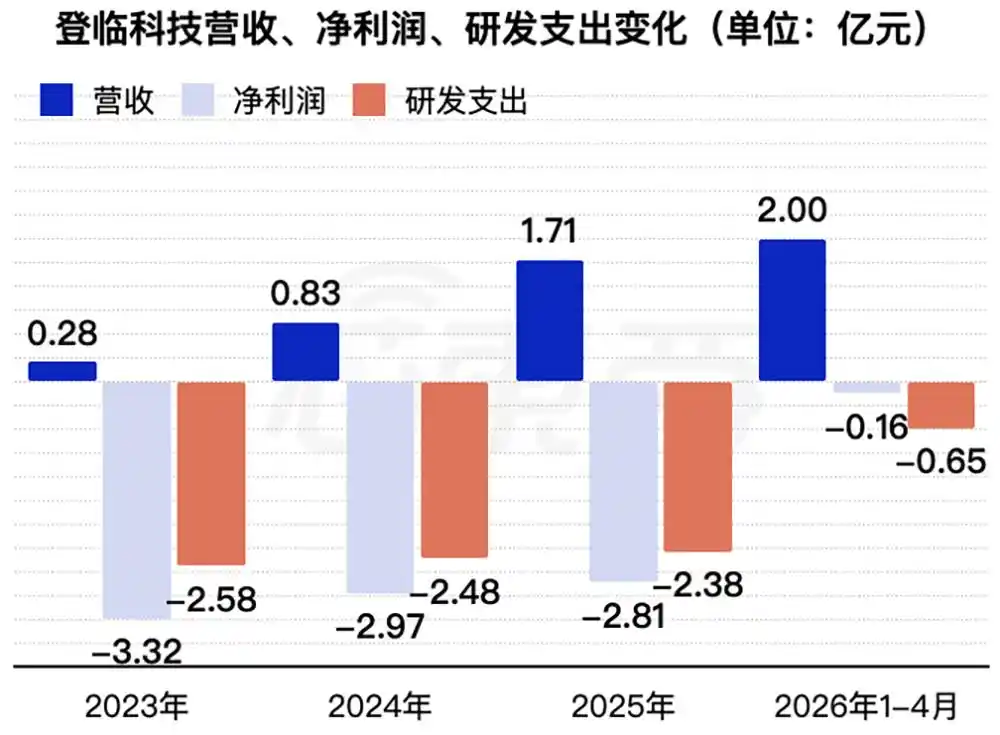
▲ Changes in Denglinc Technology’s revenue, net profit, and R&D expenses from 2023 to April 2026
During the same period, its adjusted net profit was -RMB 278 million, -RMB 224 million, -RMB 204 million, and -RMB 21 million, respectively.
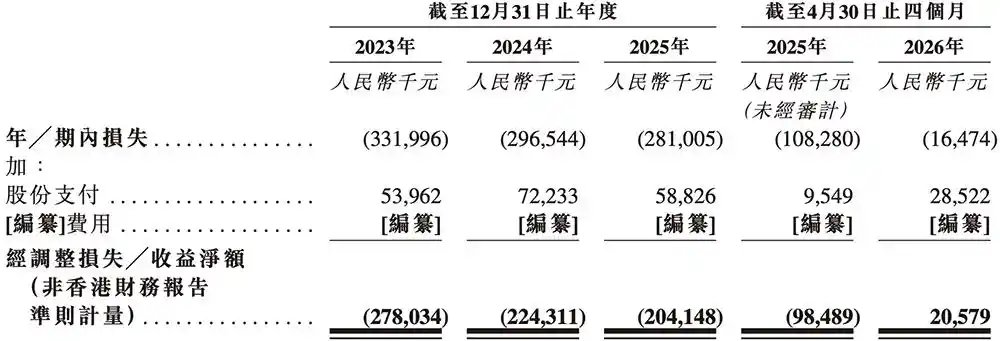
By business segment, over 67% of revenue from 2023 to April 2026 originated from GPGPU products, with the remainder from chip design services and IP licensing.
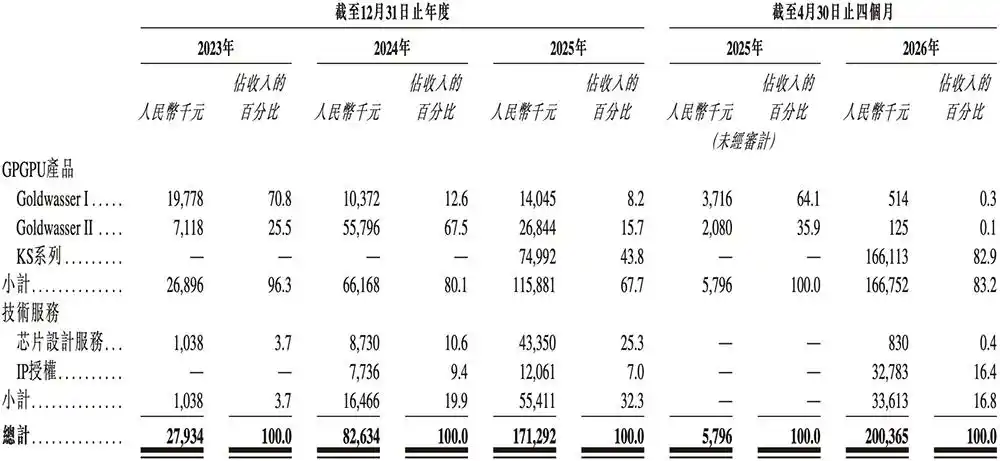
Corresponding gross profit and gross margin are as follows:
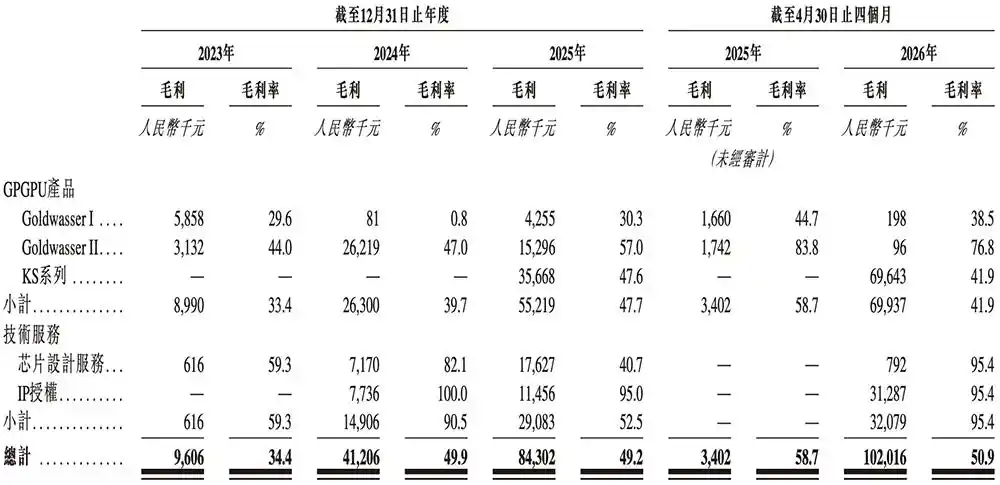
Denglinc Technology’s technical services primarily consist of customized chip design solutions. The company collaborates with clients to tailor architectures, optimize performance, adapt products to specific deployment environments, and offers curated IP licensing.
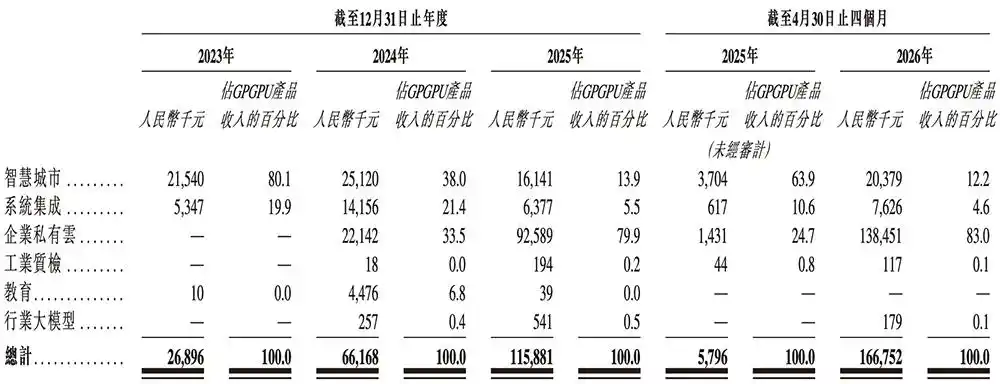
Its GPGPU products cover both enterprise data center and edge inference applications, deployed across six key scenarios: smart cities, system integration, private enterprise clouds, industrial quality inspection, education, and industry-specific large models.
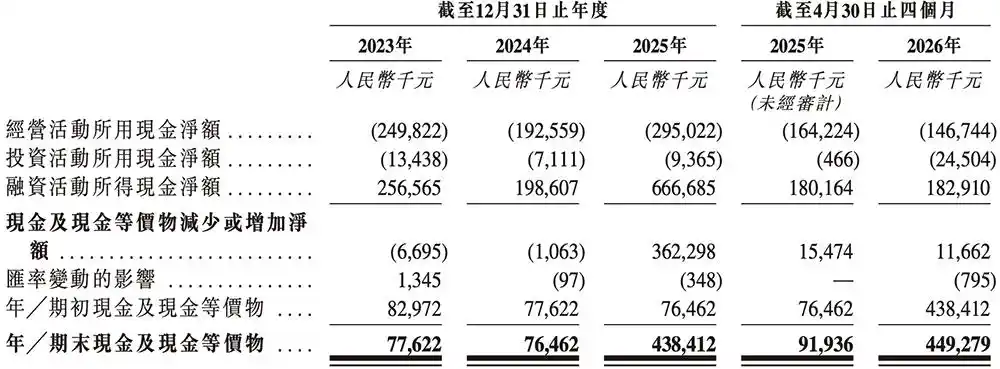
Cash flow overview for 2023 through April 2026:
02.
Over 10,000 GPGPU units sold in four months,
selectively exploring public cloud and robotics markets
Key performance specifications of Denglinc Technology’s main product series include:
(1) Goldwasser I, based on Minsky I: delivers up to 256 TOPS (INT8), 64 TFLOPS (FP16), and 16 TFLOPS (FP32) compute power, equipped with 8GB to 64GB memory, peak memory bandwidth of 239 GB/s, maximum power consumption of 55W, primarily used for inference tasks in smart city deployments.
(2) Goldwasser II, based on Minsky II: provides up to 512 TOPS (INT8) and 256 TFLOPS (FP16), featuring 32GB to 128GB memory, peak memory bandwidth of 192 GB/s, maximum power draw of 95W, supporting both inference and training in smart cities, intelligent computing centers, and other use cases.
(3) KS series, based on Minsky III: offers up to 560 TOPS (INT8) and 280 TFLOPS (FP16), with 8GB to 128GB memory, peak memory bandwidth of 819.2 GB/s, maximum power consumption of 130W, and supports both inference and training.
The Goldwasser series is specifically designed for large-scale enterprise AI workloads, enabling parallel execution of diverse modalities—such as model training, inference, image rendering, and analytics—on unified infrastructure via support for FP32, TF32, FP16, BF16, and INT8 precision levels.
Total GPGPU unit sales rose from 4,199 in 2023 to 5,295 in 2024, surged to 12,144 in 2025, and reached 10,344 units in the first four months of 2026. Shipments of the KS series increased significantly in the second half of 2025 and are expected to continue growing in 2026.
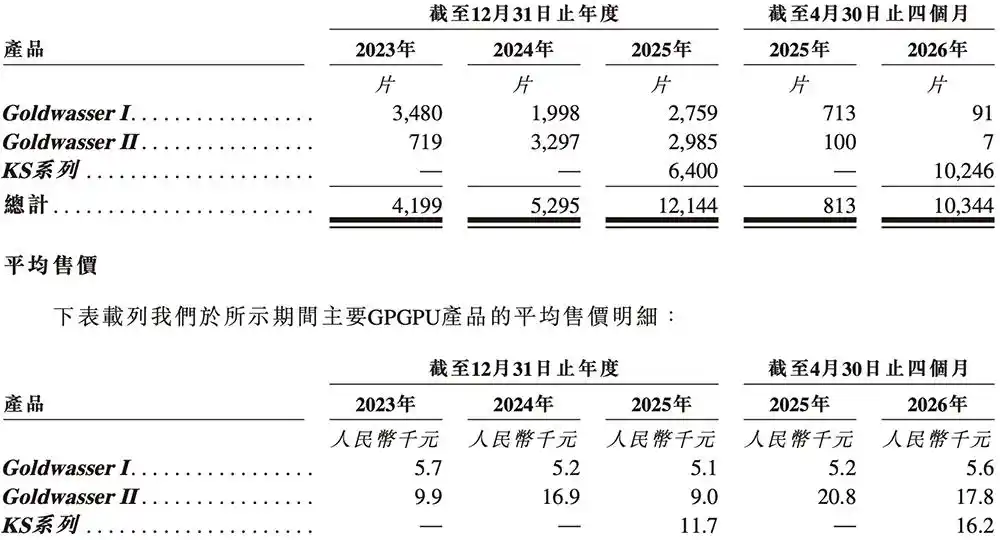
The prospectus indicates that GPGPU pricing generally ranges from RMB 10,000 to RMB 200,000 per unit, depending on performance, configuration, and brand. In the first four months of 2026, the average selling price of Denglinc Technology’s primary GPGPU products fell between RMB 5,600 and RMB 16,200.
The company expects to launch the first phase and second phase of its Minsky IV products in December 2026 and the second half of 2027, respectively. The first-phase product will retain an LPDDR-based on-chip memory subsystem; the second-phase product will integrate HBM3e or other advanced memory technologies, potentially delivering up to 2,000 TFLOPS of FP8 compute capacity, targeting major intelligent computing center operators and public cloud providers.
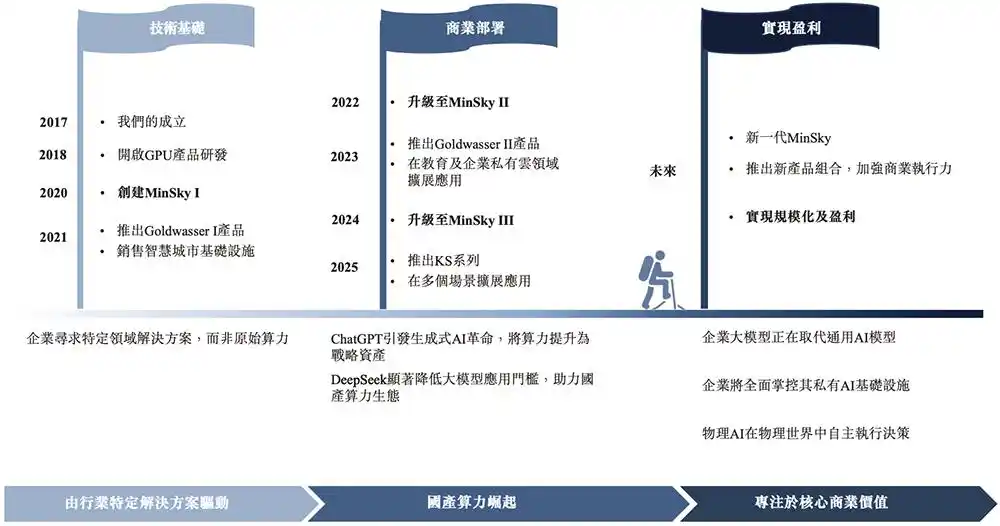
Beyond enterprise AI, Denglinc Technology plans to selectively explore opportunities in public cloud and robotics markets. Public cloud initiatives include early-stage technology exploration and product roadmap development, while in robotics, the focus lies on industrial robots, service robots, and embodied intelligence robots.
03.
R&D personnel account for nearly 70%,
has developed fully autonomous core IP portfolio
As of April 30, 2026, nearly 70% of Denglinc Technology’s workforce consists of R&D staff, most with over ten years of industry experience.

Its products are built on the original GPU+ (Minsky) architecture—supported by a unified Hamming software stack—which integrates GPGPU cores, AI acceleration units, and high-bandwidth on-chip memory subsystems into a single die via heterogeneous on-die integration.
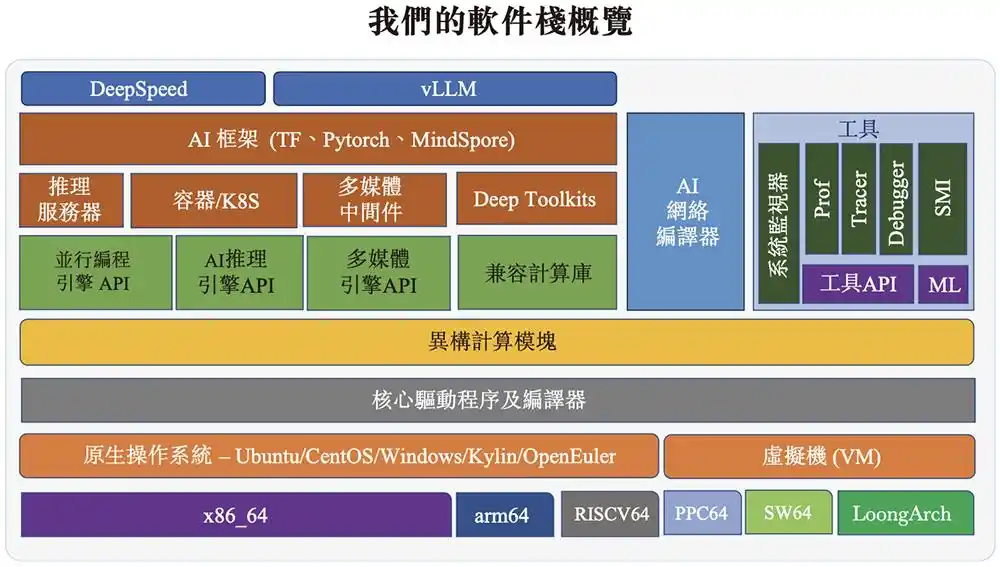
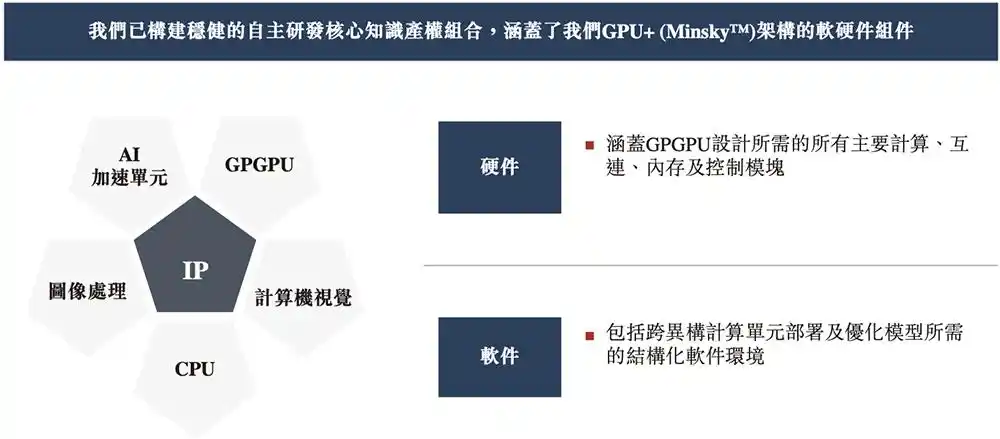
Based on this architecture, Denglinc Technology has developed a structured and fully self-owned intellectual property (IP) portfolio covering a broad range of computational and acceleration functions.
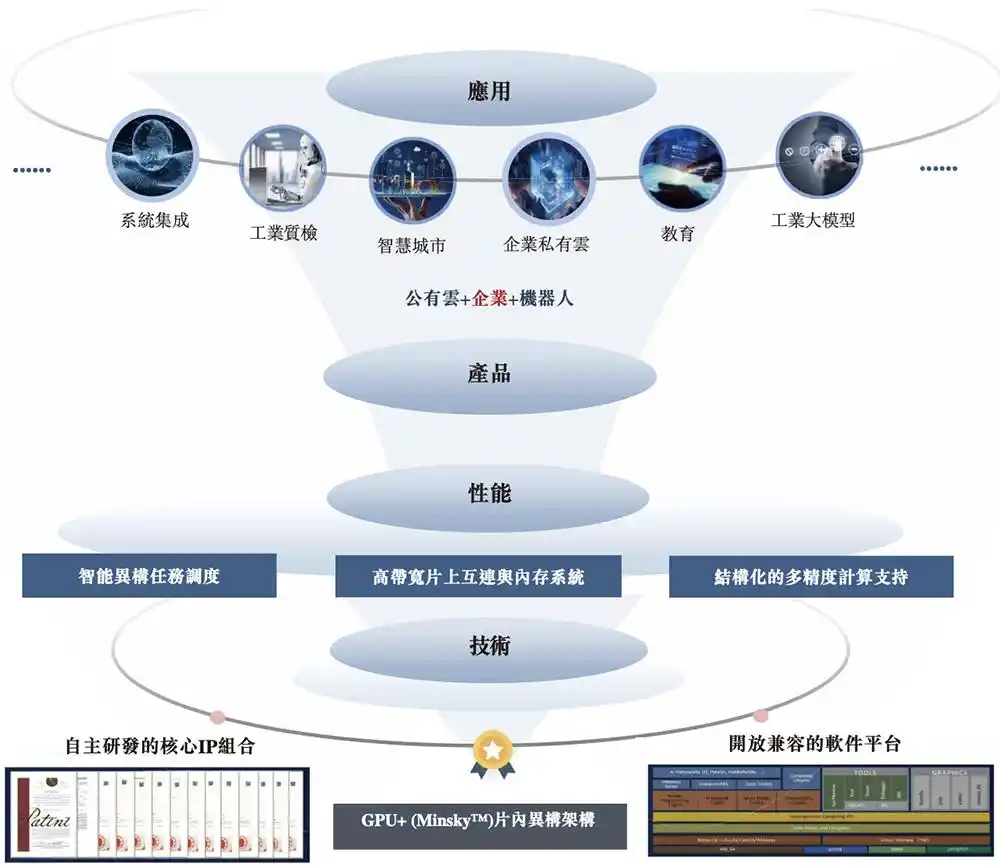
Differing from IP vendors like Arm or Imagination Technologies—whose GPU IPs are typically optimized for mobile applications and lack the performance required for high-end cloud workloads—Denglinc Technology focuses on cloud-scale, high-performance applications demanding large-scale architectural integration and optimization.
04.
Top five clients contribute over 80% of revenue,
most customers are private enterprises
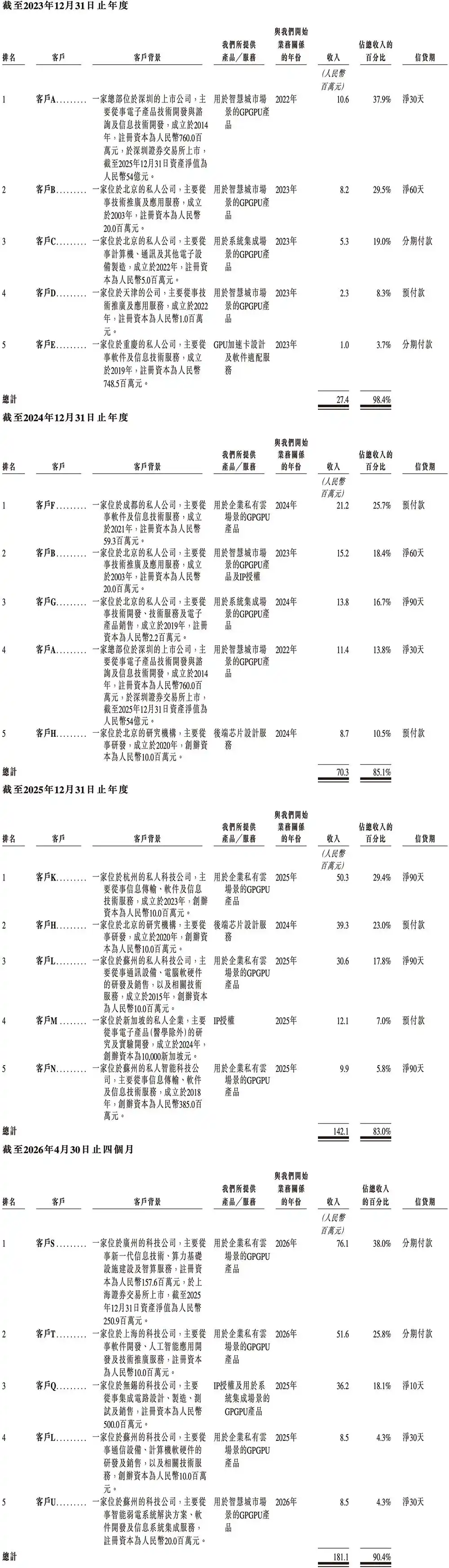
For 2023, 2024, 2025, and January–April 2026, revenue from the top five clients accounted for 98.4%, 85.1%, 83.0%, and 90.4% of total revenue, respectively, with the largest client contributing 37.9%, 25.7%, 29.4%, and 38.0% of total revenue during each period.
Simultaneously, procurement from the top five suppliers represented 83.1%, 65.2%, 56.9%, and 76.3% of total procurement, with the largest supplier accounting for 59.5%, 31.1%, 31.2%, and 21.0% of total procurement, respectively.
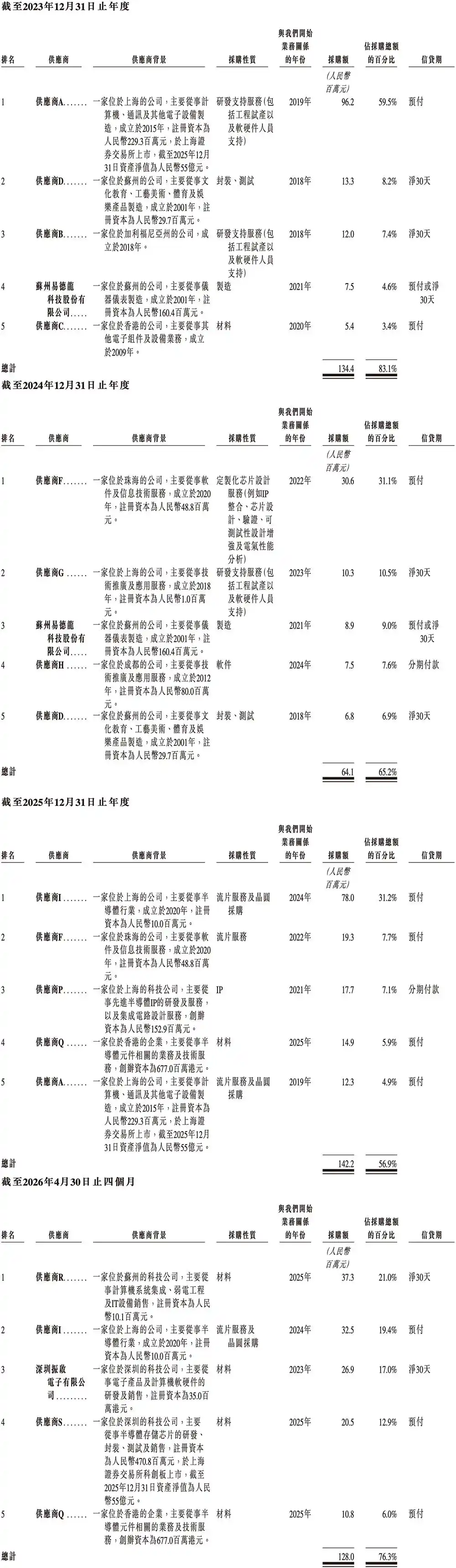
Several firms serve as both customers and suppliers to Denglinc Technology. During the historical performance period, the majority of the company’s GPGPU product customers were private enterprises, with the rest being publicly listed companies.
To support continuous capacity expansion, Denglinc Technology has placed orders securing core wafer production capacity equivalent to approximately 1,400 wafers, while simultaneously expanding packaging, testing, and PCB assembly capabilities through third-party partners.
In addition, the company is in discussions with other potential clients, with intended contract value totaling approximately RMB 200 million.
05.
Conclusion: Domestic GPU firms list consecutively,
transitioning toward full-stack computing infrastructure providers
Over the past year, the pace of domestic GPU listings has accelerated, with companies such as Moore Threads, Muxi Inc., Denglinc Technology, Tiandu Zhi Xin, and Denglinc Technology successively entering capital markets.
According to Denglinc Technology’s prospectus, Chinese general-purpose GPU firms are evolving from hardware suppliers into full-stack computing infrastructure builders—expanding vertically along the self-developed GPU supply chain at the hardware level, ensuring compatibility with operating systems and optimized algorithm frameworks at the software layer, and delivering value-added solutions tailored to diverse application scenarios at the service level.
This integrated model lays a foundational basis for achieving autonomy, control, and scalable deployment within China’s AI industry.
Source: Zhi Dongxi
Disclaimer: Contains third-party opinions, does not constitute financial advice


HuggingFace's "AI Duck" Goes Viral, Boosting Chinese Chip Supplier Rockchip
09-02
Yushu Surges 629% on First Day of Trading, Humanoid Robots Sell 5,500 Units
08-19
14 Executives Depart, Horizon Unleashes a Robot Legion
08-11
Nokia Snatches AI Optical Chip Race, Stock Soars 52%
08-07
Yushu's 61 Billion IPO: Who Will Make Money?
08-07
AI stocks down 40%-60%, yet NVIDIA's valuation is at a 10-year low
08-06
HBM Bottleneck Migration, NVIDIA Also Aims to Downgrade
08-06


