Nasdaq plunges 6.4% in a single day—why is Morgan Stanley shouting "Buy the dip"?
Nasdaq plunges 6.4% in a single day—why is Morgan Stanley shouting "Buy the dip"?

2026-11-10 12:00
Lead: Local approval resistance may delay up to 5 GW of projects by one year. TL;DR · Of 41 local referendums related to data centers in the November 3 midterms, 40 were unfavorable to the industry
TL;DR · In the November 3 midterms, 40 out of 41 local referendums on data center projects were unfavorable to the sector, and the newly elected Texas governor pledged to suspend new project approvals. On November 5, the Nasdaq-100 plunged 6.4% in a single day, erasing approximately $2.3 trillion in market value. · Hedge funds sold tech stocks at near-record pace, with U.S. long/short fund leverage dropping 8.7 percentage points in one week. Morgan Stanley, HSBC, Jefferies, and UBS all called the sell-off excessive, while Citigroup downgraded U.S. and global tech to neutral.
Related exposures: NVIDIA (earnings on Nov 17), Broadcom, SOXX ETF, Philadelphia Semiconductor Index, QQQ, Amazon, Meta, Google, Microsoft.
The Nasdaq-100 dropped 6.4% on November 5, erasing ~$2.3 trillion in market cap, while the Philadelphia Semiconductor Index fell over 12% on the same day.
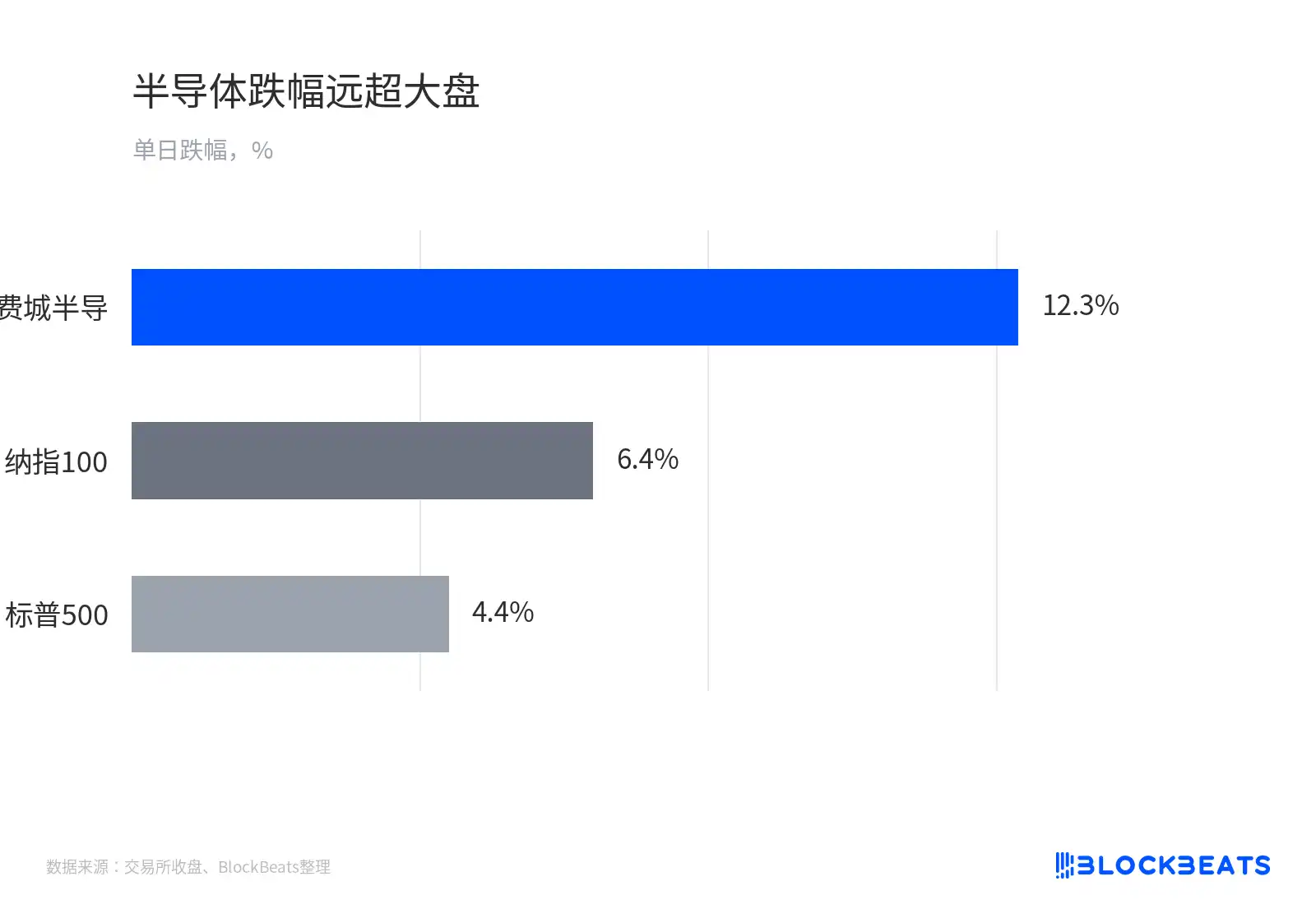
Semiconductor losses far exceeded broad market decline
By November 9, Morgan Stanley, HSBC, Jefferies, and UBS all concluded that the current AI-driven sell-off was excessive, while Citigroup downgraded U.S. and global tech to neutral.
Buy-side activity ran counter to this. Goldman Sachs’ institutional clients recorded net selling in tech at nearly the highest level since 2016 for the week ending November 6. U.S. long/short fund leverage fell from 216.2% to 207.5%, a weekly drop of 8.7 percentage points—the largest weekly decline since March 2020.
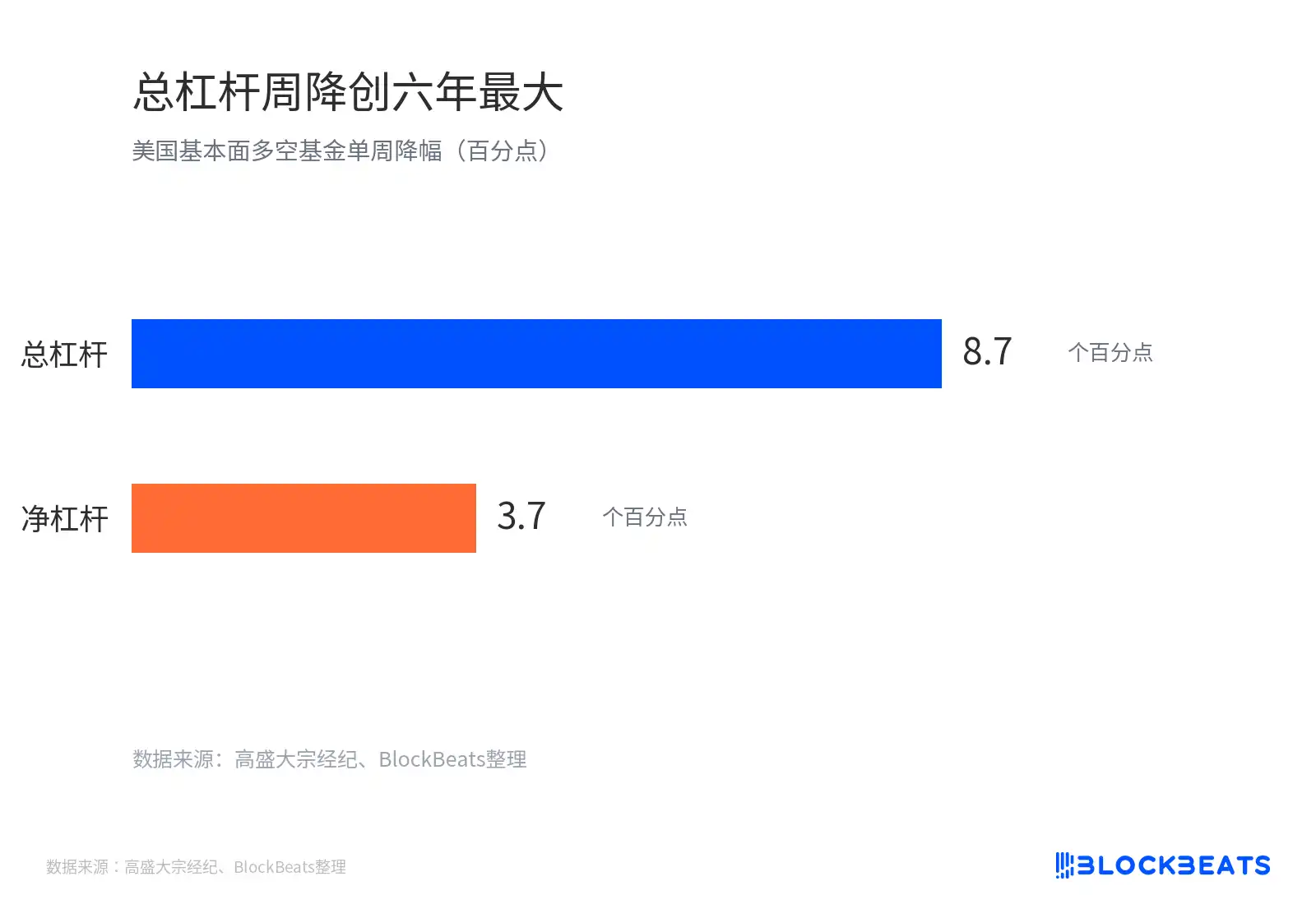
Weekly leverage drop marks six-year high
Total leverage reflects the aggregate size of long and short positions. A sharp weekly decline indicates risk reduction across both sides. On November 6, hedge funds turned net buyers—of index and ETF short positions—not re-establishing longs in tech.
Leverage unwinding typically occurs passively during downturns, amplifying losses beyond the news-driven magnitude.
This week’s price action: permitting politics pulled the trigger, crowded positioning set the slope, and earnings held firm.
Local Referendums Are Rewriting the AI Capex Calendar
Chips are only valuable if there’s local infrastructure, power availability, and regulatory approval to convert data centers into revenue. Elections didn’t change compute demand—but they did alter “when” projects get built, which is the key variable driving this week’s re-pricing of AI trades.
In the November 3 midterms, Democrats took control of both chambers of Congress, but more immediate shifts occurred at the county and municipal levels: of 41 local referendums on data center projects, 40 were unfavorable to the industry.
Texas’ incoming governor, Gina Hinojosa, pledged to suspend new project approvals until legislation establishing “protection clauses” is passed, taking office January 19, 2027. Texas accounts for roughly 23% of planned AI campus capacity in the U.S., according to industry tracking data.
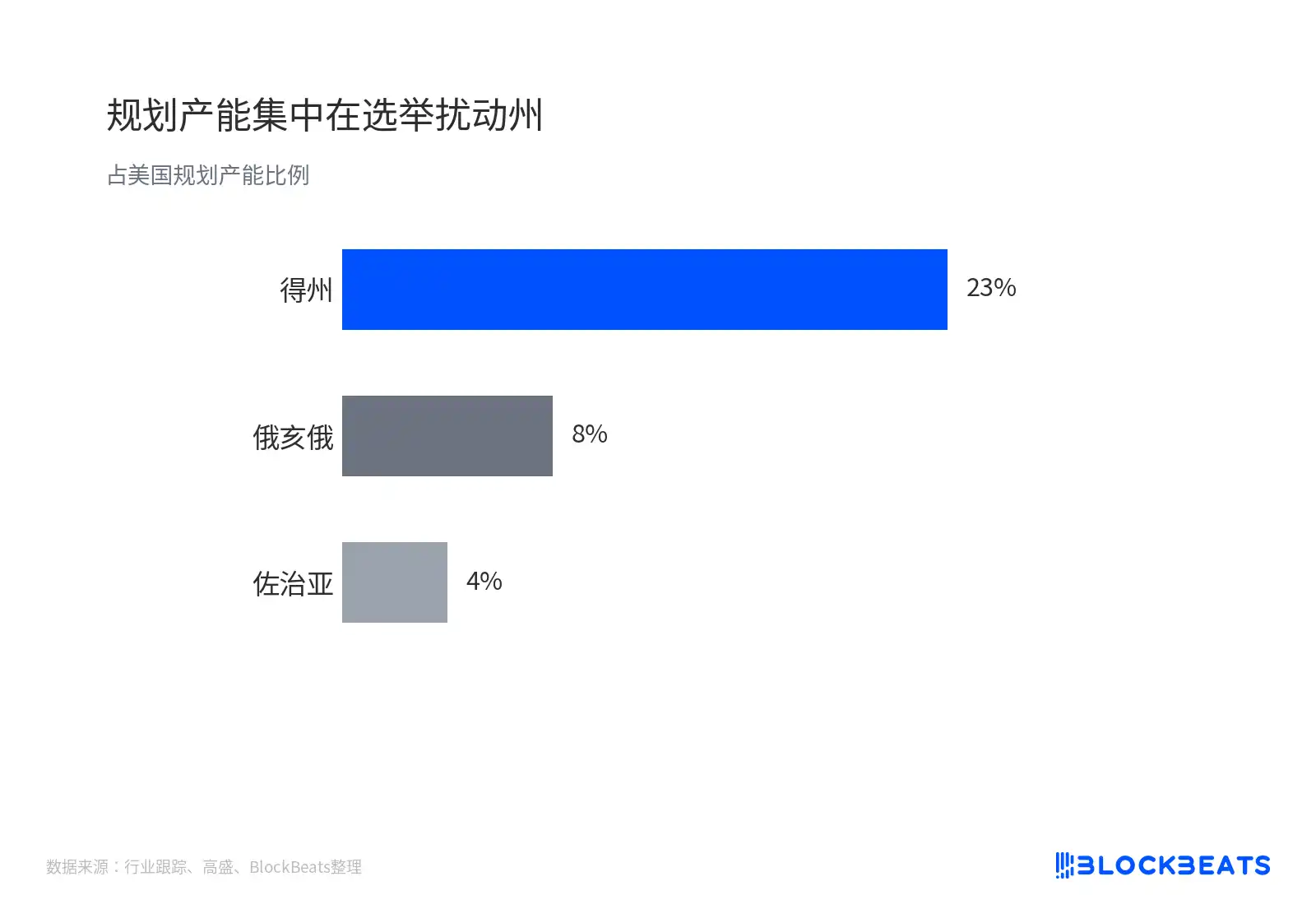
Planned capacity concentrated in election-affected states
Morgan Stanley’s November 9 “Buy the Dip” note shifted about 20% of U.S. projects originally slated for 2028 (approx. 5 GW) to 2029.
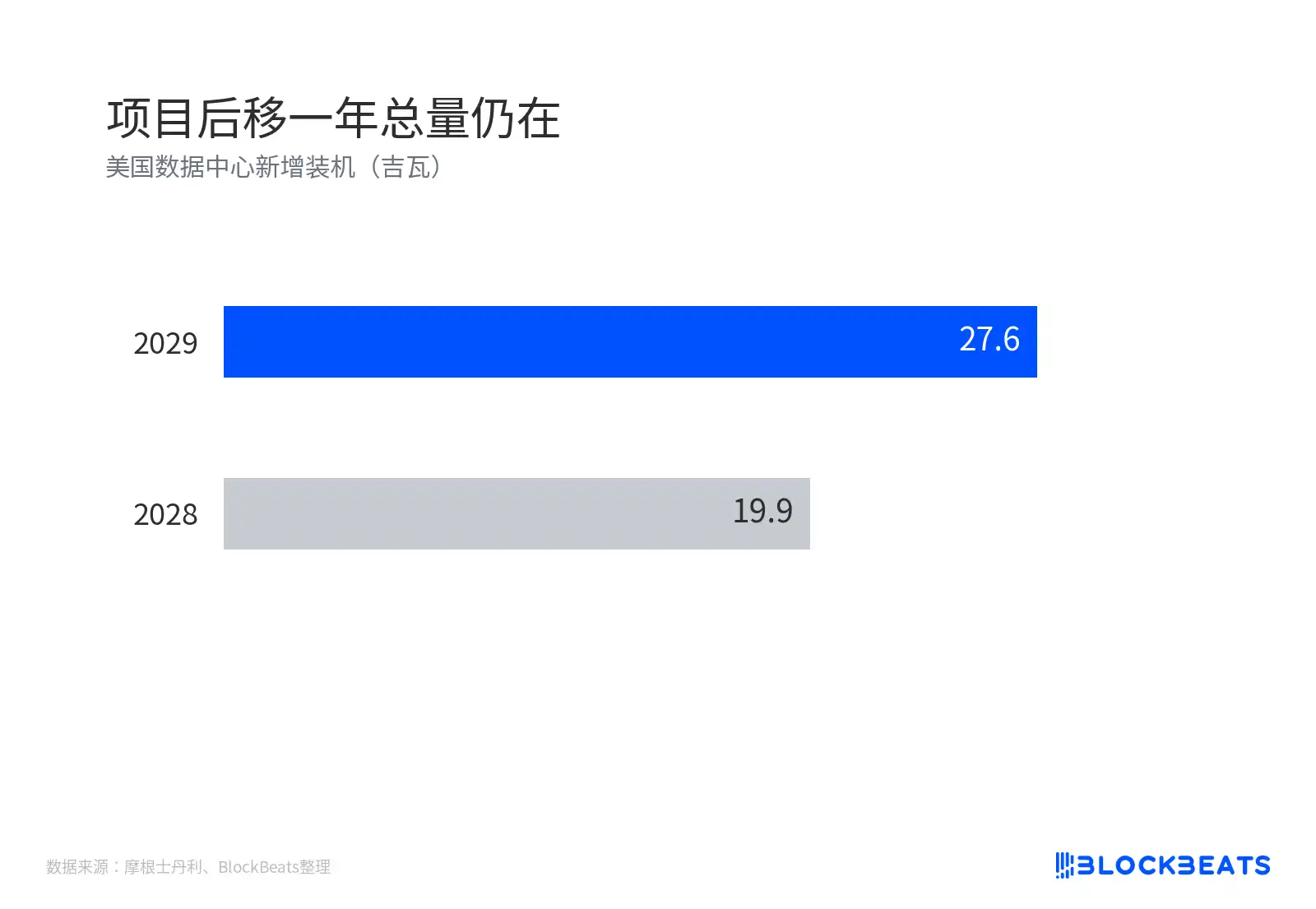
Project delays push timeline back, total volume intact
Projected hyperscale cloud capex remains at $1.6 trillion for 2027 and $1.8 trillion for 2028, though 2028 forecasts show downward bias.
Sellers are clear: demand hasn’t changed—just the calendar has been pushed back by one year.
Of the 8.7 percentage points, how much was forced liquidation vs. market value erosion?
Using the weekly leverage drop to infer “active net selling” is invalid. Price declines simultaneously affect both numerator and denominator—declining long values and fund NAVs can drive leverage reductions via mark-to-market, not actual trading.
Goldman Sachs did not disclose its full client memo, so the 8.7 percentage point drop was not broken down into active versus passive components.
A more reliable indicator is the record level of net selling: technology is the most heavily sold sector globally and in the U.S., with individual stock net selling hitting a four-month high.
Mechanical selling amplified losses. JPMorgan’s derivatives strategy noted that once indices breached momentum thresholds, commodity trading advisors (CTAs) shifted to net short exposure in equities, and volatility-targeted portfolios still held ~$50 billion in open sell orders in the following days.
Leveraged ETFs saw tail-end selling exceeding $60 billion, with ~90% concentrated in tech products. Barclays’ model estimates an additional $1.35 billion in futures selling over the next 24–48 hours—this is modeled, not executed, but sufficient to explain the 6.4% daily slope.
Why Do Sell-Side Analysts Dare to Say “Buy the Dip”?
These firms differ in their approach. Morgan Stanley offers a revised timeline: ~5 GW of projects moved from 2028 to 2029, with total volume unchanged. HSBC’s Max Kettner had already reduced positions prior to the election and is now tactically adding back, viewing Anthropic’s IPO as a larger catalyst than the midterm results.
Jefferies described the November 5 move as “reactive, not fundamental reset.” JPMorgan’s Dubravko Lakos-Bujas labeled it the largest “long momentum relative to market” unwind in ~40 years, with deleveraging now back to the level seen in the “Liberation Week” of April 2025.
Their shared bet: extreme federal-level data center regulation will not materialize. Passing major legislation in the Senate requires 60 votes, and the new Congress won’t convene until January 2027. Data centers remain politically sensitive across both parties due to employment and AI competitiveness.
Citigroup stands apart within the sell-side. Beata Manthey’s team downgraded U.S. and global tech to neutral, citing potential further rebalancing toward net short exposure in the Nasdaq-100. This reflects position path assessment, not policy finality.
The Time-Shift Assumption Is Pinned on NVIDIA Guidance and the Anthropic Window
The clearest validation point for this thesis is NVIDIA’s post-market earnings report on November 17. Guidance matters more than numbers. If the company pushes forward its 2027 delivery schedule, the sell-side’s calendar assumption must be recalibrated. If unchanged, the recent sell-down is more likely a positioning event.
The other window is Anthropic. The company filed S-1 on October 26 and S-1/A on November 2, aiming to list on Nasdaq under ticker ANT—but share count and pricing range remain unspecified.
Reuters cited potential investors on November 6 expressing doubts about completing the IPO by November, with Goldman Sachs and Morgan Stanley serving as joint lead underwriters.
Texas’ new governor won’t take office until January 19, 2027, leaving a period of regulatory vacuum before the suspension pledge becomes enforceable. Whether 2028 projects truly shift to 2029 hinges on the first batch of project approvals. Whether positions are fully cleaned out depends partly on NVIDIA’s guidance—which will provide half the answer.
Source: BlockBeats
Disclaimer: Contains third-party opinions, does not constitute financial advice


HuggingFace's "AI Duck" Goes Viral, Boosting Chinese Chip Supplier Rockchip
09-02
Yushu Surges 629% on First Day of Trading, Humanoid Robots Sell 5,500 Units
08-19
14 Executives Depart, Horizon Unleashes a Robot Legion
08-11
Nokia Snatches AI Optical Chip Race, Stock Soars 52%
08-07
Yushu's 61 Billion IPO: Who Will Make Money?
08-07
AI stocks down 40%-60%, yet NVIDIA's valuation is at a 10-year low
08-06
HBM Bottleneck Migration, NVIDIA Also Aims to Downgrade
08-06


