AI animation series cost only 1% of live-action productions, and one person can take on the entire project.
AI animation series cost only 1% of live-action productions, and one person can take on the entire project.
2026-08-12 09:52
Intro: A live-action short drama costs between $50,000 and $80,000 to produce, while an AI-generated animated short can be made for just $3,000 to $5,000—this hundredfold cost difference is the entry point for ordinary creators.
Last month, I came across an industry statistic that left me staring at my screen in disbelief: among the 128,000 micro-short dramas launched nationwide in Q1 2026, 122,000 were AI-generated—over 95% of the total. The number of live-action short dramas being shot has plummeted year-on-year, with production crews in Hengdian dropping from 150 to just 59.
This isn’t a future trend—it’s already reality. I spent a full month immersed in the AI animated short drama space, running the entire pipeline from concept ideation and scriptwriting, through storyboarding and order acquisition, all the way to monetization. Today, no fluff—just actionable insights. After reading this, you’ll know exactly how to start your first episode.
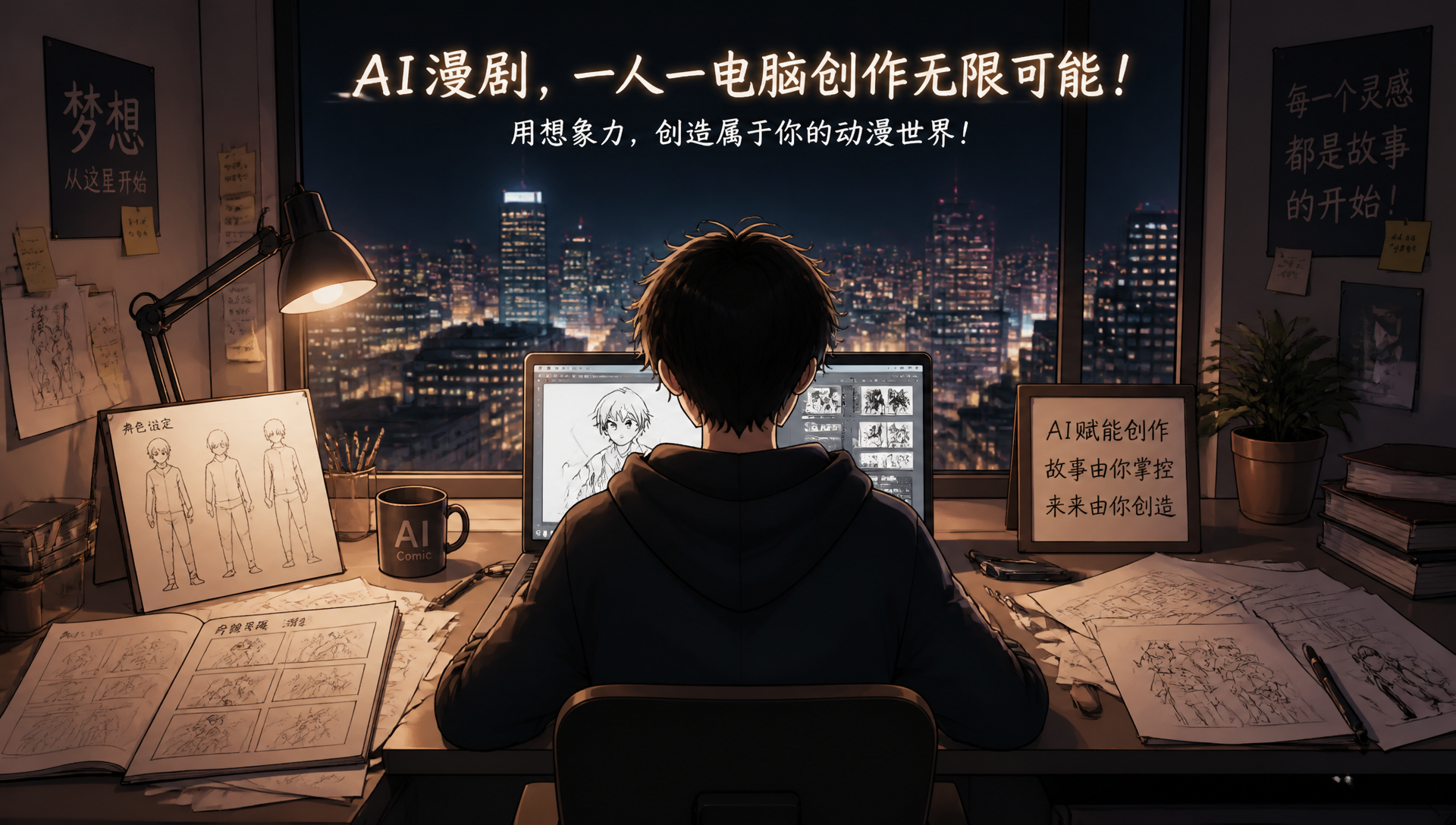
AI Animated Short Drama essentially means using AI throughout every stage of production: AI writes the script, generates character designs, breaks down scenes into storyboards, renders visuals, synthesizes voiceovers, and finally compiles the final cut. One person, one computer—on paper, the whole workflow can be completed solo.
First, clarify what profit this business actually makes
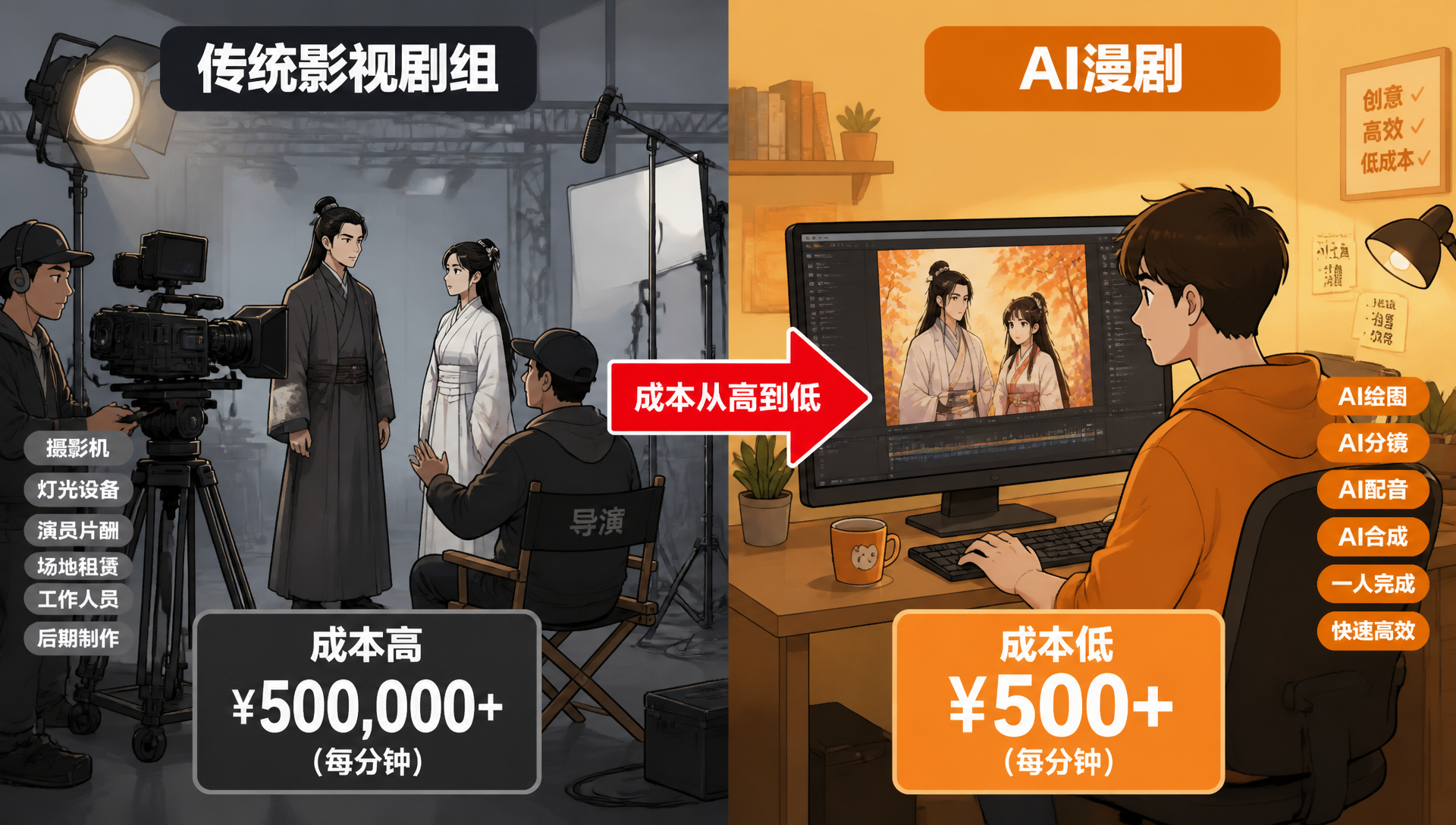
Don’t get excited too fast—understand the numbers before diving in. The average production cost for a live-action short drama ranges from $50,000 to $80,000, with actors’ fees, locations, costumes, makeup, and props acting as major cash drains. In contrast, an AI animated short drama can be produced for just $3,000 to $5,000, roughly 1% of the live-action cost.
Where does the cost drop? Let me break it down: AI-assisted scriptwriting costs around $300 (vs. $3,000 traditionally); AI-generated storyboarding via image generation costs $200 (vs. $5,000 for hand-drawn); batch-generated images cost mere cents per frame; voice synthesis is nearly zero-cost. With a three-person team, one can complete a short drama in five days, with compute costs totaling about $3,000.
The primary revenue model today is platform revenue sharing. Platforms like Hongguo Short Drama have eliminated guaranteed minimum payouts for AI scripts, switching instead to pure revenue-sharing models with a typical 20% split—content with high engagement can also earn bonus rewards based on viewership heat. Hongguo’s average daily user session length is 125 minutes, with ad ARPU reaching $29—proving the massive traffic pool available.
I’ve reviewed two real cases: one creator spent $20,000 on compute costs and finished an AI animated short in seven days, achieving over 100 million views across platforms within three days of launch. Another creator independently produced six episodes and earned over $120,000 through revenue sharing. A company that pivoted to AI animated shorts saw its monthly revenue reach $10 million, with $7 million attributed to AI content alone. These figures don’t guarantee you’ll replicate them—but they prove this business model is viable and already generating real profits.
Scripting is the foundation—two paths are viable
Whether a short drama goes viral hinges largely on the script, not the visuals. A weak story won’t attract viewers regardless of visual polish. There are two routes—choose based on your situation.
First path: write from scratch with zero budget. I started with a story idea and used AI to refine it into a full-fledged narrative. I’ve tested three sets of prompt templates in sequence—ready-to-use, compatible with Douyin Bot, Deepseek, and Gemini.
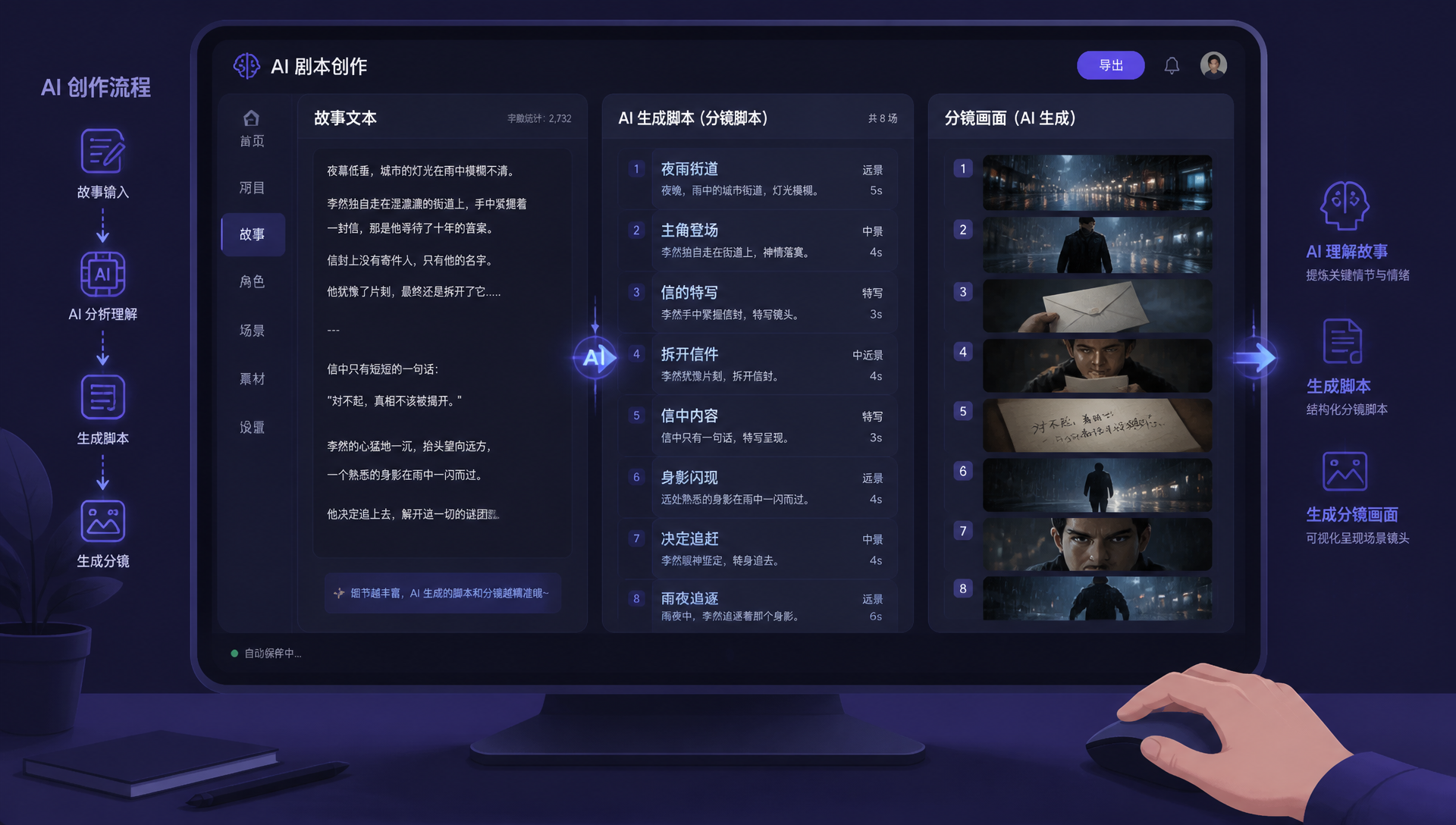
The first set generates novels: input your story premise, and the AI drafts a medium-length novel—suitable for genres like suspense, xianxia, or post-apocalyptic themes. The second set converts the novel into a professional screenplay, extracting dramatic conflicts and strengthening character motivations, transforming narrative prose into cinematic language. The third set transforms the screenplay into detailed storyboard scripts, where each scene includes shot number, visual content, camera type, perspective, composition, and lighting—all described with extreme specificity so the AI can directly generate images.
Important note: large language models typically cap input at around 100,000 characters. For longer stories, feed them in segments—don’t dump everything at once, or risk data loss and logical inconsistencies.
Second path: purchase licensed IP with budget. I’ve compiled four legitimate sources: Tomato Copyright Mall, Qimao Copyright Center, YWen Platform, and Zizhi Animation—a distribution platform integrating copyrights from Tomato, Qimao, YWen, Zhihu, and Heiyan, offering end-to-end publishing support. Its drawback? It takes a 20% cut from sales—ideal for creators who want to focus solely on production without managing operations.
Keep characters consistent—three proven strategies
The biggest pitfall for beginners is character inconsistency. One episode, the female lead has a pointed face; the next, she has a square jaw. Lighting shifts abruptly from cool to warm—viewers instantly notice, and completion rates plummet. I’ve fallen into this trap myself—here are three solutions.
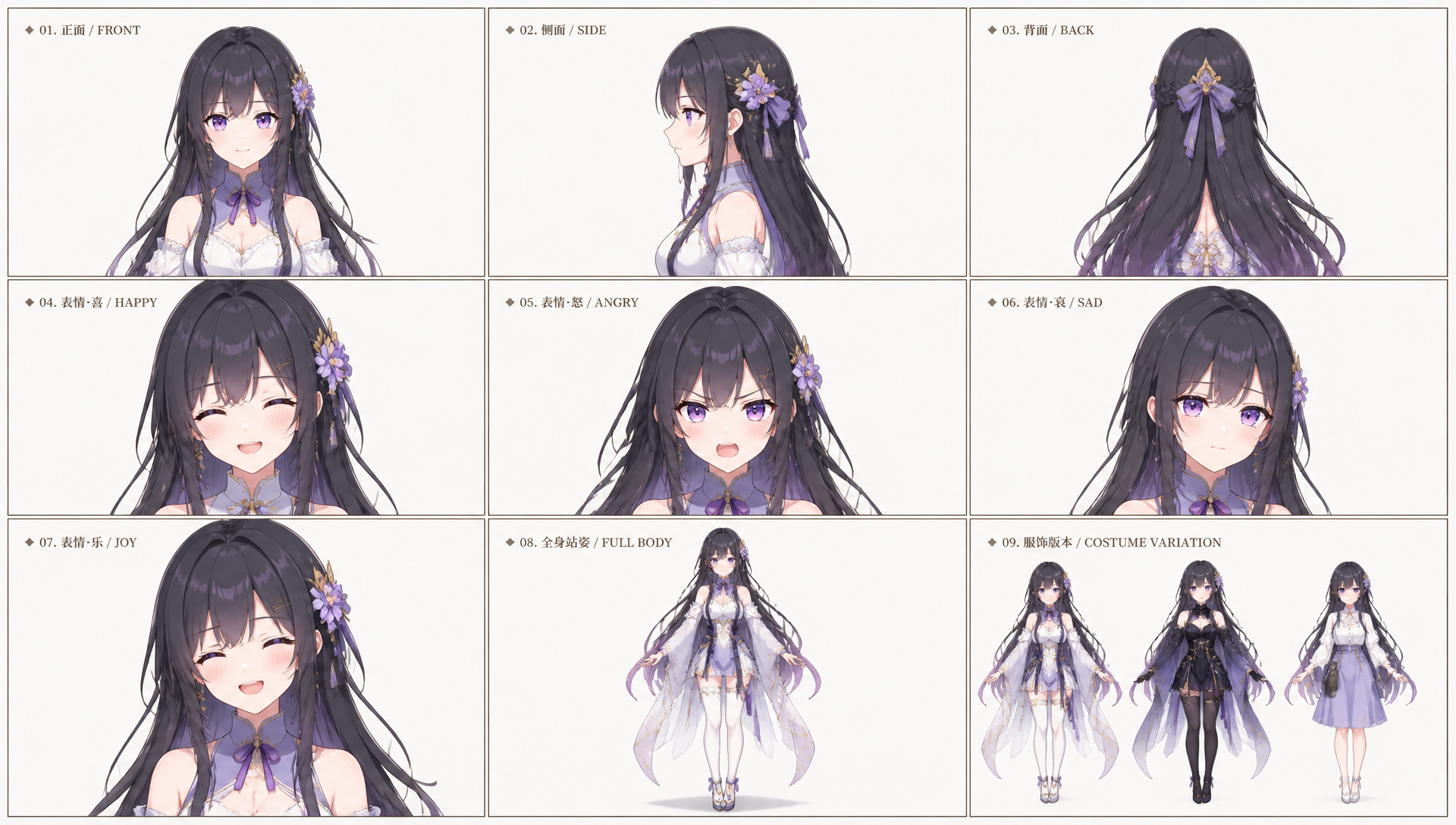
First strategy: create character cards upfront. Fix the visual design for protagonists and key supporting characters—use multi-angle views and a 3x3 grid to lock in the art style. Reuse these reference images throughout the project to prevent character drift.
Second strategy: use a standardized template for image generation. Structure your prompt like this: shot type, perspective, character action, environment, lighting, color tone—add “Japanese anime storyboard” to lock in the aesthetic. This ensures strict composition, high resolution, and fine details. Apply this template to every shot to maintain visual consistency.
Third strategy: avoid large upfront tool investments. Platforms like LibTV offer free trials—test the output first, then upgrade only if satisfied. Run a proof-of-concept before spending.
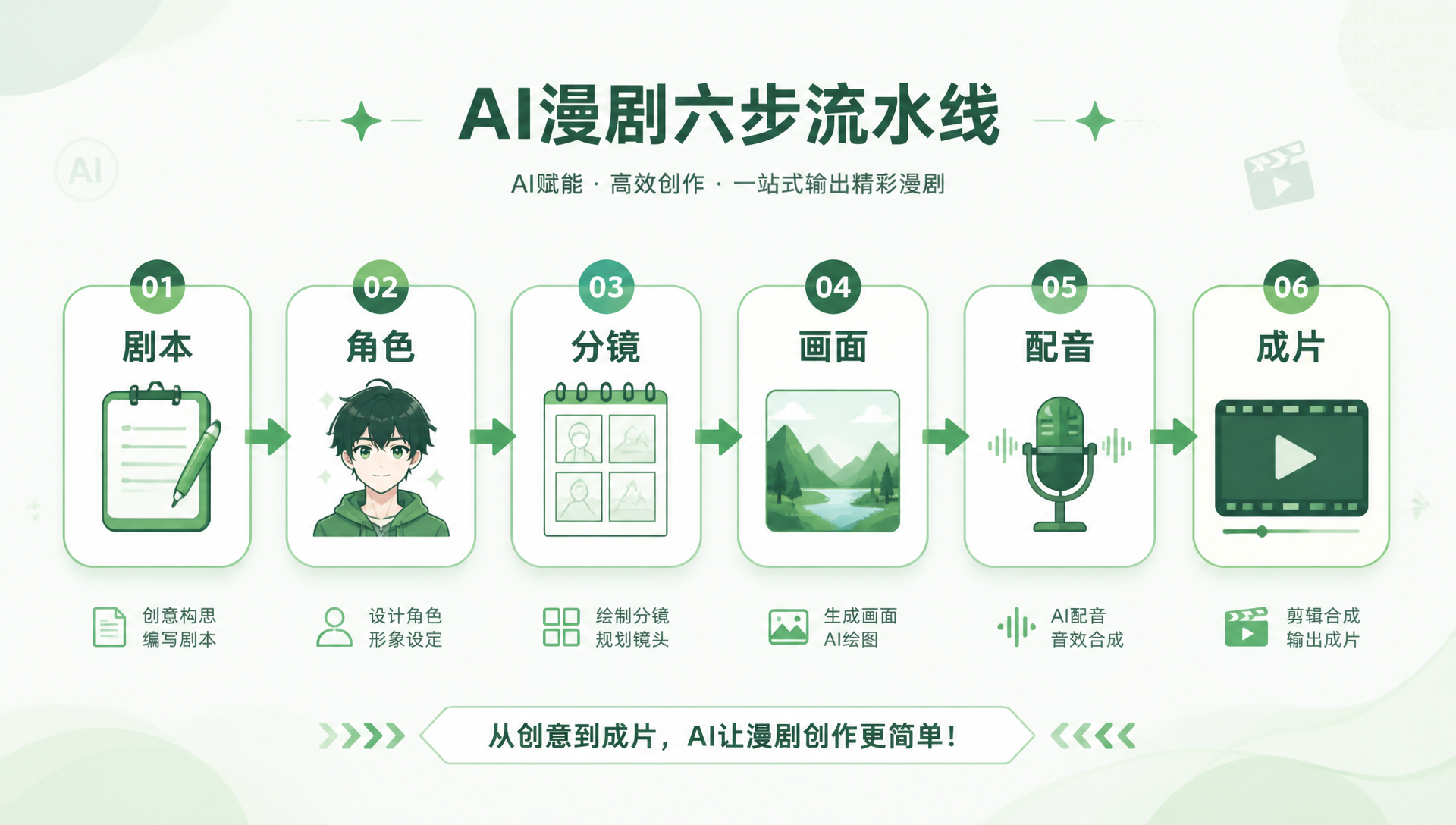
Build your toolchain to run the full workflow solo
The process is straightforward: script → character design → storyboard → visuals → voiceover → final edit—six steps total. I use three open-source tools, each specialized to cover different stages—from beginner to mass production.
For beginners, use huobao-drama. Its design philosophy boils down to three words: fully automated. Type a sentence like “Create a post-apocalyptic survival short drama starring a convenience store owner,” and it automatically handles script rewriting, character extraction, storyboard breakdown, image generation, video creation, voice synthesis, and final compilation—outputting a finished video in under ten minutes. Perfect for zero-experience users to experience the full workflow firsthand.
If you have existing novel resources, go with waoowaoo. Most viral AI short dramas originate from web novel IPs—stories already validated by millions of readers. Paste your novel text into the system, and it auto-analyzes character relationships, identifies pivotal scenes, extracts plot beats—producing a rough cut in just two hours. Take any promising story from Tomato or Qimao and test it immediately.
For scaling premium-quality productions, use Moyin Creator. Its core strength lies in solving character consistency. Standardizes five stages: script, character, scene, storyboard, final cut. Once character designs are locked, all subsequent storyboards automatically reference the same set of assets. Deeply integrated with Seedance 2.0, enabling batch processing at every stage—entire episodes can be queued for sequential generation.
These tools can be combined: use huobao-drama for concept validation, confirm market demand, then rework with Moyin Creator for a high-quality version.
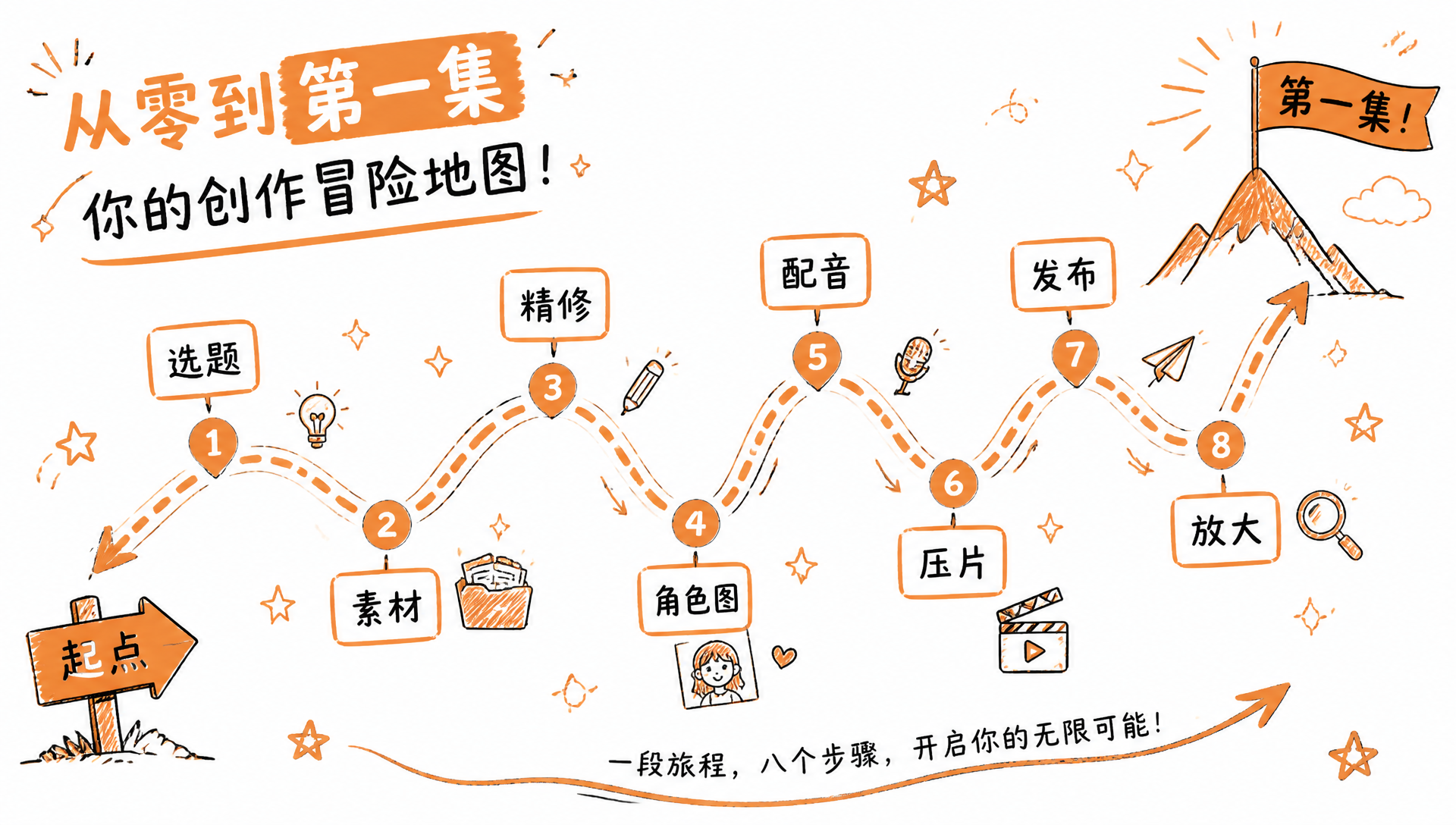
From zero to first episode: follow these eight steps
Here’s a real-world workflow I’ve successfully executed—follow it, and you’ll have your first project in hand.
Step 1: Topic selection. Don’t invent from scratch—check trending genres on Tomato Novel. Choose proven formats like “post-apocalyptic supermarket” or “sweet romance twist.” Find a well-performing, unadapted novel.
Step 2: Material preparation. Import the first few chapters into waoowaoo to generate a rough cut. Only proceed if the story shows promise.
Step 3: Refinement. Use Moyin Creator to rebuild the project. Lock in one set of reference images for characters. Break down storyboards in detail—keep each episode between 8 to 16 shots, with scripts ranging from 500 to 1,200 words per episode—the sweet spot for viewer retention.
Step 4: Character image polishing. AI-generated character images often lack detail and blur when zoomed. Optimize key character and background images—inspect thumbnails and character cards at full size. Image clarity directly impacts first impressions.
Step 5: Voiceover review. Listen to the AI narration. If emotional tone is off, re-record specific lines or switch voice styles.
Step 6: Final edit optimization. Individual episode files often exceed 100–200 MB—slow upload speeds and high storage usage. Compress once to reduce file size significantly with minimal quality loss.
Step 7: Publish and analyze. Prioritize platforms with active promotion—Hongguo, TikTok, Kuaishou. Launch simultaneously across multiple platforms. Identify which episode has the highest completion rate, which scene sparks the most comments—those are your next season’s inspiration.
Step 8: Scale iteratively. Once one account is validated, replicate the entire pipeline to build 10 to 20 additional accounts. Spend just two hours daily monitoring—revenue will grow exponentially.

Four revenue streams—don’t rely solely on revenue sharing
Don’t limit yourself to platform revenue sharing alone—I’ve identified at least four income channels operating simultaneously.
First, platform revenue sharing. Earn money based on playback volume after uploading to platforms like Hongguo. Though unit prices are low, it forms a stable base income.
Second, novel promotion posts. Insert cliffhangers at critical moments in videos, prompting viewers to search keywords on novel platforms—revenue splits can reach 50%. This is the core growth path for new accounts with zero followers.
Third, B2B custom production. This is the strongest cash flow stream. Traditional web novel studios and short drama companies constantly seek outsourced production capacity—charged by the minute. Basic and advanced customization can differ by several times in price. You earn money immediately upon delivery—no need to wait for a viral hit.
Fourth, matrix scalability. Once one account is operational, replicate the entire pipeline across dozens of accounts. More accounts mean exponential revenue growth. Combined with automated publishing tools, just two hours of daily oversight suffices.
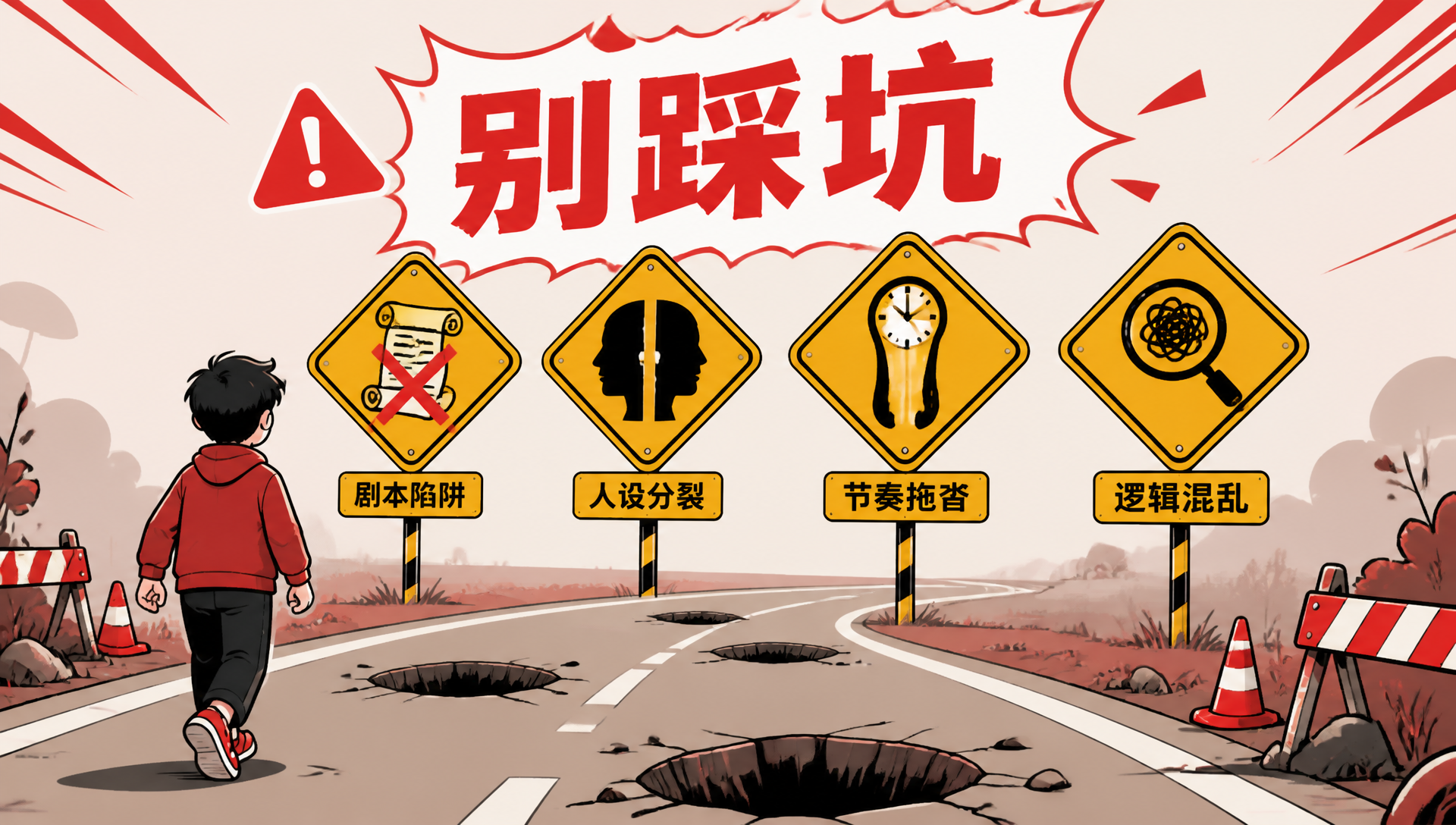
Four pitfalls—preemptively avoided for you
Finally, four traps I’ve personally encountered—avoiding them will save you half a month of wasted effort.
Pitfall 1: Never underestimate the script. No matter how powerful the tools, a bad story can’t be saved. Viral hits almost always come from verified web novel IPs—start with proven narratives, not original ideas.
Pitfall 2: Character consistency must be rigorously checked. Always reference the same image for every shot—don’t cut corners, or you’ll face costly rework due to character drift.
Pitfall 3: Shot duration can spiral out of control. A script written for 3 seconds may be auto-extended to 10 seconds—resulting in double the runtime. You’ll have to manually trim in post-production. Always verify duration shot-by-shot after generation.
Pitfall 4: Don’t chase perfection from day one. First, use fully automated tools to run a full cycle and understand the workflow. Then optimize step by step. I’ve seen too many creators spend three days debating “which model to pick”—and never release a single video.
A hard truth to accept: the AI animated short drama market is aiming toward a $3 billion valuation. Over 40 works have already surpassed 100 million views—the opportunity is real. But it won’t stay open forever. Once top-tier factories scale up production and platform subsidies fade, the window for solo operators will shrink rapidly.
So don’t wait for “perfect readiness.” Tonight, do one thing: deploy a fully automated tool, input “Create a post-apocalyptic survival short drama,” and in ten minutes, watch the final cut. The moment you see it, you’re no longer just a viewer—you’re a creator.
Disclaimer: Contains third-party opinions, does not constitute financial advice
Town – An active AI personal assistant that collaboratively coordinates schedules
16 hours ago
Seven exclusive closed-door sessions with top-tier decision-makers, uncovering the most authentic insights and cutting-edge judgments on AI deployment
1 day ago
The "rat race" in East Asian education is being re-exported through AI
1 day ago
ABot-Earth 0.7 – The World’s First 3D-Native Urban World Model Launches by Gaode
1 day ago
JPMorgan Bullish on Meta: Muse, Model API, and Subscriptions Drive $820 Price Target
1 day ago
GPT-6 Tops the Charts, Biggest Shock After AlphaFold, Emerges as the Most Powerful AI for Antibody Prediction
1 day ago
Nobel Heroes & AI4SCI Summit 2026 to Launch in Singapore This October
1 day ago
EchoWM – JD.com's Open-Source Interactive Multimodal World Model
1 day ago


